English Courses at Cork English College, Ireland
Cork English College has taught English in the centre of Cork since 1978, and is still run by the family that started it. Sixty minute lessons, three buildings over the River Lee, and an exam centre for seven international exams in the same rooms you study in.


 1. Tell us your goal
 2. We help you find the right program
 3. We handle the paperwork
 4. Ready to Start
TL;DR: Quick summary
Cork English College, CEC for short, teaches English from three buildings in the middle of Cork, in the south of Ireland, one on Patrick’s Hill above the city and two looking over the River Lee. It opened in 1978 and is still family owned, which in this sector is rare enough to matter. Adults study General English, exam preparation, business or the twenty-five week study and work programme; students of 11 to 17 have a summer school that has been running as long as the college, with English combined with Munster Rugby, football, golf, horse riding or STEAM; and teenagers who want a full year sit in an Irish secondary school with a host family. CEC is accredited by ACELS and by EAQUALS, and it is the only Quality English school in Cork.
Thirteen programmes from one college: General English and the intensive version, preparation for seven different exams, the twenty-five week study and work programme, business and executive training, a 50+ course, the summer junior school with five combined options from Munster Rugby to STEAM, and a full year in an Irish secondary school.
Adult lessons last sixty minutes rather than the forty-five that much of the industry calls a lesson, and classes average six to eight students with a maximum of twelve in the mornings. You sit the placement test online before you fly, so you are in the right class on the first morning rather than the second day.
- Sixty minute lessons, 6 to 8 per class, max 12
- Nine levels from A2 to C2, on the European framework
- Three buildings in the centre of Cork
- ACELS accredited, EAQUALS member, Quality English
ViveCampus
ViveCampus is a leading education abroad agency with over 17 years of experience and more than 5,000 satisfied students around the world. We handle your Cork English College application for you, guide you at every step, and our service costs you nothing.


Why do students choose Cork English College in 2026?
Forty-seven years in the same city, still owned by the same family, and a set of things that are easy to check before you book. Here is what separates it.

CEC runs sixty minute lessons on every adult programme. Most of the industry quotes lessons of forty-five or fifty minutes, so twenty lessons a week can mean fifteen hours of teaching somewhere else and twenty here. Over twelve weeks that gap is sixty hours of class, which is most of a month of study, and it costs nothing extra because it is simply how the timetable is built. It is the first number to compare when two schools quote you the same price.
CEC is an open exam centre for IELTS, Cambridge, OET, TOEIC, TOLES, LanguageCert and Trinity, which is a longer list than almost any school in Ireland holds. IELTS runs every month of the year in Cork, on paper or on computer, and Cambridge exams are held at the college several times a year. Preparing for an exam in the same rooms where you will take it means the room is already familiar on the day.
The junior summer programme has run since 1978, and the partnerships are the reason families choose it. English plus Rugby is delivered with coaches from Munster Rugby, one of the best known clubs in Europe, and students finish with a certificate from the club as well as from the college. The same morning classes pair with football coached by Valencia CF staff, golf at the Fota Island Golf Academy, horse riding at Castlemore Stables or STEAM workshops with Designer Minds, and there is a general multi-activity option for students who would rather do a bit of everything.
For a teenager whose plan is bigger than a summer, CEC places students of 13 to 18 into Cork secondary schools for the academic year, usually into Transition Year, living full board with host families the college has worked with for years. The partner schools are chosen on their results, and CEC states that 80 to 90 per cent of their leavers go on to third level education. Entry is from B2, because a year of school in English only works if the English is already there.
This is the practical reason many students choose Ireland over the alternatives. Students from the EU can work during their studies whatever the length of the course. Students from outside the EU take the twenty-five week study and work programme, which comes with an eight month permission, twenty hours of work a week during term and forty during the holidays, and an exam at the end. CEC supports the job hunt with a Jobs Club, CV clinics and free workshops rather than leaving you to it.
CEC has been owned and run by the same family since 1978. It is accredited by ACELS, the Irish English language scheme, and by EAQUALS, and it is the only Quality English school in Cork. It was voted Best Language School at the Irish Education Awards three years running, in 2019, 2020 and 2021, and named Cork Business of the Year in 2019. Bookings and enquiries are answered within twenty-four hours and there is a twenty-four hour emergency line for students.
Cork English College has been teaching English in Cork since 1978 and is still family owned and family run. It is accredited by ACELS, the English language scheme operated under Ireland’s national qualifications authority, and by EAQUALS, and it is the only Quality English school in Cork. It is a member of English Education Ireland, Select Ireland, ALTO, IATEFL and the Cork Chamber, an Erasmus+ and Bildungsurlaub provider, and an open exam centre for IELTS, Cambridge, OET, TOEIC, TOLES, LanguageCert and Trinity. It was voted Best Language School at the Irish Education Awards in 2019, 2020 and 2021, and Cork Business of the Year in 2019.
Source: Cork English College

Cork, the city Ireland calls its real capital
Cork is Ireland’s second city, about two hundred and ten thousand people on an island in the River Lee, and it is small enough that almost everything is a walk. Condé Nast Traveler readers voted it the third friendliest city in the world, and Lonely Planet wrote that everything good about Ireland can be found in County Cork. It was European City of Culture in 2005 and it still runs on festivals: jazz, film, choral music and midsummer.
For a student the practical case is just as strong. Cork is the start of both the Wild Atlantic Way and Ireland’s Ancient East, so the coast, Kinsale, Cobh, Killarney and the Cliffs of Moher are all day trips. The airport is eight kilometres from the centre with more than fifty international routes. And the city is a real employer, with Apple, Amazon, Pfizer and dozens of other multinationals running bilingual teams from Cork, alongside two universities and the food scene that makes people call it the gourmet capital of Ireland.

What English courses does Cork English College offer?
Thirteen programmes from one college, for adults, for teenagers in summer and for a student who wants a full year in an Irish school. Adult lessons are sixty minutes, classes average six to eight with a maximum of twelve in the mornings, and levels run from A2 to C2 on the European framework.

The course most adults book, from A2 to C2 and open to anyone of 16 or over. Twenty lessons a week of sixty minutes, mornings from twenty to nine until one, working on grammar, vocabulary and pronunciation through the four skills, with the emphasis on saying what you mean accurately and being corrected when you do not. You sit the placement test online before you travel, meet your teacher for feedback every week, take a short progress test each Friday and move up a level on a Monday when you are ready. Afternoon electives can be added: TOEIC, OET or one to one.
The same mornings with six more hours in the afternoons, twenty-six sixty minute lessons a week in total. The afternoon classes are topic based and built around talking: interview technique and CV writing, food and restaurants, work and jobs, with an e-learning masterclass in the middle of the week. It is the option for a student who has a fixed number of weeks and wants to come out of them a level higher, and for anyone whose speaking is behind their grammar.
CEC is an open exam centre, so you prepare and sit the paper in the same building. IELTS preparation runs all year and the exam itself runs every month in Cork, on paper or on computer. The Cambridge courses run nine or ten weeks with the exam at the end, or four weeks in the accelerated version for students who are already close, and they are timed to the Cambridge sittings the college hosts through the year. There is also OET for healthcare professionals, TOEIC, TOLES for lawyers, LanguageCert and Trinity. A placement test decides which exam is realistic before you book.
The programme that brings most non-EU students to Ireland. Twenty-five weeks of morning classes across an eight month permission, with eight weeks of holidays inside it, twenty hours of work a week during term and forty during the holidays. Everyone takes a placement test on arrival and an induction session in the first week covering the course, the immigration process and which exam to finish with, and the programme ends with an IELTS, Cambridge or TIE exam. CEC adds a Jobs Club, CV clinics and free career workshops. Students from the EU can work on any course length and take the same programme without the visa requirement.
For the English your job actually needs. Business English is a twenty lesson week for students of 21 and over from B2 upwards, working through negotiation, meetings, emails that are direct without being rude, and the language of the business news. The Executive programmes go further and are designed around you or your team, with specialists in finance, law or sales and marketing, from financial statements and taxation to contracts, litigation, brand management and pricing. One to one tuition runs from one to fifteen hours a week and starts with a needs analysis rather than a syllabus.
A week of English and Ireland for students over 50, taught only with others in that age group in a class of around fifteen. Mornings are General English from A2 to B2; afternoons are the part people book it for, with a Cork city orientation, Nano Nagle Place, the Jameson distillery, a chocolate workshop and an Irish music and dancing night, and a full day in Killarney National Park on the Saturday. It runs on a handful of set weeks between spring and late summer, and you can stay in a host family, a residence, a B&B or a hotel.

The summer school for students of 11 to 17, and the programme CEC has been running since the year it opened. Mornings are English in a class of no more than fifteen, placed by level on arrival; afternoons and evenings are the reason they remember it, with half day trips off campus, on campus activities, a full day excursion every week and evenings of Irish dancing, karaoke, discos and a talent show. Choose a host family with a commuter bus ticket, or a single ensuite room at the Munster Technological University campus with residential staff. Weekly assessment, a diploma at the end, and Cork airport transfers included.

Mornings of English and afternoons on one of Ireland’s best known resort courses. Four afternoons a week are spent at the Fota Island Golf Academy, four thousand square yards of practice ground where PGA coaching covers everything from chipping and putting to iron play and driving, with a private bus from the school. The rest of the week keeps the excursions and the evening programme of the summer school. Open to any level of English and any level of golf, host family or residence, full board.

For the student who would rather spend the afternoon in a field than a sports hall. Five hours of riding training a week at Castlemore Stables, an equestrian centre out in the Cork countryside, with a private bus from the school and instructors who take complete beginners as readily as experienced riders. Mornings are the same English classes as the rest of the summer school, and the evenings and the weekly full day excursion come with it. Host family or residence, full board.

The one families ask us about by name. Students of 13 to 16 study English every morning and train in the afternoons with coaches from Munster Rugby, one of the best known clubs in European rugby, working through the skills and the values the club teaches, teamwork, respect and integrity. It comes with a Munster Academy shirt and a certificate from the club alongside the CEC diploma, full board with a host family or at the MTU residence, evening activities and a full day excursion each week.

Five afternoons a week of training and matches with coaches from the Valencia CF academy, conducted in English, which is the part that makes it a language programme rather than a football camp. Students get the full Valencia kit, shirt, shorts and socks, and the mornings are the same English classes as the rest of the summer school. Evenings bring karaoke, bingo and the disco, and a full day excursion outside Cork runs on the Saturday. Host family or residence, full board.

The option for a student whose interest is science rather than sport. Three afternoons a week are hands-on STEAM workshops run by specialist facilitators, working through science, technology, engineering, art and maths by building things and taking them apart, with two more afternoons of general sport so nobody sits still all week. Mornings are English with the rest of the summer school, and the evening programme and the weekly full day excursion are included. Host family or residence, full board.

A full academic year, forty weeks, inside an Irish secondary school in Cork, for students of 13 to 18 from B2 upwards. Most students join Transition Year, the Irish fourth year built around projects, work experience and getting out of the classroom, though other years can be arranged. Students live full board with host families the college has used for years and are supervised throughout. The partner schools are picked on their exam results, and CEC reports that between eighty and ninety per cent of their students go on to third level. Shorter group stays and mini-stays run in term time as well.

General English is where most adults start, and the summer school and the high school year are what bring families here, some of them for a fortnight and some for a full Irish school year
Source: ViveCampus

What should you know before applying to Cork English College?
The things worth settling before you book rather than after, taken from the college’s own brochures and student handbook and from what our advisors are asked every week.
Costs, Dates, Application Process and other Considerations
Application Process - Send us the contact form and an advisor comes back with the sequence for your country: the documents you will need, how long each stage takes, and whether your nationality needs a visa for Ireland at all. CEC asks every new student to sit its placement test online before travelling, which is what lets you walk into the right class on the first morning so the lessons start straight away. For a student under 18 we set out the supervision, the host family and the airport transfer in writing before anything is booked. We prepare the application and send it.

Dates of the Program - General English, the intensive version, IELTS preparation, business and one to one all start every Monday of the year. The ones with fixed dates are Cambridge, whose nine, ten and four week courses are timed to the exam sittings the college hosts; the 50+ week, which runs a handful of times between spring and late summer; the summer junior programmes, which have two start dates each summer and ask for a minimum of two weeks; and the high school year, which begins with the Irish school year. Those dates move every year, so tell us the month you have in mind and we will confirm the exact ones that still have room. The college closes for a short break at Christmas and on bank holiday weekends, and runs a free cultural tour on bank holiday Mondays.

Length of the Program - One week to a full academic year. General English has no maximum, the Cambridge courses are fixed at four, nine or ten weeks, the study and work programme is twenty-five weeks of class inside an eight month permission, the 50+ course is one week, the summer junior programmes need a minimum of two weeks, and the high school programme is forty weeks or a single term. Give us your dates and we will say which of those actually fit them.

Costs - What you pay depends on the programme, the number of weeks, the accommodation and the season, and the weekly rate falls as the booking gets longer. Use the form at the bottom of this page and a written quote comes back with tuition, the enrolment and materials fees, accommodation, transfers and the promotion running this month, before you commit to anything. Two costs to keep in mind separately: exam entry is paid on top of an exam preparation course, and non-EU students need medical insurance, which we arrange with the booking. If you want a figure before you write to anyone, our cost of studying abroad calculator adds up the course, the room and the week.

Health Insurance - Every non-EU student coming to Ireland needs private medical insurance for the whole stay, and it is checked at immigration registration rather than treated as a formality. CEC arranges a policy as part of the enrolment if you do not already hold one that qualifies, and long bookings also carry the learner protection insurance that Irish law requires of language colleges. EU and EEA students should travel with a European Health Insurance Card, which covers public treatment but not repatriation or a cancelled course, so we usually recommend a policy on top.

Minimum Age - Adults from 16 on General English and the exam courses, 18 for the study and work programme and one to one, and 21 for business and executive training. The summer junior school takes students from 11 to 17, the Munster Rugby programme from 13 to 16, the Young Adult programme 16 to 19, and the high school year 13 to 18. Every junior centre is recognised by the Irish Department of Education and every activity is supervised by the college’s own staff.

Minimum English Level - None for General English, which runs from A2 upwards across nine levels to C2, and the summer junior programmes take beginners too. The ones with a floor are the exam courses, where the entry level depends on which exam you are aiming at, business English, which needs B2, and the high school year, which needs B2 because a year of Irish school in English does not work below that. Everyone sits the online placement test before arriving and the teacher confirms the level during the first class.

Visa Regulations - It depends on your passport. Students from the EU and the EEA need no visa at all and can simply arrive. Students from outside the EU should check whether their nationality needs a visa before travelling, and in either case a stay of more than ninety days means registering with immigration after arrival and enrolling on a course of at least twenty-five weeks from the official list, which the study and work programme is. CEC runs a dedicated immigration meeting in your first week, helps prepare the documents and will send a member of staff with you to the registration appointment and to open a bank account. We prepare the application from our side and our team handles the translations.

Working While You Study: - This is the reason a lot of students pick Ireland. If you are from the EU you may work part time or full time during your studies, whatever the length of your course. If you are from outside the EU you need the twenty-five week study and work programme, which allows twenty hours of work a week during term and forty during the holiday periods. CEC runs a Jobs Club, CV clinics and free career workshops, and Cork itself helps: the city has Apple, Amazon, Pfizer and a long list of multinationals running bilingual customer teams, alongside the hospitality that hires students everywhere.

Accommodation - Three routes, all arranged by the college. A host family is what most students take and the one we recommend for a first stay, chosen and visited in person by the accommodation officer, with meals included and English at the dinner table. Self-catering student apartments hold five to eight bedrooms, ensuite or shared, with bed linen and kitchen equipment provided and the cleaning left to you. There are also hotels, B&Bs and hostels the college works with across Cork, which suits older students and executives. Junior students stay full board with host families or in single ensuite rooms at the MTU campus with residential staff. Write to us and we will put a figure on each of them for your dates.

Extra Curricular Activities - There is something on every day, and a CEC guide goes with every trip at no extra cost. Afternoons run the city tour, the Crawford Art Gallery, UCC and the Glucksman, Cork City Gaol, Blarney Castle, Cobh, Kinsale, Fota Wildlife Park and a pronunciation class for anyone who would rather stay in. Evenings are bowling, cinema, Irish dancing, live traditional music, a brewery tour, escape rooms, karaoke and a Cork City FC match. Full days go to Killarney National Park, the Cliffs of Moher, the Ring of Kerry, Bunratty, the Rock of Cashel and Kilkenny. Some trips carry a small charge for entry or transport; on bank holiday Mondays the cultural tour is free.

Airport Pickup - Cork Airport is eight kilometres from the city and runs more than fifty international routes, and the shuttle into town takes ten to fifteen minutes. If you are landing in Dublin instead, the direct coach to Cork takes about three and a half hours, or the train from Dublin runs to Kent Station, a ten minute walk from the adult school. CEC arranges airport transfers as part of a booking, and for junior students arriving from Cork they are included in the programme.
First day of classes - Be at the adult centre for half past eight. There is a welcome presentation with the team, your timetable and the practical information, then class shortly after twenty to nine, because you will have done the placement test online before travelling. Your teacher checks the level during that first lesson. In the afternoon there is a city tour with a CEC teacher, which you can sign up for at the welcome meeting, and non-EU students are given the date of their immigration meeting for later that week.

Keep in mind that the biggest expense is usually not the course itself, but the living costs. So, before choosing the cheapest school, consider all factors carefully
Source: ViveCampus

Three buildings over the River Lee
CEC is at Saint Patrick’s Bridge, in the middle of Cork, with a second building up Patrick’s Hill looking over the city and a third nearby. Classrooms have interactive projectors, there is a student common room, cinema rooms for the film afternoons, a multimedia lab and free wifi throughout, and the buildings are wheelchair accessible. Kent Station is a ten minute walk and the bus station is closer than that.
Address: Saint Patrick’s Bridge, Cork, T23 D863, Ireland
About Cork
Cork is Ireland’s second city, around two hundred and ten thousand people built on and around an island in the River Lee, and the first thing you notice is the scale: the centre is walkable end to end, most of the attractions are free, and the main shopping streets are closed to cars. It calls itself the real capital of Ireland and it is unarguably the food capital, with the English Market running since 1788 and a restaurant scene that made the reputation. Condé Nast Traveler readers voted it the third friendliest city in the world, and it was European City of Culture in 2005, which is still visible in the calendar: the Guinness Jazz Festival, the International Film Festival, the International Choral Festival and Midsummer. Beyond the city, Cork is the starting point of both the Wild Atlantic Way and Ireland’s Ancient East, so Kinsale, Cobh, Killarney, the Ring of Kerry and the Cliffs of Moher are day trips rather than holidays. The airport is eight kilometres out with more than fifty international routes, and the city is home to Apple, Amazon, Pfizer and dozens of other multinationals, many of them hiring in more than one language.
Weather in Cork
Cork is coastal and mild, which means it rarely freezes, rarely gets hot and changes its mind constantly. Summer, June to August, sits around eighteen to twenty degrees and gives the long evenings that make the activity programme work. Autumn is soft and green and is when the festivals cluster. Winter, December to February, hovers around seven or eight degrees and is wet rather than cold, with short days. Spring brings the light back from March. The advice the college itself gives new students is the right one: pack for every kind of weather and bring a light raincoat even on a sunny morning, because a clear sky at nine can be a shower at one.
Cork in images
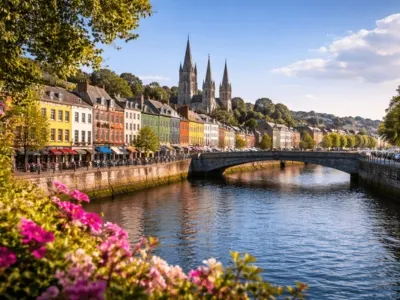
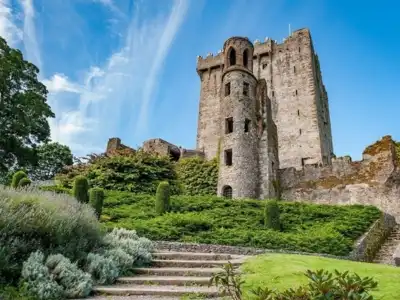
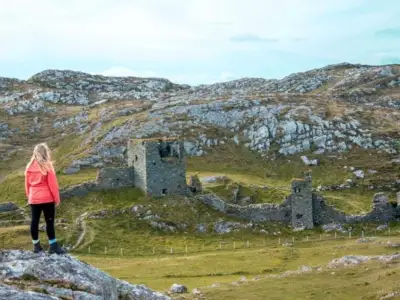
A river running through the middle of the city, a covered market from the eighteenth century, a harbour that ships left for New York from, and green country twenty minutes out. Cork gives a student plenty to do after class.
Source: Pure Cork

What do students say about studying at CEC?
Two students who have already done it, in their own words. Eleonora came from Italy for general English and Martín from Argentina for the rugby programme, and between them they cover most of what people ask us: the teachers, the city and the people you end up spending the year with.

I’m writing because I am very grateful to Cork English College. I have improved my English a lot and made many friends. Cork is a very safe city with plenty to do, even though it is smaller than Dublin. The teachers here are not typical English instructors; they become like a second family.

Hi, I’m Martín, and I took CEC’s English and rugby program. I would recommend it to everyone. I made many friends, and the training sessions with the Munster coaches were on another level. I feel that I have improved my game so much over these three weeks. They have been intense, but it’s an experience I will carry with me for the rest of my life.
Student testimonials from Cork English College share students’ experiences at the language school.
Source: ViveCampus

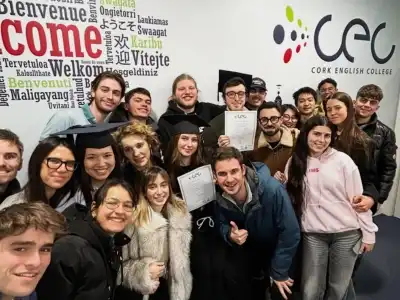
Cork English College in images
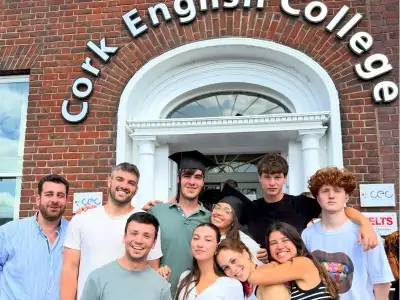


How ViveCampus can help you
A ViveCampus advisor helps you find the right program for you according your goals, needs and budget.
Our advice is completely free, and the process is 100% transparent. You make all payments directly to Cork English College.
When you apply through ViveCampus, you receive support from both the school and our team. We will assist you throughout the application process, the visa, the accommodation and the arrival.
You will also receive an international student card with thousands of discounts, along with other benefits that your educational consultant will explain.
Steps you should follow
1. Tell us your goal A short conversation about your needs, level, budget, dates and what you are looking for.
2. We clarify your doubts We answer all your questions about costs and requirements.
3. We handle the paperwork Application, letter of acceptance and the documents your visa or permit needs.
4. Ready to Start Accommodation confirmed, payments processed, and someone to call whenever you need a hand.


Frequently Asked Questions
What our advisors are asked before somebody books a course at Cork English College: visas and working, levels and exams, sending a teenager to the summer school or to an Irish secondary school, and what the first week looks like.

Do I need a visa to study at Cork English College?
That depends on your passport. If you are from the EU or the EEA you need nothing at all: you arrive, you enrol, you can work. If you are from outside the EU, some nationalities need a visa before travelling and some do not, and either way a stay longer than ninety days means registering with immigration once you are here and being enrolled on a course of at least twenty-five weeks from the official list. The study and work programme is exactly that. CEC holds an immigration meeting in your first week, prepares your documents and will send a staff member with you to the appointment. We handle the application from our end and the translations your file needs, at no extra cost.
How much does Cork English College cost?
It moves with the programme, the number of weeks, the accommodation and the time of year, and long bookings bring the weekly rate down. Send us the contact form and the full figure comes back in writing: tuition, enrolment and materials, accommodation, transfers and any discount that applies to your dates. Two things sit outside the course price and are worth knowing early: the entry fee for whichever exam you take, and medical insurance for non-EU students, which we arrange with the booking. Before any of that, our cost of studying abroad calculator will get you close enough to plan around. What we do is free.
What level of English do I need to start?
None for General English. CEC runs nine levels from A2 to C2 and takes students at the bottom of that scale, and the summer junior programmes accept beginners as well. The courses with a real entry level are the exam classes, where it depends on the exam you are aiming at, Business English, which asks for B2, and the high school year, which asks for B2 because a year of Irish school taught in English needs that much to be worth doing. Everyone sits the placement test online before travelling and the teacher confirms the level in the first class.
How big are the classes, and how long is a lesson?
Adult classes average six to eight students with a maximum of twelve in the mornings, and junior classes are capped at fifteen. The lesson length is the number worth comparing: CEC uses sixty minute lessons on every adult programme, where much of the industry counts forty-five. Twenty lessons a week therefore means twenty hours of teaching here and can mean fifteen elsewhere, which over a term is the difference of a month of class.
What makes the summer junior programmes different?
They have been running since the college opened in 1978, and they are built around real partnerships rather than a generic activity list. English plus Rugby is run with coaches from Munster Rugby and ends with a certificate from the club; football is coached by Valencia CF academy staff and conducted in English; golf is at the Fota Island Golf Academy with PGA coaching; horse riding is at Castlemore Stables in the countryside outside the city; and the STEAM workshops are run with Designer Minds. There is also a multi-activity version for students who would rather try everything. Mornings are English in classes capped at fifteen, afternoons and evenings are supervised by CEC staff, and every centre is recognised by the Irish Department of Education.
Can a teenager do a whole year in an Irish school?
Yes, and it is one of the things CEC is known for. Students of 13 to 18 at B2 or above are placed into Cork secondary schools for the academic year, forty weeks from August, most often into Transition Year, which is the Irish fourth year built around projects and work experience rather than exams. They live full board with host families the college has worked with for years and are supervised throughout, with a welcome pack, school materials and a certificate at the end. The partner schools are chosen on results, and the college reports that eighty to ninety per cent of their leavers go on to third level. Shorter term stays and mini-stays are available for groups.
Can I work while I am studying in Ireland?
If you hold an EU or EEA passport, yes, part time or full time, on a course of any length. If you do not, you need the twenty-five week study and work programme, which comes with an eight month permission and allows twenty hours a week in term time and forty during the holidays. CEC supports the search with a Jobs Club, CV clinics and free workshops, and Cork is a genuine job market: Apple, Amazon, Pfizer and a long list of other multinationals run multilingual teams here, and the hospitality sector hires students year round. We confirm what applies to your nationality before you book a flight.
When can I start at Cork English College?
General English, the intensive course, IELTS preparation, business and one to one start every Monday of the year. The rest run on set dates that move from year to year: the Cambridge courses are timed to the exam sittings the college hosts, the 50+ week runs a few times between spring and late summer, the summer junior programmes have two start dates each summer with a minimum of two weeks, and the high school year begins with the Irish school year in the autumn. Tell us roughly when you want to travel and we will confirm the current dates and what still has room. The college takes a short break at Christmas and closes on bank holiday weekends, running a free cultural tour on the Monday.
What accommodation is available?
A host family, a self-catering student apartment, or a hotel or B&B, all arranged by the college. The host families are visited in person by the accommodation officer and chosen for the atmosphere and the food as much as the room, and they are the option that puts English at your dinner table. The apartments have five to eight bedrooms, ensuite or shared, with linen and kitchen equipment provided and cleaning left to you. Junior students stay full board with a host family or in a single ensuite room on the MTU campus with residential staff. Send us the form and we will compare them side by side on your dates.
Where exactly is Cork English College?
At Saint Patrick’s Bridge in the centre of Cork, with a second building on Patrick’s Hill overlooking the city and a third close by, all within a few minutes of each other. Kent Station is a ten minute walk, the bus station is closer, and the airport shuttle takes ten to fifteen minutes from the door. The buildings have interactive projectors in the classrooms, a common room, cinema rooms, a multimedia lab, free wifi and wheelchair access. The junior summer centres are elsewhere: Douglas Community School for host family students and the MTU campus in Bishopstown for residential ones.
What else comes with a course at CEC?
The online placement test before you travel, a welcome presentation and a city tour on the first day, a weekly meeting with your teacher, a progress test each Friday, a speaking assessment every two weeks and a certificate with your exit level at the end. Every student gets a CEC student card that carries discounts around the city, access to the college’s e-learning platform, and the activity programme, with a guide included on every trip. Enquiries are answered within twenty-four hours and there is a twenty-four hour emergency number while you are in Ireland.
Is Cork English College accredited?
Yes, and by more bodies than most. It is accredited by ACELS, the Irish scheme that inspects English language providers, and by EAQUALS, the European accreditation for language education, and it is the only Quality English school in Cork. It is a member of English Education Ireland, Select Ireland, ALTO and IATEFL, an Erasmus+ and Bildungsurlaub provider, and an open exam centre for IELTS, Cambridge, OET, TOEIC, TOLES, LanguageCert and Trinity. It was voted Best Language School at the Irish Education Awards in 2019, 2020 and 2021.
What makes Cork a good place to study English?
Size and cost, mostly. Cork has around two hundred and ten thousand people, so the centre is walkable, the accommodation is easy to find and affordable, and there is room for a student to pick up part time work. What Cork gives you is a city where the same faces recognise you after a fortnight, a food and festival culture out of proportion to its size, and the coast and the countryside half an hour away. Condé Nast readers rated it the third friendliest city in the world, and students tend to agree.
How do I apply to Cork English College from my country?
Start with the form on this page. A ViveCampus advisor replies in your own language with the part that depends on where you live: whether your passport needs a visa, which documents to gather, how the twenty-five week route works if you want to work, the total cost and which start dates still have room. For a student under 18 we set out the supervision, the host family and the transfers in writing so a parent can read them before deciding. You do not have to arrive at that call with anything ready, and none of it is billed to you.
Which of the summer junior programmes should we choose?
Every one of them has the same mornings, English in a class of no more than fifteen, placed by level on arrival, so the choice is really about the afternoons. English plus Rugby, for 13 to 16 year olds, trains with Munster Rugby coaches and hands over a club certificate and an Academy shirt. English plus Football is five afternoons a week with Valencia CF coaches, in English, and the student keeps the kit. English plus Golf is four afternoons at the Fota Island Golf Academy with PGA coaching, for beginners as much as for players. English plus Horse Riding is five hours a week at a stables in the Cork countryside. English plus STEAM is three afternoons of workshops with Designer Minds plus two of sport. And English plus Multi-Activity, the original, mixes trips, sport and culture without committing to one thing. Tell us the age and what the student actually likes and we will tell you which one fills up first.
What is included in a junior summer booking, and who looks after my child?
The price covers the course, full board accommodation, the activity programme and the transfers, which is worth knowing when you compare quotes. Accommodation is either a host family, with a commuter bus ticket to get to class, or a single ensuite room at the Munster Technological University campus with residential staff living on site. The week includes half day trips, on campus activities, a full day excursion and evening activities, all supervised by CEC staff, and every centre is recognised by the Irish Department of Education. Students are assessed weekly and leave with a diploma, and the sports programmes add a certificate from the partner club. Transfers from Cork Airport are included; a Dublin arrival is arranged separately. Write to us with the dates and we will set the whole thing out before you commit to anything.
Don’t see your question here? Send it through the form below and a ViveCampus advisor will answer it directly. Asking costs nothing and commits you to nothing.
Source: ViveCampus
Fill out the form below. It only takes 2 minutes to start your journey!

Get a Quote
Fill out the form and a ViveCampus advisor will reach out by email or phone to go over schools, costs and start dates that fit your plan. Our help is free and you are under no obligation.

TODAY
