English Courses at Kiwi English Academy, Auckland, New Zealand
Kiwi English Academy has taught English in Newmarket since 1991. Fifteen students to a class at most, students from more than twenty-five countries, and a Category One rating from the NZQA, the best of the four it awards.


 1. Tell us your goal
 2. We help you find the right program
 3. We handle the paperwork
 4. Ready to Start
TL;DR: Quick summary
Kiwi English Academy teaches English from one school on the ground floor of 27 Davis Crescent, in Newmarket, five minutes from the centre of Auckland. It opened in 1991 and deliberately stayed small: fifteen students in a class at most, and a roll drawn from more than twenty-five nationalities. Adults study General English, exam preparation or a course that combines classes with volunteering; students of 14 to 17 have a school of their own, with high school preparation that earns NCEA credits and placements into New Zealand secondary schools. The New Zealand Qualifications Authority rates it Category One.
Nine programmes from one school: an English + High School summer programme in January and February, General English and exam preparation for adults, a volunteering course, a junior school for 14 to 17 year olds, high school preparation with NCEA credits, short immersion programmes with local students, a full term inside a New Zealand high school, and an online academy you can start before you fly.
Classes are capped at fifteen students, and the school calls itself boutique for a reason: the teachers know every student by name. A short interview confirms your level before you start, and orientation is run by the student support staff rather than handed to you on paper.
- Classes capped at 15 students, 25+ nationalities
- Adults study 20 hours a week, juniors 9.00 to 3.00
- One school on Davis Crescent, in Newmarket
- NZQA Category One, and a pathway visa provider
ViveCampus
ViveCampus is a leading education abroad agency with over 17 years of experience and more than 5,000 satisfied students around the world. We handle your Kiwi English Academy application for you, guide you at every step, and our service costs you nothing.


Why do students choose Kiwi English Academy in 2026?
Thirty-five years in Newmarket, and a school that answers a question most language centres avoid: what happens after the English course. Here is what separates it.

Most language schools take students of 16 and over and treat the younger ones as an exception. Kiwi English Academy runs a junior school as a proper half of the business: 14 to 17 year olds, 12 and 13 by arrangement, with their own timetable from nine to three, guardianship through the school’s own pastoral care company, and teachers who work with that age all day. For a family sending a teenager abroad for the first time, that is the difference between a school that can take your child and a school that is set up for them.
The high school preparation course is not only English. It teaches the subjects a New Zealand classroom will expect, mathematics, science, economics and accounting, in the language they are taught in, and strong students can earn NCEA credits at levels 1 and 2 while they are still in it. The school also offers guaranteed entry into some New Zealand schools, which turns a language course into an actual admission rather than a hope.
Kiwi English Academy is a pathway visa provider, which means a single long-term visa can cover both the English course and the tertiary study that follows it, instead of a fresh application at every stage. Through KiwiEdLink, its network of partner providers, it places students into secondary schools, polytechnics, universities and specialist colleges. The point is that the plan continues past the language course, and the paperwork does too.
The Newmarket campus caps classes at fifteen students, and the school describes itself as boutique, where the teachers know every student. That claim is testable in week one: you have an interview about your level before you are placed, orientation with student support staff, and counsellors available outside the classroom. With more than twenty-five nationalities on the roll, there is rarely a large group of any one language to fall back into.
The volunteer programme is the one adults remember. Classes run in the morning, and three afternoons a week you work in a New Zealand organisation in the field you care about, from one to four in the afternoon, for two to four weeks. It asks only for an elementary level. What it gives back is the English nobody teaches, the sort you use when a colleague explains a task and expects you to get on with it.
The school is on the ground floor of 27 Davis Crescent, five minutes from central Auckland and a short walk from the Auckland Domain, the museum and Parnell. Newmarket is the city’s shopping and business district, with the train station, the cafés and the cinema all within a few blocks, which means an afternoon does not need a plan. Homestays, hotels and flats sit close by, and the school arranges the first two.
Kiwi English Academy has been teaching English in Auckland since 1991. The New Zealand Qualifications Authority rates it Category One, the best of the four bands NZQA gives providers and the one with the fewest restrictions on enrolling international students, following its 2023 external evaluation and review. It has signed the Code of Practice for the pastoral care of international students, its fees are protected by Public Trust as NZQA requires, and it is an approved pathway visa provider.
Source: Kiwi English Academy

Auckland, seen from Newmarket rather than from the tower
Auckland holds about a third of New Zealand’s population and most of its international flights, but the part that matters to a student is the neighbourhood they live in. Newmarket is a few minutes south of the centre: a district of shops, cafés, offices and a train station, with the Auckland Domain and the museum on one side and Parnell, the oldest street in the city, on the other. You can walk to most of it.
The rest of Auckland is then a short train or ferry ride away, and that is the argument for studying here rather than somewhere smaller. Beaches on two coasts, islands in the gulf, volcanic cones inside the suburbs, a job market big enough that part time work exists, and universities that take students on from here. It is a city where a student can arrive alone in January and have a life by March.

What English courses does Kiwi English Academy offer?
Nine programmes from one school, split between adults and teenagers. A short interview confirms your level before you are placed, classes are capped at fifteen, and adults study twenty hours a week from nine to twenty past one, Monday to Friday.

Kiwi English Academy’s summer programme for teenagers: two experiences in one trip. January is four weeks of English at the school in Newmarket, with outings and activities every afternoon. February is four weeks as a student at a New Zealand state high school, in class with local students and studying the subjects you choose. Homestay, insurance and the school uniform are all arranged.
The course most adults book, open from complete beginner upwards. It works through grammar and the functional English you need to do something with it, across reading, writing, listening and speaking, and it is built on the Common European Framework so the level you reach means something outside the building. Classes run nine to twenty past one, Monday to Friday, twenty hours a week, and you can stay for two weeks or most of a year.
For the certificate a university, an employer or an immigration officer is asking for. The school prepares IELTS, both Academic and General Training, Cambridge B2 First and C1 Advanced, TOEFL and TOEIC, which is a wider set than most schools this size attempt. IELTS preparation runs all year; the others go on set dates and need minimum numbers, so they are worth booking early. Entry starts at pre-intermediate, A2 and above on the Common European Framework.
Two to four weeks of English combined with real work in a New Zealand organisation, chosen around what you actually want to do. Mondays and Fridays are full mornings of class; Tuesday to Thursday you study from nine to eleven and then volunteer from one until four. It needs only an elementary level, and it is the fastest way we know to stop translating in your head, because the people you work with are not your teachers.
The junior school, for students of 14 to 17, with 12 and 13 year olds taken by arrangement. Classes run nine to three, Monday to Friday, longer than the adult day because the afternoons are part of the programme, and beginners are welcome. The teaching covers grammar and the four skills with the emphasis on talking, and the school arranges homestay and guardianship through its own pastoral care service, so one organisation is responsible for your child from the airport onwards.
For the student whose plan is a New Zealand secondary school, and the course that makes the plan real. It teaches academic English alongside the subjects themselves, mathematics, science, economics and accounting, so that the first day at a New Zealand school is not also the first day of understanding a maths lesson in English. Strong students can gain NCEA credits at levels 1 and 2 during the course, and the school offers guaranteed entry into some New Zealand schools. Entry is from pre-intermediate.
Two short programmes for students who want New Zealand rather than only a classroom. Kiwi Buddy runs four weeks during term time and pairs you with a local high school student, which is the only reliable way to meet teenagers your own age in a country you have just arrived in. The study tours teach mornings from nine to twenty past twelve and spend the afternoons hiking, sailing and out in Māori culture, with Summer Fun in January, Autumn Fun in April and May, and Mid-Year Fun in July and August.
A term or a year inside a New Zealand high school, from one to four terms, living with a homestay family and studying alongside New Zealand students rather than international ones. The school handles the placement, the accommodation and the guardianship, which is the part a family cannot organise from abroad. It is the natural step after high school preparation and the reason a lot of families come to this school in the first place.
The school’s online arm, for students of 13 and over who are waiting on a visa or a term start and would rather not waste the months. High School Foundation Online prepares secondary students before they arrive, covering academic English, the vocabulary of their subjects and enough New Zealand geography and history to follow the first weeks of class. Private lessons, one to one or in a small group, are arranged around your timetable. There is a free trial class and a free level assessment.

General English is where most adults start, and about half the school is 14 to 17, studying towards a New Zealand secondary school rather than a certificate
Source: ViveCampus
English + High School: a New Zealand summer at Kiwi English Academy
Eight weeks that give a teenager the full Kiwi experience. First a month of English with classmates from around the world, then a month as a real student at a New Zealand high school, with a homestay family the whole way through. A rare combination, and a summer your teenager will talk about for years.
- Ages 13 to 17
- 8 weeks, from early January to late February
- 4 weeks of English and activities, then 4 weeks at a local high school
- Upper elementary English and above, with a level test before enrolment
- Homestay with a New Zealand family


January: English and adventures in Auckland
Four weeks at Kiwi English Academy in Newmarket: English classes in the morning and, in the afternoon, cultural outings, sightseeing and fun activities around Auckland.
- Small classes of up to 12 students
- Experienced, friendly teachers
- Classmates from many countries
- A family-like atmosphere with full student support

February: life at a New Zealand high school
Four weeks as a student at a New Zealand state high school, sharing lessons, breaks and school life with Kiwi teenagers. The perfect way to put a month of English straight into practice.
- Co-educational state schools
- Schools in locations throughout New Zealand
- Classes alongside local students
- Choose the subjects you like
Included in the programme
Flights and the transfer to and from the homestay are booked separately, and we can help you with both.

Source: Kiwi English Academy

What should you know before applying to Kiwi English Academy?
The things worth settling before you book rather than after, taken from the school’s own enrolment pages and from what our advisors are asked every week.
Costs, Dates, Application Process and other Considerations
Application Process - Send us the contact form and an advisor comes back with the steps for your country. The school’s own process is short and worth knowing: you apply with a copy of your passport, plus school or university transcripts if the student is heading into secondary or tertiary study, and the academy replies with an offer, a contract and an invoice. Once the contract is signed and the fees are paid you sit a Cambridge placement test online, and the accommodation is arranged in parallel. We prepare and send the application, and the translations your file needs are done by our team.

Dates of the Program - General English, exam preparation and the junior school start every Monday of the year. English + High School runs in January and February. The other programmes with fixed dates are the seasonal study tours, Summer Fun in January, Autumn Fun in April and May and Mid-Year Fun in July and August, the high school immersion, which follows New Zealand school terms, and the Cambridge, TOEFL and TOEIC courses, which run on set dates and need minimum numbers. The school closes on New Zealand public holidays, for about two weeks over Christmas and for a week in June.

Length of the Program - Two weeks to forty-eight for General English and the junior school. English + High School lasts eight weeks, the volunteer programme two to four weeks, the study tours and Kiwi Buddy four weeks, and the high school immersion goes from one term to four. Adults study twenty hours a week, nine to twenty past one, Monday to Friday; the junior day runs nine to three because the afternoons are part of the teaching. Tell us the weeks you have and we will tell you what fits inside them.

Costs - What you pay depends on the programme, the number of weeks and the accommodation you choose. Use the form at the bottom of this page and a written quote comes back with tuition, the enrolment and placement fees, accommodation and the promotion running this month, before you commit to anything. One reassurance worth having: as NZQA requires, student fees are held by Public Trust, so the money is protected if a school ever closes. Our cost of studying abroad calculator puts course, accommodation and living costs side by side.

Health Insurance - New Zealand law requires every international student to hold current medical and travel insurance, and the academy states it plainly at enrolment. What that policy has to cover is more than a cancelled flight: treatment here, hospital care and repatriation. The Accident Compensation Corporation covers accidents for anyone in the country, including visitors, and nothing else, and most international students cannot use publicly funded health services at all. We arrange the cover with the enrolment so it is in place the day you land.

Minimum Age - Adults from 18, and a junior school built for 14 to 17 year olds with 12 and 13 year olds accepted by arrangement. English + High School takes students from 13 to 17, and the online academy from 13. Anyone under 18 is placed in a homestay the school has chosen and monitors, with guardianship through its own pastoral care company, which is the arrangement New Zealand requires and the reason families send younger students here.
Minimum English Level - None for General English, which takes complete beginners, and none for the junior school either. Exam preparation starts at pre-intermediate, A2 and above, the volunteer programme asks for elementary, and high school preparation runs from pre-intermediate to intermediate. Everyone sits a Cambridge placement test online before arriving and has a short interview here to confirm the level, so the class you walk into on the first morning is already the right one.

Visa Regulations - A course of up to three months is usually done as a visitor, and travellers from many countries need only an NZeTA rather than a visa to board. Longer than that needs a student visa, and here there is a third option worth asking about: the academy is an approved pathway visa provider, so one long-term visa can cover the English course and the study that follows it. We prepare and file whichever application fits, and the school asks for your flight details at least two weeks before you arrive so someone is at the airport.

Working While You Study: - Often yes. A student enrolled full time for fourteen weeks or more at a Category One school, which this is, can work up to twenty hours a week, subject to the conditions on their own visa, and we confirm what applies to your enrolment before you book a flight. Auckland is the easiest place in the country to find that work, because a third of New Zealand lives here and the hospitality and retail that hire students are everywhere. Students under 18 are a different case and normally study rather than work.

Accommodation - A homestay is the usual choice and the one the school arranges through its own pastoral care service, with the family chosen and monitored rather than picked off a list, and guardianship included for students under 18. Adults who want independence can take a hotel or a flat near the school, and Newmarket has both within walking distance. Accommodation is organised as part of the enrolment, and a change needs a week’s notice and a small administration fee. Write to us and we will put a figure on each option for the dates you have in mind.

Extra Curricular Activities - The activities are run by the academy’s own programme, after school and at weekends: sport for the junior students, excursions around Auckland, and longer trips through the North and South Islands with guides. For a student in a city this size that structure matters, because the difference between a good three months and a lonely one is usually whether somebody organised the first few weekends. The junior study tours have their own timetable of hiking, sailing and Māori culture built into the course.

Airport Pickup - The school arranges the airport pickup and the transfer to your accommodation as part of the enrolment, which is why it asks for your flight details at least two weeks ahead. Auckland Airport is about forty minutes from Newmarket without traffic and longer with it, so this is worth taking on a first arrival rather than working out a bus with your luggage at six in the morning.
First day of classes - A short interview to confirm your English level, then orientation with the student support staff: how the school works, your wifi password, your accommodation, and how to get around Auckland. You will already have sat the Cambridge placement test online before arriving, so classes start straight away. Take your passport and your insurance certificate.

Keep in mind that the biggest expense is usually not the course itself, but the living costs. So, before choosing the cheapest school, consider all factors carefully
Source: ViveCampus

A school on the ground floor in Newmarket
Kiwi English Academy is at 27 Davis Crescent, on the ground floor, in the middle of Newmarket. Classrooms, a student lounge with a microwave and a vending machine, computers, free wifi and a small library, plus the learning platform the teachers post work on. The train station, the cafés and the shops are a few minutes’ walk, and central Auckland is five minutes away.
Address: Ground Floor, 27 Davis Crescent, Newmarket, Auckland 1023, New Zealand
About Auckland and Newmarket
Auckland is home to about a third of New Zealand, spread between two harbours and built over fifty volcanic cones, and it is where almost every international flight lands. Newmarket, where the school is, sits just south of the centre and is the part of the city people actually live in rather than photograph: a district of shops and offices around a train station, with the Auckland Domain and the war memorial museum on one side, the old villas and galleries of Parnell on the other, and Mount Eden a short walk further on. Everything else in the city is a train or a ferry from there. The beaches of the east coast are half an hour away and the black sand of the west coast about an hour; Waiheke Island is forty minutes by ferry. For a student it is the most practical city in the country: the widest choice of part time work, the universities that most pathway students are aiming at, and a bus and train network that makes a car unnecessary.
Weather in Auckland
Auckland is subtropical, which in practice means mild all year and wetter than the photographs suggest. Summer, December to February, sits in the low to mid twenties and is when the city empties towards the beaches. Autumn, March to May, stays warm into April and is the season locals quietly prefer. Winter, June to August, rarely drops below eight or nine degrees and almost never freezes, but it rains and it blows, and New Zealand houses are less insulated than you may be used to. Spring, September to November, is changeable. The advice that actually helps: bring a waterproof jacket rather than a thick coat, and expect sun and rain in the same afternoon.
Auckland in images


A harbour on each side of the city, volcanic cones between the suburbs, ferries out to the gulf islands and a neighbourhood you can walk across. Auckland gives a student a lot to do after class.
Source: Auckland NZ

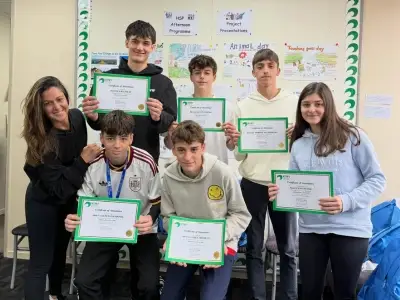
Kiwi English Academy in images


How ViveCampus can help you
A ViveCampus advisor helps you find the right program for you according your goals, needs and budget.
Our advice is completely free, and the process is 100% transparent. You make all payments directly to Kiwi English Academy.
When you apply through ViveCampus, you receive support from both the school and our team. We will assist you throughout the application process, the visa, the accommodation and the arrival.
You will also receive an international student card with thousands of discounts, along with other benefits that your educational consultant will explain.
Steps you should follow
1. Tell us your goal A short conversation about your needs, level, budget, dates and what you are looking for.
2. We clarify your doubts We answer all your questions about costs and requirements.
3. We handle the paperwork Application, letter of acceptance and the documents your visa or permit needs.
4. Ready to Start Accommodation confirmed, payments processed, and someone to call whenever you need a hand.


Frequently Asked Questions
What our advisors are asked before somebody books a course at Kiwi English Academy: entry, levels, visas, sending a teenager, the route into a New Zealand high school, and what the first week looks like.

Do I need a visa to study at Kiwi English Academy?
It depends how long you are staying and what comes after. Up to three months is normally done as a visitor, and travellers from many countries need only an NZeTA rather than a visa to board. Anything longer and the student visa is what you file for. If the plan continues into a school or a university here, ask us about the pathway visa: the academy is an approved provider, so one long-term visa can cover the English course and the study that follows instead of a new application at each step. We prepare and file whichever one applies, and our team handles the translations without charging for them.
How much does Kiwi English Academy cost?
That depends on the programme, the number of weeks, the accommodation and whether guardianship is needed. Send us the contact form and the whole figure comes back in writing: tuition, the enrolment and placement fees, accommodation, transfers and any discount your dates qualify for. One thing worth knowing before you pay anyone: student fees at this school are held by Public Trust as the NZQA requires, so the money is protected. Our cost of studying abroad calculator gives you a rough total first. What we do is free.
What level of English do I need to start?
None for General English or for the junior school, both of which take complete beginners. Exam preparation starts at pre-intermediate, A2 on the Common European Framework, the volunteer programme asks for elementary, and high school preparation runs from pre-intermediate to intermediate. You sit a Cambridge placement test online before you travel and have a short interview when you arrive, so the level is settled before your first class rather than during it.
How big are the classes?
Fifteen students at most at the Newmarket campus. The school calls itself boutique and describes a place where the teachers know every student, which in a school of this size is checkable rather than a slogan. With more than twenty-five nationalities on the roll in a typical month, the class mix changes through the year but rarely leaves you sitting beside three people who speak your language.
Can this school get a teenager into a New Zealand high school?
That is one of the things it is built for. High school preparation teaches academic English alongside mathematics, science, economics and accounting, strong students can earn NCEA credits at levels 1 and 2 during the course, and the school offers guaranteed entry into some New Zealand schools. Beyond that, the Kiwi High School Immersion programme places students inside a New Zealand secondary school for one to four terms, with homestay and guardianship arranged by the academy’s own pastoral care service. Its partner network also reaches polytechnics, universities and specialist colleges.
When can I start at Kiwi English Academy?
General English, exam preparation and the junior school start every Monday of the year. IELTS preparation also runs year-round, while Cambridge, TOEFL and TOEIC go on set dates and depend on minimum numbers. English + High School starts in early January and runs until late February. The seasonal programmes have their own calendar: Summer Fun in January, Autumn Fun in April and May, Mid-Year Fun in July and August, and the high school immersion follows New Zealand school terms. The school closes on public holidays, for around two weeks at Christmas and for a week in June.
Can I work while I am studying?
Usually, if you are an adult on the right visa. A student enrolled full time for fourteen weeks or more at a Category One school can work up to twenty hours a week, subject to their own visa conditions, and we confirm your case before you book a flight. Auckland is the best place in New Zealand to try: it holds about a third of the country’s population, so the cafés, shops and hotels that hire students are everywhere and the wage is set nationally. Students under 18 study rather than work.
Is it safe to send a teenager on their own?
This is the school we suggest most often for that, and the reason is structure rather than reassurance. Students under 18 are placed in a homestay the academy has selected and monitors, guardianship is provided by its own pastoral care company, the junior timetable runs nine to three so the day is accounted for, and the activity programme covers the after-school hours and the weekends. Somebody is responsible from the airport onwards, and there is an after-hours number for emergencies. Tell us the student’s age when you first write and we will set out exactly what is included.
What accommodation is available?
A homestay is the standard option and the one we recommend for a first stay, arranged through the school’s own pastoral care service with the family selected and monitored, and guardianship built in for students under 18. It also means English at the dinner table, which is where most of the progress happens. Adults who prefer independence can stay in a hotel or a flat near the school, and Newmarket has both within walking distance. Accommodation is arranged with the enrolment, and changing it needs a week’s notice. Ask us for a quote and we will price it for your dates.
Where exactly is Kiwi English Academy?
Ground floor, 27 Davis Crescent, Newmarket, about five minutes from central Auckland. Newmarket is the city’s shopping and business district, so the train station, the cafés, the cinema and the shops are all a short walk, and the Auckland Domain, the museum and Parnell are on the other side of the motorway. The school has classrooms, a student lounge with a microwave and vending machine, computers, free wifi and a small library. Auckland Airport is roughly forty minutes away.
What else comes with a course at Kiwi English Academy?
The placement test and the interview that settles your level, orientation with the student support team, and counsellors you can talk to outside class. The activity programme runs after school and at weekends, with sport for junior students, excursions around Auckland and longer trips through both islands. Homestay, guardianship and the airport transfer are arranged by the school rather than by you. Fees are protected by Public Trust, and there is an after-hours number for emergencies.
Is Kiwi English Academy accredited?
Yes. The New Zealand Qualifications Authority rates it Category One following its 2023 external evaluation and review, which is the best of the four bands NZQA gives providers and the one that carries the fewest restrictions on enrolling international students. The school has signed the Code of Practice for the pastoral care of international students, which is mandatory in New Zealand and governs how a school looks after anyone under 18, and its student fees are protected by Public Trust under NZQA rules.
Why Auckland rather than a smaller New Zealand city?
Because of what happens around the course. Auckland has the part time work, the universities that pathway students are heading for, the international flights and a transport network that means you do not need a car. A smaller city will give you fewer speakers of your own language, which is a real advantage, and this school answers that with a roll of more than twenty-five nationalities and classes of fifteen. Newmarket also helps: it is a neighbourhood rather than a downtown, so the daily routine is short walks rather than commutes.
How do I apply to Kiwi English Academy from my country?
Start with the form on this page. A ViveCampus advisor replies in your own language with what depends on where you live: the documents to gather, how long each stage takes, how the New Zealand student or pathway visa works, the total cost and which start dates still have room. For a student under 18 we will also set out the guardianship and homestay arrangements in writing so a parent can see them before deciding. Nothing needs preparing for that conversation, and we do not charge for any of it.
What is the English + High School programme?
It is Kiwi English Academy’s eight-week summer programme for students aged 13 to 17. From early January the student spends four weeks at the school in Newmarket, with English classes in the morning and activities in the afternoon, then four weeks in February at a New Zealand state high school alongside local students. Homestay, insurance, the school uniform and the afternoon activities are included. Fill in the form and we will send you this year’s dates and price.
Don’t see your question here? Send it through the form below and a ViveCampus advisor will answer it directly. Asking costs nothing and commits you to nothing.
Source: ViveCampus
Fill out the form below. It only takes 2 minutes to start your journey!

Get a Quote
Fill out the form and a ViveCampus advisor will reach out by email or phone to go over schools, costs and start dates that fit your plan. Our help is free and you are under no obligation.

TODAY
