Chinese, Japanese, Korean and Vietnamese Courses at LTL Language School
LTL teaches Japanese courses in Japan, Korean courses in South Korea, Chinese courses in China, Taiwan and Singapore, and Vietnamese courses in Vietnam. LTL has 18 schools in 6 countries and has been teaching since 2007. Group classes take 6 students at most and average 3.


 1. Tell us your goal
 2. We help you find the right program
 3. We handle the paperwork
 4. Ready to Start
TL;DR: Quick summary
LTL Language School, which stands for Live The Language, opened in Beijing in 2007 and now teaches in 18 schools across 6 countries and territories. Chinese is taught in 10 of them: Beijing, Shanghai, Chengde, Chengdu, Beihai, Xian, Kunming, Taipei, Kaohsiung and Singapore. Japanese is taught in 4: Tokyo, Osaka, Kyoto and Fukuoka. Korean is taught in Seoul and Jeonju, and Vietnamese in Hanoi and Saigon. Every school runs the same two formats, a small group capped at 6 students and one-to-one lessons built around you, so you pick the city first and take the same course with you. Certified native teachers, books and study materials in the price, and a homestay with a local family that around 8 in 10 LTL students choose. Tell us which language you want and a ViveCampus advisor comes back with the cities, the dates and a quote.
LTL runs 12 programmes: small group classes capped at 6 students, one-to-one lessons, an 18 or 36 week Semester, a Gap Year in Asia, a high school year, summer and winter camps for ages 7 to 17, school trips, the Descent Speakers course for heritage speakers, HSK, JLPT and TOPIK exam preparation, a Master Class for over 50s, and online lessons you can start from home.
Group classes average 3 students and take 6 at the most, which is close to a private lesson at a group price. Group classes start from USD 378 a week and one-to-one lessons from USD 763, with books and study materials in the price, and a homestay with a local family starts from USD 402 a week. Semester students study 4 hours a day, Monday to Friday, for 18 or 36 weeks. Courses start any Monday, all levels from complete beginner, and LTL is approved by CSN, the Swedish Board of Student Finance.
- Maximum 6 per class, average 3
- Live with a local family
- 18 schools, 6 countries, 4 languages
- Teaching in Asia since 2007
ViveCampus
ViveCampus is a benchmark study abroad agency with more than 17 years of experience and over 5,000 satisfied students around the world. We handle your enrolment at LTL for you, we walk you through every step, and our service costs you nothing.


Why do students choose LTL in 2026?
LTL has 18 schools, 4 languages and a classroom that averages 3 students. Here is what makes the difference once you are in the room.

LTL caps every group class at 6 students and the average across its schools is 3. That is the number to hold on to, because it decides how many minutes of the hour you spend actually speaking. In a class of 3 you answer, you are corrected and you go again, several times in a single lesson, and your teacher knows exactly which tone or which particle you are still working on. Group classes start from USD 378 a week with books and study materials in the price. If you want the whole hour to yourself, one-to-one lessons start from USD 763 a week and are built around the vocabulary you need. Many students book group classes in the morning and add a few private lessons a week on top, and that combination is the one our advisors are asked for most.
The course does not change when the city does, and that is the whole advantage of a group this size. Group classes, one-to-one lessons, the Semester, the camps and the exam courses run to the same structure whichever school you pick, so the city becomes a free choice. Beijing and Shanghai for the big city and the widest course list, Chengde and Kunming to spend the whole day inside Mandarin, Beihai for a beach, Taipei and Kaohsiung for traditional characters, Tokyo, Osaka, Kyoto and Fukuoka for Japanese, Seoul and Jeonju for Korean, Hanoi and Saigon for Vietnamese. Students on the Gap Year in Asia programme move between cities and countries as they go, all on one booking.
At LTL, Chinese, Japanese, Korean and Vietnamese sit side by side under one application and one standard of teaching. Simplified characters and Mandarin in mainland China and Singapore, traditional characters in Taipei and Kaohsiung, Japanese across 4 Japanese cities, Korean in Seoul and Jeonju, Vietnamese in Hanoi and Saigon. Students who finish one language and want the next keep the same contacts, the same account and the same way of working, which is why so many LTL students come back for a second one.
The Semester programme runs 18 or 36 weeks at 4 hours of class a day, Monday to Friday, and it is where LTL puts its method to work. In Beijing, 18 weeks cost USD 5,782 and take a complete beginner to the point of holding a real conversation. Stay longer and you sit the HSK, JLPT or TOPIK at the end, so you come home with a certificate a university or an employer recognises. There is a high school version for students aged 14 to 18 that includes the school place, a homestay and a legal guardian for the whole stay.
LTL stands for Live The Language, and the school builds the day around it. Around 8 in 10 students choose a homestay with a local family, where breakfast and dinner add several more hours of the language to every day. The Survival Kit gets your first week sorted with an airport pickup, a pre-charged transport card and a local SIM with data. The Connection Kit pairs you with a language exchange partner who shares your interests. The Safari upgrade takes your one-to-one teacher out of the classroom to top up a metro card, order food and bargain in a market alongside you, which is the lesson students remember.
LTL publishes its guarantees openly. You can cancel up to 2 weeks before you start and get your money back, minus bank fees and a USD 150 processing fee, and that holds everywhere except South Korea. Your first message gets a reply within a working day, or lunch is on them. Your first day includes a meal with the students and the team, and every week after that has at least one social event in it. Booking a stay on the other side of the world is easier when the school commits to that in print.
LTL Language School has been teaching Asian languages since 2007, when it opened in Beijing, and now operates 18 schools in China, Taiwan, Singapore, Japan, South Korea and Vietnam, teaching Chinese, Japanese, Korean and Vietnamese. All courses are taught by certified native teachers. Group classes take a maximum of 6 students. LTL is approved by CSN, the Swedish Board of Student Finance, so a Swedish student can draw state study finance for an LTL course. Books and study materials are included in the course price.
Source: LTL Language School

One group in 6 countries, and the choice is yours
Most students reach this page having decided they want to learn an Asian language and not yet where. That is the right order, and LTL is the group that lets you answer it last: the class size, the course structure, the teachers and the support hold in every school, so the city is a free choice you make for the life you want outside class.
What changes between them is cost of living, climate, the writing system and what your afternoons look like. Mainland China gives you simplified characters, the lowest prices on this list and cities that range from Beijing to a beach town on the Gulf of Tonkin. Taiwan gives you traditional characters and a famously easy place to live. Singapore gives you Mandarin in a city that runs in English too. Japan gives you 4 very different cities within a couple of hours of each other by train. South Korea gives you Seoul, and Vietnam gives you the fastest growing economy in the region. We will talk the trade-offs through with you before you choose.

What courses does LTL offer?
Chinese, Japanese, Korean and Vietnamese courses, in the countries where they are spoken
LTL runs 12 programmes, and every one of them runs in all four languages: Chinese courses in China, Taiwan and Singapore, Japanese courses in Japan, Korean courses in South Korea and Vietnamese courses in Vietnam. Group classes take 6 students at most and average 3, one-to-one lessons are built around you, levels run from complete beginner upwards, and most courses start any Monday from 1 week. Books and study materials are in the price.

The course most students book, and the one the school is built around. You get a maximum of 6 students in the room and an average of 3, which is close to a private lesson at a group price. Classes run 20 hours a week, 4 a day Monday to Friday, with your own teacher tracking what you can already say and what comes next. Big, bright classrooms and a group of people from everywhere who are all learning the same thing you are, which is where the friendships come from. From USD 378 a week with books and study materials included.
The whole hour, built entirely around you. You set the timetable, you set the pace and you choose the content, so a chef learns the kitchen vocabulary and a sales manager learns the meeting. Progress is the fastest LTL offers, which is why students on tight deadlines and working professionals book it. Add the Safari upgrade and your teacher takes the lesson out of the building to top up a metro card, order lunch and bargain in a market with you. From USD 763 a week.
Choose 18 or 36 weeks of intensive study, 4 hours a day Monday to Friday. It is the programme that takes a complete beginner to a real conversation. Long enough to move through several levels, to sit the HSK, JLPT or TOPIK at the end, and to start thinking in the language. A full semester in Beijing costs USD 5,782 for 18 weeks, and most Semester students live with a host family for the whole stay so the language carries on after class.
A year out that leaves you with a language. You study while you travel, moving between LTL schools and between countries as you go, so a year can take in Beijing, Taipei, Tokyo and Saigon on one booking with one team looking after it. Students come back with a level they can put on a CV, a stamp collection in their passport and a network across the region. Our advisors help you plan the route and the order the cities go in.
One or two semesters at a local high school, for students aged 14 to 18, at schools that prepare their students for leading universities. Classes are taught in the local language or in English, and with local teachers and classmates the rest of the day happens in the language. The programme includes the school place, a homestay with breakfast and dinner, a legal guardian service for the whole stay, an orientation day at the LTL school, airport pickup and 24/7 support from the LTL team.
A summer holiday that comes home with a language in it. You get 4 hours of class each morning, lunch together, and afternoons that run from Beijing opera mask painting to Shaolin kung fu, with a full day trip every Saturday to the palaces, temples and parks. Students live in a homestay or in a supervised residence, and the camp is supervised from arrival on Sunday to departure on Saturday. The camp is for ages 7 to 17, grouped by age and by level.
The same idea over the winter holidays, running in Beijing, Seoul and Tokyo. Choose 1 to 6 weeks of morning classes with afternoon activities and weekend trips, and a smaller intake than the summer, so groups are smaller and the attention is closer. Winter is when these three cities are at their most photogenic and their least crowded, and it is a good fit for a student whose long holiday falls in December and January.
Bring your whole class to Asia. LTL builds the itinerary with you, from traditional craft workshops to guided tours of the places your syllabus covers, with a day trip at the weekend. The price includes 20 hours of language a week, all meals, accommodation, transport, airport pickup and drop-off, a local guide and 24/7 support, so the teacher travelling with the group can concentrate on the students. Beijing, Seoul and Tokyo are the most requested, and other cities are available.
For students who grew up hearing the language at home. Heritage speakers usually understand far more than they read and write, so this programme starts from what you already have and fills in the rest: characters, grammar you absorbed without ever naming, formal register, and the confidence to use it outside the family. Many students combine it with a homestay in the city their family came from.
A personalised programme aimed at the HSK for Chinese, the JLPT for Japanese or the TOPIK for Korean. Your teacher works from a diagnostic of where you are against the level you want, so the hours go on the papers and the sections that will move your score. These certificates open doors: HSK levels are what Chinese universities ask for, the JLPT is what Japanese employers read, and the TOPIK is what a Korean university visa is built on.
A programme for adventurers over 50, with a pace and a social programme built around the group. Classes are small and the afternoons lean towards culture, food, history and conversation with people who live there. It attracts retirees who always meant to learn the language, people with family in the region and travellers who want to chat with the people they meet, and the group tends to stay in touch long after.
Start now, from home, in any of the four languages. The same teachers who run the classrooms in Asia teach online, one-to-one or in a small group, on a timetable that fits around your week and your time zone. Students use it to build a base before they travel, so they arrive in a higher class and get more out of every week on the ground, and to keep the language alive after they come home. Lessons carry over, so the teacher who prepares you can be the teacher who welcomes you.

Small group classes and one-to-one lessons are where most students start, the Semester is what people book when fluency is the goal, and the camps are what bring families back year after year
Source: ViveCampus

What should you know before enrolling at LTL?
The things worth settling before you book rather than after, taken from LTL’s own school pages and price lists, and from what students ask us every week.
Costs, Dates, Application Process and other Considerations
Application Process - Send us the contact form and an advisor comes back with the order of operations for your nationality and the country you are considering, because 6 countries genuinely differ: China, Taiwan, Singapore, Japan, South Korea and Vietnam each ask for different documents, different money and different amounts of lead time. You take a short level test before you travel, so you walk into the right class on your first morning and the lessons start straight away. Preparing the application, the visa invitation letters and the school paperwork is our job, in whichever country you pick, and the translations are included.

Dates of the Program - Group classes and one-to-one lessons start any Monday of the year at every school, which is what makes LTL easy to fit around a job, a semester at home or a flight you have already booked. The Semester, the high school programme and the Master Class run to fixed start dates, the summer camps run through the summer holidays and the winter camps in December and January in Beijing, Seoul and Tokyo. Tell us the window you have and we will send you the nearest start date at each school you are considering.

Length of the Program - Courses run from 1 week upwards, and the right length depends on what you want to be able to do at the end. A stay of 1 to 4 weeks is a strong introduction and a real holiday. At 8 to 12 weeks, most students say the language started to feel like theirs. The Semester at 18 or 36 weeks is the one to book if you want to hold a conversation, sit an exam and put a level on your CV, and the Gap Year in Asia stretches it across several cities. Longer stays bring the price per week down, so ask us for both when you compare.

Costs - LTL publishes a price list for every school, and the useful thing to know early is that the city moves the number more than the course does. Group classes start from USD 378 a week and one-to-one lessons from USD 763, with books and study materials included in both. A full Semester in Beijing is USD 5,782 for 18 weeks. Accommodation is booked alongside the course: a homestay from USD 402 a week with meals, an en suite apartment from USD 372 and a studio apartment from USD 643. Send us the contact form with your city and your dates and an advisor will put the course, the accommodation and the extras into one quote you can read in a single line. For a first estimate, try our cost of studying abroad calculator.

Health Insurance - Travel and medical cover is required for every LTL programme and for most of the visas behind them, and it is straightforward to arrange. Long stay students in China, Japan and South Korea normally join the local system as well once they are resident, and the school will show you how on your orientation day. For students under 18 on the camps and the high school programme, cover is part of the booking and the LTL team holds the details. Our advisors will tell you exactly what your country and your course need before you pay for anything.

Minimum Age - The minimum is 16 for the year-round adult courses at every school, so a 16 year old studies alongside adults. The summer and winter camps take students from 7 to 17, grouped by age, with supervision and a full activity programme. The high school programme runs from 14 to 18 and includes a legal guardian for the whole stay. The Master Class is for students aged 50 and over, and the Gap Year in Asia starts at 18.

Minimum Language Level - None at all for group classes, one-to-one lessons, the Semester and the camps. LTL teaches from complete beginner in all 4 languages, and a large share of students arrive knowing how to say hello and nothing else, which is exactly what the first week is designed for. The exam courses ask for a working base, because they aim at a score rather than at the alphabet, and the Descent Speakers programme is built for students who already understand the language from home. Tell us where you are and we will tell you which door to come in through.

Visa Regulations - This is the question that most often decides the length of the stay, so settle it early and it stops being a question. Short courses in Japan, South Korea, Taiwan, Singapore and Vietnam are usually possible on a visitor entry for most nationalities, and China issues a study visa for stays beyond the visitor window. Longer courses everywhere run on a student visa, which the school supports with an invitation letter and the enrolment documents, sent by courier where the consulate wants originals. LTL has been issuing these since 2007 and our advisors prepare the file with you, so tell us your passport and your dates and we will map it out.

Working While You Study: - Language students in this region normally study on a student visa rather than a work visa, so the plan most students build is to study first and work afterwards, and the language is what makes that possible. A working level of Mandarin, Japanese, Korean or Vietnamese is a genuinely scarce skill in Europe and the Americas, and students who reach HSK, JLPT or TOPIK level through the Semester regularly come home with a skill that opens new doors at work. Plenty also pick up language exchange and volunteering while they study, which LTL helps arrange through the Connection Kit. Ask us what your nationality and your course allow before you plan around it.

Accommodation - LTL arranges accommodation in every city and the options are the same everywhere, which makes comparing cities easy. A homestay with a local family, with meals, is the one we recommend and the one around 8 in 10 LTL students choose: it is several more hours of the language every day, it comes with people who will explain the city to you, and it starts from USD 402 a week. An en suite apartment gives you your own bedroom and bathroom of about 25m² sharing with local residents, from USD 372 a week, and a studio apartment adds your own kitchen and complete privacy from USD 643. Students on the camps and the high school programme are placed in a homestay or a supervised residence. Tell us how you like to live in the contact form and we will book it with the course.

Extra Curricular Activities - LTL guarantees at least one social event a week at every school, and the calendar is built by people who live there: calligraphy and tea houses, kung fu and ping pong, karaoke, cooking classes, hikes, temple visits and the weekend trips out of the city. The Connection Kit pairs you with a local language exchange partner chosen around shared interests, which is how most students end up with friends rather than classmates. The point of all of it is time on your feet using the language, which is where the progress actually happens.

Airport Pickup - The Survival Kit covers your arrival and is the thing experienced travellers still book: an airport pickup, a pre-charged transport card and a local SIM with a data package, so you walk out of the terminal with a phone that works and a way to get across the city. It is included in the high school and camp programmes and available everywhere else. Arriving into Beijing, Tokyo or Seoul for the first time is far easier with a name on a board and a car waiting, and it lets the first evening be about the city rather than about logistics.

First day of classes - You will have taken your level test before travelling, so the first morning is a welcome session, a tour of the school and the practical business of wifi, timetables and your student account. Classes begin the same day. LTL guarantees a meal with the students and the team on day one, which is the fastest way to meet the people you will spend the next weeks with. By the end of the first day you will have a class, a teacher, a route home and a few names.

Keep in mind that living costs are usually a bigger part of the budget than the course itself, so look at the whole picture when you choose
Source: ViveCampus

LTL schools, and the language each one teaches
LTL has 18 schools in 6 countries: Chinese in Beijing, Shanghai, Chengde, Chengdu, Beihai, Xian, Kunming, Taipei, Kaohsiung and Singapore, Japanese in Tokyo, Osaka, Kyoto and Fukuoka, Korean in Seoul and Jeonju, and Vietnamese in Hanoi and Saigon. A ViveCampus advisor helps you pick between them by weighing what actually changes your stay: what it costs to live there, how hot or cold it gets, how much of the day you will spend inside the language, and how big a city you want to wake up in.
- Chinese coursesLTL Beijing
LTL’s first school and still its biggest in China, in a bright building on Jianguo Road in the Chaoyang business district, with the metro at the end of the street. Beijing is where Mandarin is spoken at its clearest, which is why it is the city most students pick for a first stay: the accent you learn here is the one the textbooks are written in. The Great Wall, the Forbidden City and the hutongs are a weekend each, and the course list is the widest in the group, from a week of group classes to a full 36 week Semester, summer and winter camps and the high school programme.
Location: 88 Jianguo Road, SOHO Xian Dai Cheng, Building B, 504, Chaoyang, Beijing
- Chinese coursesLTL Shanghai
A school on Xiangyang South Road in the old French Concession, the leafiest part of the city, minutes from the cafés and bars of the former quarter and a short metro ride from the Bund. Shanghai is China’s business capital and the city students choose when an internship or a career in the region is part of the plan: it is the easiest big Chinese city to live in, the international community is large and welcoming, and there is always something on. Group classes, one-to-one lessons, the Semester and the summer camp all run here.
Location: Xiangyang South Road 218, Modern Mansion Building A, #901, Xuhui, Shanghai
- Chinese coursesLTL Chengde
A small mountain city three hours north of Beijing, and the school students pick when they want every hour of the day to be in Mandarin. Chengde is where the Qing emperors came to escape the summer heat, so it comes with an imperial summer palace, eight outer temples and pine forest on the doorstep, and it is calm, cheap and genuinely local. Students here progress quickly because the language follows them out of the classroom, into the market and onto the bus. Group classes and one-to-one lessons, with homestay strongly recommended.
- Chinese coursesLTL Chengdu
The capital of Sichuan, on Huaxing East Road in the Jinjiang district right in the centre. Chengdu is the city students fall for: famously relaxed, famously good to eat in, with tea houses in the parks, mahjong on the pavement and a giant panda breeding base up the road. Living costs are a fraction of Beijing or Shanghai, so a longer stay goes further here than almost anywhere in the group. The school runs group classes, one-to-one lessons and the Semester, and the surrounding mountains make the weekends easy to fill.
Location: #0902, 16 Huaxing East Road, Jinjiang, Chengdu
- Chinese coursesLTL Beihai
Mandarin on a subtropical beach. Beihai sits on the Gulf of Tonkin in Guangxi, with Silver Beach, an old colonial street of arcaded shophouses and the volcanic island of Weizhou an hour away by boat. The school is in the City Plaza on Beihai Avenue in the centre of town. It is the most affordable city in the group and one of the most immersive, because very little English is spoken, so students who want their Mandarin to move fast and their afternoons to involve the sea book this one.
Location: No. 0510, City Plaza, No. 183 Beihai Avenue, Haicheng, Beihai
- Chinese coursesLTL Xian
The old capital, and the start of the Silk Road. Xian is where the Terracotta Army stands, where a complete Ming city wall still rings the centre, and where the Muslim Quarter serves what many travellers call the best street food in China. It is a large student city with a young population and prices well below the coast, and the accent is clear northern Mandarin. Students choose Xian when they want history within walking distance of the classroom and a city that stays interesting for a long stay.
- Chinese coursesLTL Kunming
The city of eternal spring, at two thousand metres in Yunnan, where the temperature sits in the twenties most of the year. Kunming is relaxed, affordable and truly local, with lakes, flower markets and a mild climate that makes the whole year comfortable, and it is the gateway to the rice terraces, Dali and Lijiang. Yunnan is the most ethnically diverse province in China, so the food and the weekends have a character of their own. A strong choice for a long stay on a budget, with group classes and one-to-one lessons.
- Chinese coursesLTL Taipei
Traditional characters, in a city regularly named one of the friendliest in Asia. The school is on Anhe Road in Da’an, the district with the university, the coffee shops and the best of the night markets. Taipei gives you Mandarin in a lively, easy, very safe place to live, with hot springs and mountains inside the city limits and the whole island reachable by high speed rail. Students choose Taipei for traditional characters, for the food, and because daily life here is as straightforward as anywhere in the region.
Location: No. 29, Lane 78, Section 1, Anhe Road, Da’an, Taipei
- Chinese coursesLTL Kaohsiung
Taiwan’s southern port city, with sunshine most of the year, a harbour, a beach on Cijin Island and a pace noticeably gentler than the capital. Kaohsiung is where students go for traditional characters in a place where daily life is entirely in Mandarin and Taiwanese, with living costs below Taipei and a metro that makes the city easy. The Lotus Pond, the Pier-2 Art Centre and the mountains of Kenting are all close. A great fit for a student who wants warmth, space and a local routine.
- Chinese coursesLTL Singapore
Mandarin in one of the most modern cities on earth, from a school on Robinson Road in the middle of the business district. Singapore is trilingual, so you can learn Chinese in a city where daily business also runs in English, which makes it the softest landing on this list for a first trip to Asia and a strong choice for students combining a language with an internship or a career move. It is green, spotlessly organised and safe, with hawker centres that are a cuisine in themselves and the rest of Southeast Asia an hour away by plane.
Location: 138 Robinson Road, #26-01 Oxley Tower, Singapore, 068906
- Japanese coursesLTL Tokyo
The school sits in the Sakashita Building in Kanda-Sudacho, Chiyoda, in the heart of old central Tokyo and a short walk from Akihabara. Tokyo is the city most Japanese students have in mind before they pick anything else, and it delivers: tech, trends and tradition in the same afternoon, a train system that makes the whole country a day trip, and neighbourhoods from Shimokitazawa to Ginza that each feel like a different city. Group classes, one-to-one lessons, the Semester and a winter camp run here.
Location: 3F Sakashita Building, 2-6-1 Kanda-Sudacho, Chiyoda, Tokyo
- Japanese coursesLTL Osaka
The beating heart of the Kansai region, and the friendliest big city in Japan. The school is in Naniwa, a few minutes from Namba and Dotonbori, where the street food and the neon are. Osaka people are famous for talking to strangers, which is exactly what a language student needs, and the local dialect gives your Japanese a character that Tokyo will notice. Kyoto, Nara and Kobe are all under an hour by train, so the weekends write themselves. Living costs sit below Tokyo for the same course.
Location: 4F, 1-1-10 Nipponbashinishi, Naniwa, Osaka
- Japanese coursesLTL Kyoto
A thousand years of capital, and the city students pick when the culture is as much the point as the language. Kyoto has more than 1,000 temples and shrines, the Gion district and its teahouses, the bamboo of Arashiyama and mountains on three sides, and the whole place is small enough to cross by bicycle. Japanese here is spoken with a softer, older register, and the traditional arts, from tea ceremony to calligraphy, are taught by people who have done nothing else. Osaka is 15 minutes away by express train.
- Japanese coursesLTL Fukuoka
Beaches, nature and city life within striking distance of each other, on the southern island of Kyushu. Fukuoka is consistently voted one of the most liveable cities in Japan and is the easiest of the four to afford: the airport is 15 minutes from the centre by subway, the yatai food stalls line the river at night, and the onsen and volcanoes of Kyushu are a short train ride away. Students choose Fukuoka for a warm climate, a compact city and a local routine with far fewer visitors in it.
- Korean coursesLTL Seoul
The school is in Seogyo-dong in Mapo-gu, which puts it in Hongdae, the university quarter where the live music, the cafés and the street food are. Seoul is the epicentre of everything students come to South Korea for: K-pop, cinema, food and a city that genuinely does not sleep, with palaces and mountain hikes inside the city limits. Group classes, one-to-one lessons, the Semester and a winter camp all run here, and Korean is a language that rewards a long stay because the alphabet takes a morning to learn.
Location: 2F, 404-29 Seogyo-dong, Mapo-gu, Seoul
- Korean coursesLTL Jeonju
Traditional Korea, in the city that gave the country bibimbap and keeps the largest hanok village in it, 800 traditional houses in the middle of a modern town. Jeonju is calm, affordable and almost entirely Korean-speaking, so the language follows you into the market, the tea house and the bus. It is designated a UNESCO City of Gastronomy, it is two hours from Seoul by high speed train, and it is the school to pick when total immersion is the point of the trip.
- Vietnamese coursesLTL Hanoi
The historic northern capital, and the place to learn the Vietnamese that the rest of the country treats as standard. Hanoi is a thousand years old, with a lake in the middle, an Old Quarter of 36 streets each named after the trade that worked it, French colonial boulevards and a coffee culture that is worth the trip on its own. Living costs are among the lowest in the group, Ha Long Bay and the mountains of Sapa are a weekend away, and the city rewards anyone willing to try a few words.
- Vietnamese coursesLTL Saigon
Vietnam’s southern metropolis and its commercial engine, with the school on Nguyễn Hữu Cảnh in Thạnh Mỹ Tây, close to the centre. Saigon is fast, warm, endlessly energetic and one of the best value cities in Asia, with a street food scene you could eat your way through for a year and a young population happy to practise with you. It is the city students choose when they want Vietnamese alongside an internship or a business plan, and the Mekong Delta and the beaches of Mui Ne are both short trips out.
Location: 9 Nguyễn Hữu Cảnh, Thạnh Mỹ Tây, Hồ Chí Minh, Vietnam
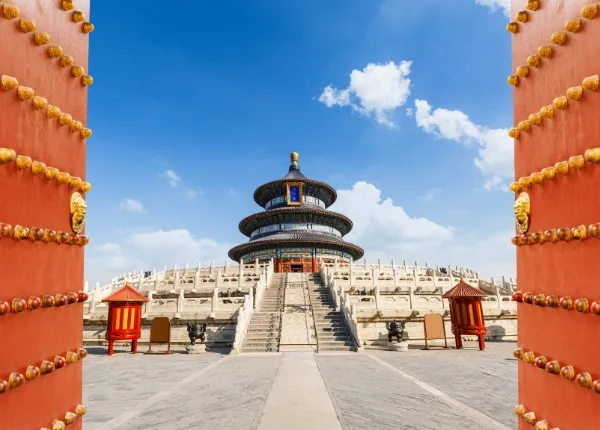



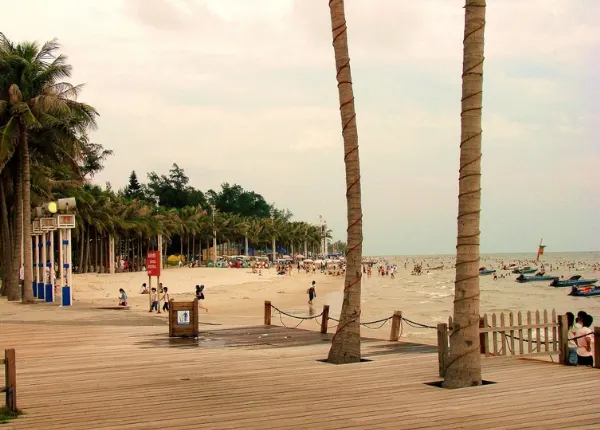







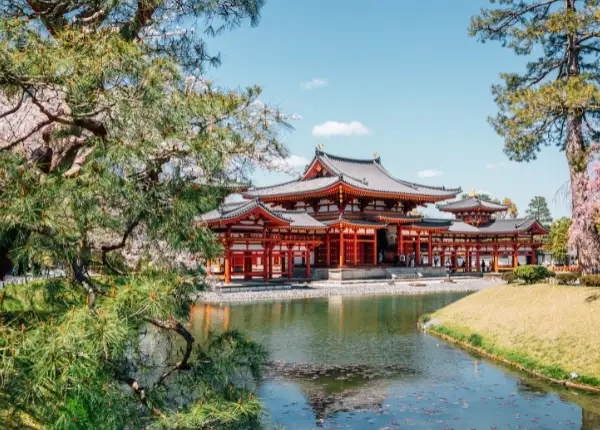



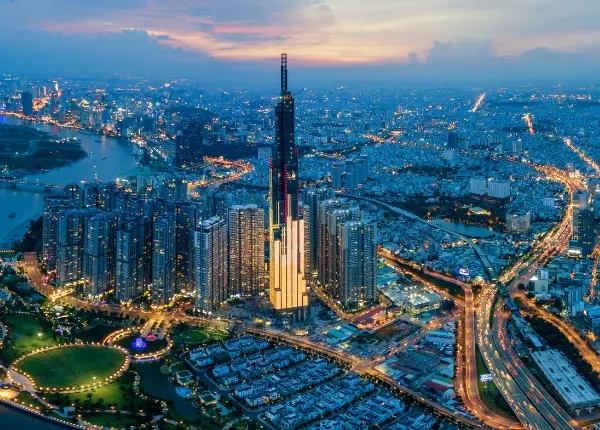

Around two thirds of the students we send to LTL choose Beijing, Shanghai, Tokyo or Seoul.
Source: LTL Language School

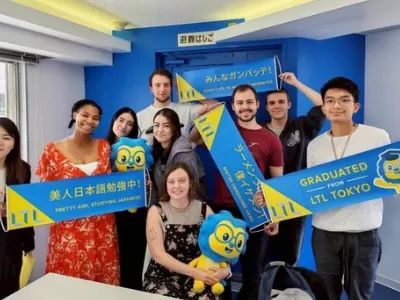
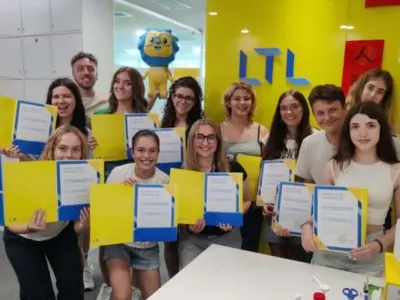
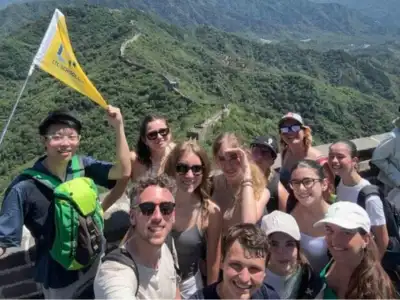
LTL in images

How ViveCampus can help you
A ViveCampus advisor helps you find the right program for you according to your goals, needs and budget.
Our advice is completely free and the process is transparent from start to finish. All payments are made directly to LTL.
When you apply through ViveCampus, you receive support from both the school and our team. We will assist you throughout the application process, the visa, the accommodation and the arrival.
You will also receive an international student card with thousands of discounts, along with other benefits that your educational consultant will explain.
Steps you should follow
1. Tell us your goal A short conversation about your needs, level, budget, dates and what you are looking for.
2. We clarify your doubts We answer all your questions about costs and requirements.
3. We handle the paperwork Application, letter of acceptance and the documents your visa or permit needs.
4. Ready to Start Accommodation confirmed, payments processed, and someone to call whenever you need a hand.


Frequently Asked Questions
What our advisors are asked most often before booking a course with LTL: which language, which city, how small the classes really are, which visa, and what a week actually costs.

Which LTL school should I choose?
Start from the language, and the list is already short. Chinese gives you ten schools, from Beijing and Shanghai to a beach in Beihai and traditional characters in Taipei. Japanese gives you Tokyo, Osaka, Kyoto and Fukuoka. Korean gives you Seoul or Jeonju, and Vietnamese gives you Hanoi or Saigon. Then pick on the life you want outside class: a big city with everything in it, which points to Beijing, Shanghai, Tokyo or Seoul, or a smaller place where the language follows you everywhere, which points to Chengde, Kunming, Jeonju or Kaohsiung. If the budget decides it, Beihai, Kunming, Chengde and Hanoi go furthest. Send us that one priority in the contact form and we will come back with two or three schools that fit it.
Do I need to speak any of the language before I start?
Not a word. LTL teaches all four languages from complete beginner, and a large share of students arrive able to say hello and nothing else. You take a short level test before you travel so that you are placed with people at your own stage, and the first week is built for exactly that starting point. Chinese and Japanese characters look daunting from the outside and are far more approachable once a teacher shows you how they are built, and Korean has an alphabet you can genuinely learn in a morning. Vietnamese uses the Latin alphabet, so reading comes almost immediately.
How small are the classes really?
LTL takes a maximum of 6 students per class, with an average of 3 across the group. That number decides how much of the lesson you spend speaking rather than listening. In a class of 3 you are answering every couple of minutes, your teacher hears every tone you produce, and a correction lands while you still remember what you said. It is the closest thing to a private lesson at a group price, and it is the single thing students mention most in their reviews.
What does a week at LTL cost?
Group classes start from USD 378 a week and one-to-one lessons from USD 763, with books and study materials included in both, so the figure you are quoted is the figure you pay. Accommodation is booked alongside: a homestay with meals from USD 402 a week, an en suite apartment from USD 372 and a studio apartment from USD 643. A full 18 week Semester in Beijing is USD 5,782. Longer bookings bring the weekly price down, and the city moves the total more than the course does, so send us the contact form with your dates and we will put course, accommodation and extras into one quote.
Should I book group classes or one-to-one?
Group classes give you a room of people learning the same thing at the same pace, which is where the friendships and the daily practice come from, and at 6 students maximum you still get plenty of airtime. One-to-one gives you the fastest progress and a course built entirely around your vocabulary and your timetable, which is what professionals and students with a deadline book. The combination our advisors are asked for most is group classes in the morning and a few private lessons a week on top, so you get the community and the targeted work at once. Tell us your goal and we will suggest the split.
Where will I live?
Around 8 in 10 LTL students choose a homestay with a local family, and we would recommend the same, especially for a first stay: breakfast and dinner with native speakers is several more hours of the language every day, and a host family will explain the city to you in a way no guidebook manages. It starts from USD 402 a week with meals. If you want your own space, an en suite apartment gives you a private bedroom and bathroom of about 25m² sharing with local residents from USD 372 a week, and a studio apartment adds a kitchen and complete privacy from USD 643. All of it is arranged by the school and booked with your course.
Will I need a visa?
It depends on your passport, the country and how long you are staying, and it is the first thing we settle with you. Short courses in Japan, South Korea, Taiwan, Singapore and Vietnam are usually possible on a visitor entry for most nationalities. China issues a study visa for stays beyond the visitor window, and longer courses in any of the six run on a student visa. LTL has been issuing invitation letters and enrolment documents for this since 2007, and sends originals by courier where the consulate asks for them. Send us your nationality and your dates and an advisor will map out the exact steps and the timing.
Can I take the HSK, JLPT or TOPIK with LTL?
Yes, and it is worth aiming for. The Exam Preparation programme is built around a diagnostic of where you are against the level you want, so the hours go on the papers and the sections that move your score, one-to-one or in a small group. These certificates carry real weight: HSK levels 1 to 9 are what Chinese universities and employers read, the JLPT is the standard in Japan, and the TOPIK underpins Korean university admission. Students on the Semester usually sit the exam at the end of the programme, so they come home with a level on paper as well as in conversation.
How old do I have to be?
The minimum is 16 for the year-round adult courses at every school. Younger students have their own programmes: the summer camps and winter camps take ages 7 to 17, grouped by age, with supervision, meals and a full activity programme, and the high school programme runs from 14 to 18 with a homestay and a legal guardian for the whole stay. The Gap Year in Asia starts at 18, and the Master Class is designed for students aged 50 and over. Tell us the age and we will point you at the right programme.
What happens on my first day?
You take your level test before you travel, so the first morning is a welcome session, a tour of the school and the practical business of wifi, timetables and your student account, and classes start the same day. LTL guarantees a meal with the students and the team on day one, which is the quickest way to meet the people you will spend the coming weeks with. If you booked the Survival Kit you were met at the airport with a transport card and a local SIM already in hand, so you arrive at the school with a working phone and a way home.
Can I study in more than one city, or more than one language?
Both, and plenty of students do. The Gap Year in Asia is built for it: you move between LTL schools and between countries as you go, on one booking with one team arranging it, so a year can take in Beijing, Taipei, Tokyo and Saigon. Students who finish one language and want the next keep the same account and the same contacts, which is why LTL sees so many people come back. Tell us how long you have and which languages interest you, and we will draw up a route and a running total.
What if my plans change after I book?
LTL publishes the answer openly: you can cancel up to 2 weeks before your start date and get your money back, minus bank fees and a USD 150 processing fee, and that applies everywhere except South Korea. Postponing to a later start date is usually simpler still, since group classes run every Monday of the year. Talk to us first either way, because we handle it with the school for you and there is often a better option than cancelling.
Can I start online before I travel?
Yes, and it is one of the smartest things you can do with the months before a trip. LTL teaches all 4 languages online, one-to-one or in a small group, with the same teachers who run the classrooms in Asia, on a timetable that fits your week and your time zone. Arriving with a base means you start in a higher class and get more out of every week on the ground, and the lessons carry over, so the teacher who prepares you can be the teacher who greets you. Plenty of students carry on online after they come home to hold on to what they built.
Is LTL accredited, and how long has it been teaching?
LTL opened in Beijing in September 2007 and has been teaching in Asia ever since, growing to 18 schools across China, Taiwan, Singapore, Japan, South Korea and Vietnam. Every course is taught by certified native teachers. LTL is approved by CSN, the Swedish Board of Student Finance, which is a government agency: a Swedish student can draw state study finance for an LTL course, and that approval means an outside body has reviewed the school. Books and study materials are included in the course price, so the quote you get is the amount you pay.
Don’t see your question here? Send it through the form below and a ViveCampus advisor will answer it directly. Asking costs nothing and commits you to nothing.
Source: ViveCampus
Fill out the form below. It only takes 2 minutes to start your journey!

Get a Quote
Fill out the form and a ViveCampus advisor will reach out by email or phone to go over schools, costs and start dates that fit your plan. Our help is free and you are under no obligation.

TODAY
