English Courses at ACE English Malta
ACE English Malta teaches English on one floor of the Bay Street Complex in St Julian’s, two minutes from St George’s Bay. It opened in 2013, calls itself Malta’s first boutique language school, and is licensed by the ELT Council and accredited by EAQUALS.


 1. Tell us your goal
 2. We help you find the right program
 3. We handle the paperwork
 4. Ready to Start
TL;DR: Quick summary
ACE English Malta is an English school in St Julian’s, the part of Malta where most of the island’s nightlife, restaurants and beaches are, and it is small on purpose: one site, one floor, and an average of fifteen students in a general class. It opened in 2013. Adults come for General English at twenty or thirty lessons a week, for Business English in classes capped at eight, for IELTS or Cambridge preparation, or for one-to-one lessons built around whatever they actually need. There are separate classes for students over 30, a junior programme, and family courses where parents and children study at the same time. The school is licensed by the ELT Council, Malta’s regulator for English language teaching, and accredited by EAQUALS.
Fourteen programmes at one school: General English at twenty or thirty lessons a week, a conversation-only course, two combination courses that add private lessons, dedicated classes for the over-30s, Business English capped at eight students, IELTS and Cambridge preparation, fully private one-to-one tuition, a junior programme, family courses, and closed group and Erasmus+ bookings.
Lessons are 45 minutes and general classes average fifteen students; Business English never goes above eight. Teaching runs from 8:00 in the morning to 18:45 in the evening across three timetable slots, so you can put your lessons in the morning and keep the afternoon for the sea, or the other way round. Levels run from A1 to C1 and you take the placement test online before you arrive.
- Average 15 per class, max 8 in Business
- Levels A1 to C1, seven levels in all
- One school in St Julian’s, on four levels
- ELT Council licensed, EAQUALS accredited
ViveCampus
ViveCampus is a benchmark study abroad agency with more than 17 years of experience and over 5,000 satisfied students around the world. We handle your enrolment at ACE English Malta for you, we walk you through every step, and our service costs you nothing.


Why do students choose ACE English Malta in 2026?
A small school on a small island where English is an official language. Here is what that adds up to, in things you can check before you book.

This is the thing that makes Malta different from every other destination on this site, and students underestimate it. English is not a foreign language here that people have learned well: it is one of the two official languages of the Republic of Malta, used in the courts, in government, in the banks and on every road sign. The country was British until 1964 and the language stayed. So the pharmacist, the bus driver and the person at the next table all speak it as a matter of course, and the practice you get outside the classroom is not a favour anybody is doing you. You will hear Maltese too, constantly, and the switch between the two mid-sentence is part of the place.
Plenty of schools call themselves small. ACE publishes what it means: an average of fifteen students in a general English class, held through 2025, and a hard maximum of eight in Business English. It teaches on one floor of one building rather than across a campus, which is why the staff know who you are by the second week. If you have been in a class of twenty-five somewhere cheaper, the difference is not the furniture, it is how many minutes an hour you personally spend speaking.
Teaching runs from 8:00 to 18:45 and the twenty-lesson course is offered in three slots: morning from 8:00 to 11:15, early afternoon from 11:45 to 15:00, or afternoon from 15:30 to 18:45. That is not an administrative detail on an island where the sea is warm from May to November. Take the morning slot and your afternoon is free for the beach, the boat or a job; take the afternoon and you can dive before class. Almost no school we work with gives you that choice, and most students who have it use it.
Malta is in the European Union, so students from an EU or EEA country need no visa at all and can work without one. For everybody else there is a route that does not exist in most of Europe: if your course runs longer than ninety days and your visa says so, you can apply for an employment licence after the first three months and then work up to twenty hours a week. It is not automatic and it is not instant, and we will tell you honestly what your nationality can expect before you book. But it exists, and on this list only Ireland and Malta offer it.
The school is on Level 4 of the Bay Street Complex at St George’s Bay, which means a shopping centre downstairs, cafés and supermarkets on the doorstep and a swimmable bay at the end of the road. St Julian’s is where Malta goes out: Paceville, the bars and the restaurants are walking distance, and the bus route along the coast to Sliema and Valletta passes the door. The building has wifi throughout, a twelve-station internet café, a small library, lounge areas and a large terrace.
Malta licenses this industry properly, which not every English-teaching country does. The ELT Council, under the Ministry for Education, licenses both the school and every individual teacher working in it, so a teacher in front of a class here has been checked by the state rather than only by the employer. On top of that ACE is accredited by EAQUALS, the European body that inspects language schools against a published standard, and is recognised as an Erasmus+ provider and for German Bildungsurlaub educational leave.
ACE English Malta opened in 2013 in St Julian’s and describes itself as Malta’s first boutique English language school. It is licensed by the ELT Council, the regulator under Malta’s Ministry for Education that licenses both schools and teachers, and is an accredited member of EAQUALS. It is an approved Erasmus+ provider and is recognised for German Bildungsurlaub educational leave. General English classes average fifteen students and Business English is capped at eight, across seven levels from A1 to C2.
Source: ACE English Malta

Malta, a country you can cross in an hour
Malta is an archipelago south of Sicily and closer to Africa than to most of Europe: three inhabited islands, half a million people, and a land area smaller than many cities. You can drive from one end to the other in about an hour, which means nothing is far and everything is reachable by bus. It has been Phoenician, Roman, Arab, Norman, Knight-ruled, French and British in turn, and all of it is still standing: Valletta is a UNESCO World Heritage city and the temples at Ġgantija are older than the pyramids.
For a student the practical case is the weather and the price. Malta gets around three hundred days of sun a year and the sea is warm enough to swim in from May into November, which is longer than anywhere else you would go to study English. Living costs sit well below Ireland or the United Kingdom. And because it is in the European Union and the Schengen area, an EU student needs nothing to come, and anybody already in Schengen can arrive without a further visa.

What English courses does ACE English Malta offer?
Fourteen programmes from one school. Lessons are 45 minutes, general classes average fifteen students, Business English is capped at eight, and levels run from A1 to C1 with a placement test taken online before you travel.

The course most students book: twenty lessons a week, fifteen hours, four 45-minute lessons a day covering grammar, vocabulary and the four skills at your level. What makes it worth looking at twice is the timetable, because you choose one of three slots: morning from 8:00 to 11:15, early afternoon from 11:45 to 15:00, or afternoon from 15:30 to 18:45. On an island where the sea is warm half the year, that decides what your trip is actually like. Classes average fifteen students and run from A1 to C1. The fee includes materials, the online placement test, a welcome pack and student card, wifi, monthly progress tests and a certificate at the end.
The same twenty general lessons with ten conversation lessons added, thirty in all, twenty-two and a half hours a week. Six lessons a day, either 8:00 to 13:15 or 13:30 to 18:45. The extra ten are the reason to take it: they are conversation rather than more grammar, which is where most students are actually weakest and which a twenty-lesson week does not have room for. This is what we recommend to anyone with a fixed number of weeks who wants to come home a level higher rather than a little more confident.
Ten lessons a week, an hour and a half a day, afternoons only, and nothing but speaking. It exists for two quite different people: the student who is already studying something else in the morning and wants the practice, and the one whose written English is far ahead of their spoken English and knows it. Available at every level. It is also the cheapest way to keep a long stay in Malta anchored to a classroom.
Twenty group lessons plus ten private one-to-one lessons a week. The group hours give you the mixed-nationality classroom and the people you will spend the month with; the private hours go wherever you want them, which in practice means the thing that is holding you back and that a class of fifteen cannot spend an hour on. If you have a specific weakness, an accent you want worked on or an exam or interview coming, this is the shape to book.
The same idea with twice the private tuition: twenty group lessons and twenty one-to-one lessons a week. It is the most intensive thing the school offers short of going fully private, and it suits a professional with a deadline more than a student with a summer. Twenty hours a year of somebody’s undivided attention is a different product from a class, and the progress reflects it.
The same syllabus, taught to a room of adults rather than to a summer crowd. ACE runs separate A1+, A2, B1 and B2 classes for students of 30 and over, at twenty, thirty or ten lessons a week, built around the English adults actually use: work, travel, and the ordinary business of dealing with people. The reason it matters is the complaint we hear most from older students who booked elsewhere, which is that they spent a month as the oldest person in the room by fifteen years. St Julian’s in August is a young place; this is how you study in it without being surrounded by teenagers.
Twenty, thirty or forty lessons a week in a class that never exceeds eight students, which is the number that makes this course work: you cannot practise a negotiation in a room of twenty. It covers meetings, negotiation, presentations, telephone and video calls and the written English of reports and email. The small cap also means the content bends towards the people in the room, so a group of engineers and a group of hotel managers do not get the same four weeks.
Business English with private lessons attached: twenty group lessons capped at eight students, plus ten or twenty one-to-one lessons a week. The private hours are where you bring your own material, the presentation you actually have to give or the interview you are preparing for, and work on it with a teacher rather than on a generic case study. This is the version companies book when they send somebody.
Thirty lessons a week aimed at the exam most universities and immigration systems outside the United States ask for: all four components, the timing, and the task types that catch out people who already speak good English. The school recommends at least six weeks, and that recommendation is worth taking seriously rather than booking two and hoping. You sit the exam at a test centre in Malta. Tell us the score you need and by when, and we will tell you whether the weeks you have are realistic before you pay for anything.
Thirty lessons a week preparing B2 First or C1 Advanced, taught on interactive whiteboards with past papers and mock exams under timed conditions. The reason to choose Cambridge over IELTS is that the certificate never expires, where an IELTS score is treated as stale after two years, so it is the better buy if you are building a CV rather than meeting one university deadline. Six weeks minimum, and the course is timed so that you sit the exam at the end of it.
Ten, twenty, thirty or forty private lessons a week with nobody else in the room, for adults of 18 and over. The whole course is built from what you say you need at the start, whether that is pronunciation, grammar you never fixed, the vocabulary of your industry or simply the confidence to speak without rehearsing first. It is the fastest way to move and the most expensive per hour, and it is the right answer more often than people expect: a fortnight of this can do more than two months of a general class.
For teenagers of 13 to 17, with lessons every morning and an organised leisure programme of sports, cultural visits and activities in the afternoons and evenings. Accommodation, meals and supervision are part of the package rather than extras, and Malta is a genuinely good place to send a teenager: it is small, it is safe, English is an official language and the beach is part of the week rather than a treat. Available as an individual booking or as a summer programme.
Parents and children studying at the same time, in the same building, at their own levels. Children from 3 to 12 take private lessons at ten or twenty a week, teenagers join the junior classes, and the adults take a general or business course, with the timetables lined up so the family is free together. Families of four or more can book a private flat rather than sharing an apartment. It is an unusual thing to be able to organise and it is the reason a lot of parents choose Malta over a language school that only takes adults.
Closed classes for a school group, a university group or a company, taught only to your own people at a level and on content agreed in advance, with the leisure programme built around what the group came for. ACE is an approved Erasmus+ provider, so for a school or institution in the European Union the funding route already exists, and it is recognised for German Bildungsurlaub, the statutory educational leave that lets an employee in Germany take paid time off to study. Tell us the group size and the dates and we will price it.

General English at twenty or thirty lessons is where most adults start, the combination courses are what people book when they have a specific weakness, and the family courses are the reason a lot of parents pick Malta at all
Source: ViveCampus

What should you know before enrolling at ACE English Malta?
The things worth settling before you book rather than after, taken from the school’s own course pages and student handbook and from what students ask us every week.
Costs, Dates, Application Process and other Considerations
Application Process - Send us the contact form and an advisor comes back with the order of operations for your country: whether your passport needs a visa for Malta at all, which documents you will need, and how long each stage takes. Malta is in the Schengen area, so for many nationalities this is short. You take the placement test online before you travel, which is what puts you in the right class on your first morning instead of losing one to assessment. For a student under 18, who is responsible for them, where they sleep and who meets the plane all go in writing before a booking is made. We fill in the forms and send them; you do not deal with the school directly unless you want to.

Dates of the Program - Everything starts on a Monday, all year. That is true of General English, the conversation course, both combination courses, Business English, the personalised one-to-one lessons and the 30+ classes. The exam courses also start on Mondays but want at least six weeks and are best timed so the course ends at an exam session, so those need planning further out. The junior summer programme runs to summer dates, and group bookings are arranged around the group. The school closes on Maltese public holidays, and the handbook lists them at the start of each year.

Length of the Program - One week upwards, with no fixed ceiling. A fortnight is the shortest stay we would call worthwhile, four to eight weeks is what most adults book, and the exam courses want six weeks minimum. If you are staying more than ninety days the visa situation changes and so does your right to work, so tell us early if you are thinking of a long stay: it affects the paperwork rather than the price. Give us your dates and we will tell you what fits inside them.

Costs - Malta is the cheapest of the English-speaking destinations we work with, and that is most of its appeal alongside the weather. Tuition, accommodation and living costs all sit well below Ireland or the United Kingdom, and the gap is wide enough to change how many weeks you can afford. What you pay depends on the course, the number of weeks, the accommodation and the season, with summer the most expensive. Use the form at the bottom of this page and the full quote arrives in writing, with tuition, materials, accommodation, transfers and whatever promotion is running, before you commit to anything. Our cost of studying abroad calculator will get you a figure first if you want to compare Malta against somewhere else before you talk to anybody.

Health Insurance - Students from the European Union should travel with the European Health Insurance Card, which covers state healthcare in Malta on the same terms as a Maltese resident. It does not cover repatriation or a course you miss, so we usually suggest a travel policy alongside it. Everybody else needs private medical and travel insurance for the whole stay, and it is required as part of a visa application rather than merely advisable. The school strongly recommends cover for every international student regardless of nationality, and we arrange it with the booking if you want us to.

Minimum Age - Sixteen for the adult courses, which is worth knowing because a 16-year-old is in a class with adults. The personalised one-to-one courses start at 18 for adults, but children from 3 and teenagers from 13 have their own private courses, and the junior programme takes 13 to 17 with supervision and a full activity programme. The 30+ classes run the other way: they are only for students of 30 and over. There is no upper limit anywhere.

Minimum English Level - None for General English, which runs across seven levels from A1 beginner through to C2 proficiency and takes complete beginners. The courses that ask for something are Business English and the exam classes, which want intermediate or better, for the sensible reason that specialist English taught to someone still assembling basic sentences does not work. You take the placement test online before travelling; if you have not, arrive at about 07:15 on the first morning and you will sit it then.

Visa Regulations - It depends on your passport, and for a lot of people the answer is pleasantly short. Malta is in the European Union and the Schengen area. EU and EEA students need nothing at all: arrive and enrol. For everybody else a course of up to ninety days is covered by a Schengen visa if your nationality needs one, and if you already hold a Schengen residence permit you can come without a further visa. A stay of more than ninety days means a national long-stay visa applied for before you travel and a residence permit once you are here. ACE issues the enrolment documents each route needs and we prepare the application with you, including translations, at no extra cost.

Working While You Study: - Yes, on a longer course, and Malta is one of only two countries on this site where that is true. EU and EEA students can work without any permission at all. Everybody else needs a course longer than ninety days with a visa that says so, and can then apply for an employment licence once the first ninety days are up, which allows twenty hours a week. It is an application rather than an entitlement, the licence takes time, and the first three months are study only, so nobody should arrive planning to cover their rent from week one. Tell us if working is part of the plan and we will be straight with you about what your nationality can expect.

Accommodation - Three options, all arranged by the school. The ACE apartments are the one most adults take: single or twin rooms in shared two, three or four-bedroom flats with a full kitchen, washing machine, linen and towels provided and a weekly clean, ten to thirty minutes’ walk away in St Julian’s, Swieqi, Balluta, Sliema or Pembroke. They are self-catering and they are where the social life is, since your flatmates are your classmates. A host family adds meals and a lot more English at the end of the day, and is what we recommend for a first stay or a younger student. Hotels can be booked for shorter or more comfortable stays, and families of four or more can take a private flat instead of sharing. There is a refundable deposit on the apartments. Write to us and we will put a number on each one for your dates.

Extra Curricular Activities - There is a programme every week and a good part of it is outdoors, because Malta. Boat parties and island cruises, beach volleyball at St George’s Bay, the Coral Lagoon walk, Mellieħa Bay, San Anton Gardens, Café del Mar, and trips around the island to Valletta, Mdina and the Blue Grotto, plus the ferry across to Gozo and Comino for the Blue Lagoon. The school also runs free conversation and grammar classes and a weekly student party, has gym partnerships and discounted scuba diving, and can arrange car or bicycle hire. Some activities are included and the bigger excursions have a charge; we will tell you which is which for your dates.

Airport Pickup - Malta International Airport is about twenty-five minutes from St Julian’s by road, which on an island this size means it is close to everything. ACE arranges transfers as part of the booking, and for students under 18 they are included rather than optional. Malta is well served by low-cost airlines from most of Europe, which is part of why it is cheap to get to. If you would rather make your own way, the airport bus and the taxis are straightforward, and we will send you the route with your confirmation.

First day of classes - The school opens at 07:30. If you took the placement test online you go straight into the welcome, the tour of the building and your class; if you did not, arrive at about 07:15 and you will sit it first. You will be given your timetable, your student card and your welcome pack, shown the internet café, the library, the lounge areas and the terrace, and told which of the three timetable slots your class runs in. Progress tests are monthly, and you leave with a certificate provided your attendance holds up, which the school sets at 80% for its official certificate.

Keep in mind that the biggest expense is usually not the course itself, but the living costs. So, before choosing the cheapest school, consider all factors carefully
Source: ViveCampus

One floor in St Julian’s, two minutes from the bay
ACE teaches on Level 4 of the Bay Street Complex at St George’s Bay, which puts a shopping centre downstairs, cafés, restaurants and a supermarket on the doorstep, and a swimmable bay at the end of the road. The school has wifi throughout, a twelve-station internet café, a small library, chill-out and lounge areas and a large terrace, and the classrooms have interactive media boards. The coast bus to Sliema and Valletta stops outside.
Location: Bay Street Complex, Level 4, St George’s Bay, St Julian’s STJ 3311, Malta
About Malta
Malta is an archipelago in the middle of the Mediterranean, south of Sicily and closer to North Africa than to mainland Europe, with about half a million people living on three inhabited islands in a country smaller than many cities. You can cross it in an hour, so nothing is more than a bus ride away. Everybody who has wanted the middle of the Mediterranean has owned it in turn, and all of them left something: Phoenician and Roman remains, the megalithic temples at Ġgantija which are older than the pyramids at Giza, the Arab roots of the Maltese language, the fortified city the Knights of St John built at Valletta, and the British who ran it until 1964 and left behind red post boxes, driving on the left and the English language. Valletta is a UNESCO World Heritage site and one of the most concentrated historic cities in Europe. St Julian’s, where the school is, is the modern counterweight: bars, restaurants, hotels and the bays people actually swim in.
The weather in Malta
This is a large part of why students choose Malta and it is worth being specific about. The island gets around three hundred days of sunshine a year. Summer, from June to September, is hot and dry and regularly sits in the low thirties, with sea temperatures that stay swimmable from May into November, which is a longer season than anywhere else you would go to study English. Spring and autumn are the best times to be here: warm, bright and far less crowded, with the sea still warm in October. Winter is mild rather than cold, around fifteen degrees in January, wetter than the rest of the year and still sunny most days. Bring sun protection whatever month you come, and something warm for winter evenings, because Maltese buildings are built to keep heat out rather than in.
Malta in images


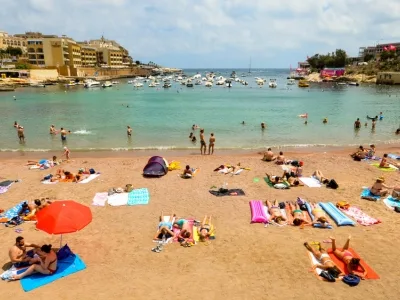
Limestone the colour of honey, water that is genuinely that blue, a walled city built by knights and a bay at the end of the school’s road. Malta gives a student a lot to do after class.
Source: Visit Malta

What do students say about studying at ACE English Malta?
Two students who have already done it, in their own words. One came from Brazil and one from South Korea, and both land on the same thing: the teachers, and the people they met in the classroom.

Studying at ACE English Malta was one of the best experiences of my life! I loved the teachers, the teaching style, and the experiences shared with people from different countries in the classroom.

ACE was the best choice for me. There are fun activity leaders, kind staff and friendly students. Thank you to everyone, especially to my amazing teacher Justin.
Student testimonials from ACE English Malta share students’ experiences at the language school.
Source: ViveCampus

ACE English Malta in images


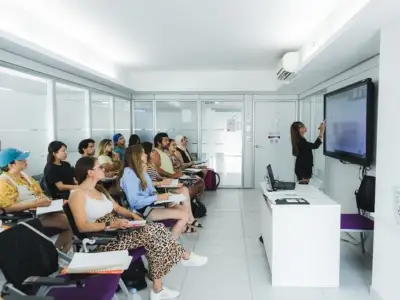

How ViveCampus can help you
A ViveCampus advisor helps you find the right program for you according your goals, needs and budget.
Our advice is completely free and the process is transparent from start to finish. All payments are made directly to ACE English Malta.
When you apply through ViveCampus, you receive support from both the school and our team. We will assist you throughout the application process, the visa, the accommodation and the arrival.
You will also receive an international student card with thousands of discounts, along with other benefits that your educational consultant will explain.
Steps you should follow
1. Tell us your goal A short conversation about your needs, level, budget, dates and what you are looking for.
2. We clarify your doubts We answer all your questions about costs and requirements.
3. We handle the paperwork Application, letter of acceptance and the documents your visa or permit needs.
4. Ready to Start Accommodation confirmed, payments processed, and someone to call if anything goes wrong.


Frequently Asked Questions
What our advisors are asked most often before booking a course at ACE English Malta: visas and working, how good the English really is on the island, levels and exams, the weather, and what it costs against the alternatives.

Do I need a visa to study in Malta?
It depends on your passport, and for many people the answer is short. Malta is in the European Union and the Schengen area, so EU and EEA students need nothing: arrive and enrol. For everybody else a course of up to ninety days falls under the Schengen rules, which means a Schengen visa if your nationality requires one and nothing at all if it does not, and anyone already holding a Schengen residence permit can simply travel. Longer than ninety days means a national long-stay visa applied for before you leave and a residence permit after you arrive. ACE issues the enrolment documents each route needs, and we prepare the application and the translations with you at no extra charge.
How much does ACE English Malta cost?
Less than the equivalent course in Ireland or the United Kingdom, which is most of why students look at Malta in the first place. Tuition, accommodation and day-to-day living are all cheaper, and the difference is usually big enough to buy you extra weeks rather than just a small saving. The final figure moves with the course, the number of weeks, the accommodation and the season, and summer is the expensive time. Send us the contact form and the full quote comes back in writing: tuition, materials, accommodation, transfers and any promotion running for your dates. Our cost of studying abroad calculator will get you close first. What we do is not charged for.
Do people in Malta really speak English?
Yes, and not in the way that phrase usually means. English is one of the two official languages of the Republic of Malta, alongside Maltese. It is the language of the courts, of government, of business and of most university teaching, and it is on every road sign. Malta was a British colony until 1964 and the language stayed when the British left. So this is not a country where a few people in the tourist trade have learned some English: the pharmacist and the bus driver use it daily. For a student that means the practice outside the classroom is real, which is the single biggest difference between improving on a language trip and not.
How many students are in a class, and how long is a lesson?
A general English class averages fifteen students, a figure the school publishes and held through 2025, and Business English never exceeds eight. Lessons are 45 minutes, which is the standard across Malta, so twenty lessons a week is fifteen hours of teaching and thirty lessons is twenty-two and a half. It is worth doing that arithmetic when you compare quotes, because a school advertising "30 lessons" and one advertising "30 hours" are not offering the same thing, and the difference over a month is substantial.
Can I work while I study in Malta?
On a long enough course, yes, and Malta is one of only two destinations on this site where that is true. If you hold an EU or EEA passport you can work with no permission at all. If you do not, you need a course longer than ninety days with a visa that reflects it, and you can then apply for an employment licence once the first ninety days have passed, which allows up to twenty hours a week. Two honest cautions: it is an application and not a right, and the first three months are study only. So budget as though you are not working, and treat a job as something that may improve the second half of a long stay. Tell us early if this matters and we will be specific about your nationality.
What level of English do I need to start?
None for General English. ACE teaches seven levels from A1 beginner through to C2 proficiency and takes complete beginners, with the group classes running A1 to C1. The courses that do have an entry level are Business English and the IELTS and Cambridge classes, all of which want intermediate or better, because specialist English delivered to someone still building basic sentences is wasted. You take the placement test online before you travel; if you have not done it, come in at about 07:15 on the first morning and you will sit it before class.
Which timetable should I choose?
This is a real decision at ACE rather than an administrative one, because the twenty-lesson course runs in three slots: 8:00 to 11:15, 11:45 to 15:00, or 15:30 to 18:45. The morning slot is what most students take and it is the right default: you finish before the hottest part of the day with the whole afternoon for the beach, an excursion or a job. The afternoon slot suits late risers and anyone who wants to dive or swim in the morning when the bays are empty. The early afternoon slot is the quietest and often the one with places left in peak summer. Tell us how you want the day to look and we will book accordingly.
When can I start, and how long should I stay?
Courses start any Monday of the year, so the date is mostly yours to choose. Length is the more interesting question. A single week is a holiday with lessons in it; two weeks is the shortest stay that produces anything; four to eight weeks is what most adults book and where people notice a real change; and the exam courses want at least six weeks, which the school says plainly and which is worth believing. Beyond ninety days the visa situation and your right to work both change, so a long stay needs planning rather than extending on the spot. Tell us your dates and we will say what genuinely fits.
What accommodation is available?
Shared apartments, a host family, or a hotel, all arranged by the school. The ACE apartments are what most adults take: a single or twin room in a two, three or four-bedroom flat with a proper kitchen, washing machine, linen and towels and a weekly clean, ten to thirty minutes on foot in St Julian’s, Swieqi, Balluta, Sliema or Pembroke. They are self-catering, and because your flatmates are your classmates they are where the social side of the trip happens. A host family includes meals and gives you several more hours of English a day, which is what we recommend for a first stay or a younger student. Hotels suit shorter or more comfortable stays, and a family of four or more can book a private flat. Send us the form and we will price each one for your dates.
Where exactly is the school?
On Level 4 of the Bay Street Complex at St George’s Bay, in St Julian’s. That means a shopping centre in the same building, cafés, restaurants and a supermarket within a minute, and a bay you can swim in at the end of the road. St Julian’s is the part of Malta that goes out in the evening, with Paceville, the bars and the restaurants all walking distance, and the coastal bus to Sliema and Valletta stops outside the door. The school has wifi throughout, a twelve-station internet café, a mini library, lounge areas, a large terrace and interactive media boards in the classrooms.
Is Malta a good place to study, or just a good place for a holiday?
Both, and it is fair to ask. The case for it as a place to study is genuine: English is an official language, so the practice outside class is real; the school is licensed by the state regulator and accredited by EAQUALS; and classes average fifteen. The case against is the obvious one, which is that St Julian’s in August is full of young people on holiday and it is entirely possible to spend a month there speaking your own language on a beach. That is a choice rather than a feature of the place. If you are worried about it, take the thirty-lesson course rather than the twenty, pick a host family over a shared flat, and consider coming in spring or autumn instead of August.
Is ACE English Malta accredited?
Yes, and Malta regulates this industry more tightly than most countries do. The school is licensed by the ELT Council, which sits under Malta’s Ministry for Education and licenses not only schools but every individual teacher working in one, so the person in front of your class has been checked by the state and not just hired by the school. On top of that ACE is an accredited member of EAQUALS, the European body that inspects language schools against a published standard and can withdraw accreditation. It is also an approved Erasmus+ provider and is recognised for German Bildungsurlaub educational leave.
Why Malta and not Ireland or England?
Price and weather, mostly, and they are not small things. Malta costs substantially less than Ireland or the United Kingdom across tuition, accommodation and daily life, and it has around three hundred days of sun with a sea that is swimmable from May into November. It is in the European Union and Schengen, so for many students the paperwork is lighter, and a long course can carry the right to work in the same way an Irish one does. The honest trade-off is the accent and the environment: you will hear excellent English every day, but it is a Mediterranean island with a lot of holidaymakers, not Dublin or Manchester. If your goal is a specific accent or a British university, look at the other two. If it is fluency, sunshine and a budget that stretches, Malta wins on every count.
How do I apply to ACE English Malta from my country?
Start with the form on this page. A ViveCampus advisor replies in your language with the part that depends on where you live: whether your passport needs a visa for Malta at all, which documents to gather, how the ninety-day threshold affects you if you want a long stay or a job, what the total comes to and which start dates still have places. If the student is under 18 we also put the supervision, the accommodation and the transfers in writing so a parent can read them before deciding. You do not need to arrive at that conversation prepared, and none of it is charged to you.
Don’t see your question here? Send it through the form below and a ViveCampus advisor will answer it directly. Asking costs nothing and commits you to nothing.
Source: ViveCampus
Fill out the form below. It only takes 2 minutes to start your journey!

Get a Quote
Fill out the form and a ViveCampus advisor will reach out by email or phone to go over schools, costs and start dates that fit your plan. Our help is free and you are under no obligation.

TODAY
