Japanese Courses in Japan (2026)
Japanese courses in Japan let you learn the language where you hear it all day, from the train announcements to the ramen counter. We work with Japanese schools in Tokyo, Osaka, Kyoto, Fukuoka and Kobe, so you can pick the big capital, the street food city, the city of temples, the relaxed south or the port city by the mountains. On many passports you can stay up to 90 days with no visa for a short course, and a Working Holiday visa opens up longer stays. Request a free quote on this page and a ViveCampus advisor will help you choose the city and the school that fit your goals.


 1. Tell us your goal
 2. We shortlist schools
 3. We handle the paperwork
 4. Ready to Start
TL;DR: Quick summary
Japan gives you Japanese classes in 5 very different cities and a whole country to explore by train. You study in the morning, practise in shops, cafés and stations after class, and spend your weekends at Mt. Fuji, Universal Studios Japan or the temples of Kyoto.
- Up to 90 days with no visa on many passports, enough for a short course
- Longer stays on a Working Holiday visa, if your nationality has one
- Courses from 1 week, and complete beginners are welcome
- Partner schools in Tokyo, Osaka, Kyoto, Fukuoka and Kobe
- Free ISIC student card when you apply through ViveCampus
ViveCampus
ViveCampus has helped students study abroad for 15+ years, working with 5,000+ students so far. We help you choose a program, apply to the school, and prepare for arrival: entry paperwork, housing, and what your first week will look like. Every payment goes straight to the school, and our help costs you nothing. We match the city, the school and the course length to what you want from your time in Japan.

Where to study Japanese in Japan
We work with Japanese schools in 5 cities, each with its own lifestyle. Choose the giant capital, the food city, the city of temples, the relaxed south or the port city, and click a city to see its full page.

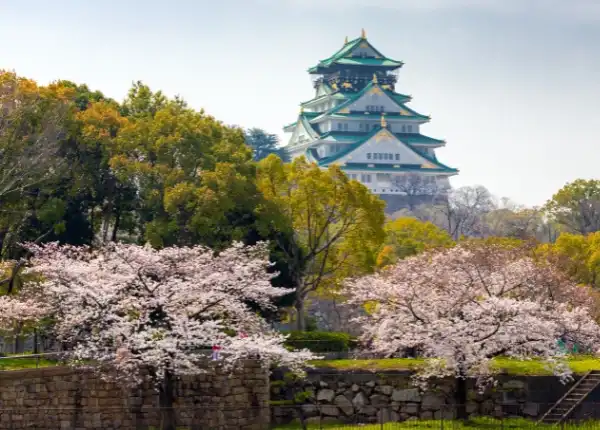
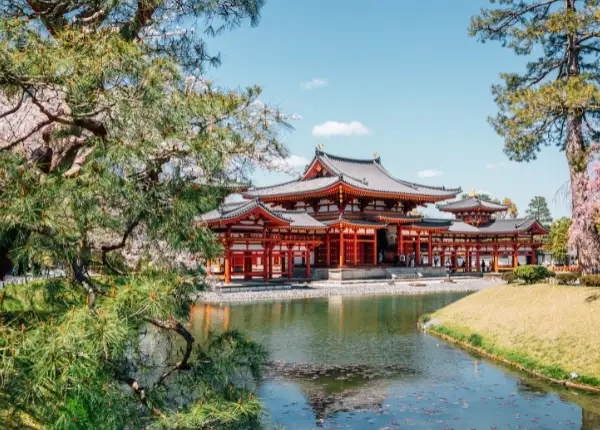

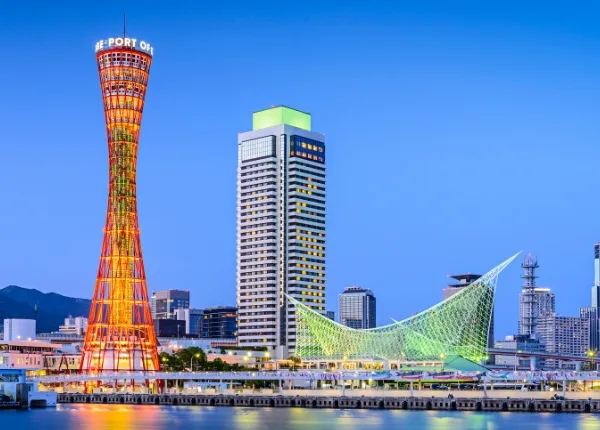

Visa-free entry works the same in every city: up to 90 days on many passports.
Source: ViveCampus

Which Japanese schools in Japan should you consider?
These are the Japanese schools we work with in Japan, each with its own style and strengths. Click any school to see its full page, courses and location.
- LTL Language School
LTL teaches Japanese in 4 Japanese cities, in small groups, one-to-one or a mix of both. Native teachers take you from complete beginner upwards, with 4 hours of class every weekday. Courses run from 2 weeks, and homestays include breakfast and dinner.
- Lexis Japan
Lexis Japan fills the whole 9th floor of a landmark building in central Kobe, a 2 minute walk from Motomachi Station. Classes average 6 students across 6 levels, beginners start any Monday from 1 week, and adults join from 16.



Some language schools offer exclusive discounts when you apply through ViveCampus. Contact us for more details.
Source: ViveCampus

Why do students choose Japan?
A country of 5 study cities, each with its own personality, linked by fast trains that run right on time. It suits students who want real progress in Japanese and a life full of things to do.

In Japan, every menu, every shop and every train announcement is part of your course. You learn a word in class in the morning and use it at the café that afternoon, so your Japanese grows fast outside the classroom too.
On many passports you can stay up to 90 days with no visa, and a short course is part of what that stay allows. For a longer stay, a Working Holiday visa lets you study and work, for the nationalities that have one.
Pick the giant capital in Tokyo, the street food and neon of Osaka, the temples of Kyoto, the easygoing south in Fukuoka or the port city of Kobe. Each one has Japanese schools we know well.
Ride Mario Kart at Super Nintendo World and walk through the Wizarding World of Harry Potter at Universal Studios Japan. Then cross Shibuya Crossing with 1,000 other people at a time and see the neon of Dotonbori light up at night.
Sushi, ramen, street food and cafés on every corner. In Fukuoka you squeeze into a yatai food stall with 10 new neighbours, and in Osaka the restaurants of Dotonbori stay busy all year.
The shinkansen, Japan’s bullet train, gives you speed and comfort, and timetables run like clockwork. From Tokyo, Lake Kawaguchi and its views of Mt. Fuji are under 2 hours away by bus from Shinjuku.
On many passports you can stay in Japan for up to 90 days with no visa.

Japan: The Essentials
The essentials for your first days in Japan, all in one place.



How do you choose the right Japanese program in Japan?
These recommendations come from helping students plan their Japanese courses in Japan. They draw on our educational consultants, our partner schools, and above all the students who have lived the experience.
Recommendations and Considerations

Choosing your City and School - Start with the life you want around your classes. Tokyo is the giant capital, with a new neighbourhood to explore every weekend. Osaka is the food and nightlife city. Kyoto gives you temples, shrines and old streets. Fukuoka is relaxed and compact, and Kobe sits between the mountains and the sea. Our consultants then match you with the school that fits you best.

Choosing the Program - Small group classes build all your skills and introduce you to classmates from around the world. One-to-one lessons go at your own pace, and you can mix both. Some schools also run JLPT exam preparation and longer semester courses. Choose the one that matches the goal you have in mind.

Length of the Program - Courses start from just 1 week, so even a short holiday can include real Japanese classes. On visa-free entry you can plan a course of up to 90 days on many passports, about 12 weeks. For a longer stay, a Working Holiday visa lets you keep going for months. Every extra week adds more speaking, more friends and more of Japan.

Minimum Age - Each school sets its own entry age, and adult courses can start from 16. Teenagers have summer programmes and junior camps of their own. Tell us your age, or your son or daughter’s, and we will suggest the right school.
Minimum Japanese Level - You can start from zero. Complete beginners are welcome, and you can apply whenever you are ready. A short level test places you in the class that fits you, so from your very first day you learn at the right pace.

Visa Regulations - Which document you need depends on your passport and how long you want to stay. On many passports you can enter Japan with no visa and stay up to 90 days, and a short stay can include a course. If your passport needs a visa for a short stay, your letter of acceptance from the school helps you apply for one. For longer stays, a Working Holiday visa is open to certain nationalities, so check whether yours is one of them. We prepare the paperwork with you.
| How long you stay | Document usually needed | Cost | Work |
|---|---|---|---|
| Up to 90 days | No visa, for visa-exempt passports | Free | Study and travel time |
| Up to 90 days | Short-term visa, for other passports, with your letter of acceptance | Depends on your country | Study and travel time |
| Longer stays | Working Holiday visa, for certain nationalities | Depends on your country | Study and work |

Working While You Study - On a Working Holiday visa you can study Japanese and work in Japan, and every shift becomes extra practice. Each prefecture sets its own minimum wage: around JPY 1,280 an hour in Tokyo, 1,231 in Osaka, 1,180 in Kyoto, 1,172 in Hyogo, where Kobe is, and 1,114 in Fukuoka. On visa-free entry, your time is for classes and for exploring the country.

Accommodation - Homestay gives you a private room with a local family, with breakfast and dinner included. It is a wonderful way to settle in and practise Japanese at the table. Student houses put you among other students, and student apartments give you your own space once you know the city. Contact us and we will arrange the option that suits you.

Getting Around and Daily Life - Trains are the easiest way to get around, and they run right on time. A rechargeable IC card takes you through the gates, onto buses and even pays at convenience stores. Carry some cash too, because Japan still loves it. For help in English, save the Japan Visitor Hotline in your phone. It answers 24 hours a day, in English too.

Costs Involved - Your budget covers tuition, accommodation, transport and daily life. On visa-free entry you pay no visa fee, so more of your budget goes on classes and trips. Tuition and accommodation vary by city, school and season. Ask us for a current quote with all the numbers in one place.
| What you pay for | Typical cost (JPY) | Worth knowing |
|---|---|---|
| Tuition | Varies by school and course | Longer bookings usually lower the weekly rate; ask us for a current quote |
| Homestay | Varies by city and season | Includes breakfast and dinner, which makes budgeting simple |
| Public transport | Around 220 a ride | A rechargeable IC card makes every trip quick |
| Lunch out | Around 1,000 | Casual restaurants make eating out easy on a student budget |
| Visa-free entry | No visa needed | Up to 90 days on many passports |
| Working Holiday visa | Depends on your country | For longer stays, for certain nationalities |
| Part-time earnings | Around 1,280 an hour in Tokyo | The Tokyo minimum wage, on a Working Holiday visa |

Accommodation and daily life usually make up a big part of your budget. So we help you look at the whole picture when you compare cities and schools.
Source: ViveCampus

Weather in Japan
Japan has 4 clear seasons: cherry blossoms in spring, hot summers full of festivals, warm and colourful autumns, and cool, dry winters. The table shows Tokyo, where afternoons reach around 10 °C even in January.
| Month | Season | Min °C | Max °C |
|---|---|---|---|
| January | Winter | 1 | 10 |
| February | Winter | 2 | 11 |
| March | Spring | 5 | 14 |
| April | Spring | 10 | 19 |
| May | Spring | 15 | 24 |
| June | Summer | 19 | 26 |
| July | Summer | 22 | 30 |
| August | Summer | 24 | 31 |
| September | Autumn | 20 | 28 |
| October | Autumn | 15 | 22 |
| November | Autumn | 9 | 17 |
| December | Winter | 4 | 12 |
In April and October, Tokyo afternoons reach around 19 to 22 °C. Perfect weather for exploring the city on foot after class.
Source: Japan Meteorological Agency, Tokyo climate normals, 1991 to 2020

Cost of living in Japan
Here is what everyday life costs in Japan, so you can plan your budget with confidence. These are typical prices across Japan, in Japanese yen, for the things you buy in a normal week.
| What you buy | Typical price (JPY) |
|---|---|
| Cappuccino in a café | around 500 |
| Lunch at an inexpensive restaurant | around 1,000 |
| Fast-food combo meal | around 800 |
| Loaf of bread (500 g) | around 230 |
| Milk (1 litre) | around 230 |
| A dozen eggs | around 325 |
| Rice (1 kg) | around 760 |
| Chicken fillets (1 kg) | around 980 |
| Apples (1 kg) | around 750 |
| Bananas (1 kg) | around 370 |
| One-way train or bus ticket | around 220 |
| Mobile phone plan with data, per month | around 3,900 |
| Gym membership, per month | around 8,300 |
| Cinema ticket | around 2,000 |
Lunch at a casual restaurant costs around JPY 1,000, so eating out with your classmates fits easily into a student budget.

Things to do in Japan
Between classes, on weekends and in your holidays, Japan is made for exploring with friends: famous crossings, theme parks, neon streets, Mt. Fuji and street food after dark. These are favourites with international students.
Main attractions
Events through the year
Japan celebrates all year round, in every city. Here is when each big event comes around, so you can plan your stay to catch your favourites. The organisers publish the exact dates each year.
| Event | Time of year | What to expect |
|---|---|---|
| Kobe Luminarie, Kobe | Late January to early February | Light art that fills central Kobe on winter evenings |
| Cherry blossom season | Late March to early April in Tokyo, Osaka and Kyoto | Picnics under the blossoms in parks across the country, the most famous season in Japan |
| Hakata Dontaku, Fukuoka | Early May | Parades of dancers, bands and lit-up floats, about 30 stages around the city and a dance you can join |
| Gion Matsuri, Kyoto | All of July | Kyoto’s summer festival, with giant floats parading through the centre and lantern-lit evenings |
| Hakata Gion Yamakasa, Fukuoka | First half of July | Teams race huge floats through the streets at dawn on the final morning |
| Tenjin Matsuri, Osaka | Late July | About 100 boats on the river and fireworks over Osaka |
| Sumida River Fireworks, Tokyo | Late July | One of Tokyo’s biggest fireworks festivals, on a Saturday evening by the river |
Many of Japan’s favourite days out are a train ride from your city, so every weekend can become an adventure with your classmates.
Source: Japan National Tourism Organization, the official city visitor sites and each attraction’s own site

Japan in images



ViveCampus can help you
A ViveCampus advisor reviews your needs, age, goals, Japanese level, budget and start date. Then we narrow Japan’s cities and schools down to the few that fit you best.
Our advice is completely free, and the process is 100% transparent. You make all payments directly to your chosen school.
When you apply through ViveCampus, you receive support from both the school and our team. We will guide you through the application, the entry requirements and your arrival in Japan.
Students who apply to a Japanese program through ViveCampus also receive the ISIC International Student Identity Card, recognised worldwide. It gives you great discounts across Japan on travel, attractions, food and shopping.
Steps you should follow
1. Tell us your goal A short conversation about your needs, level, budget, dates and what you are looking for.
2. We shortlist schools You get a written comparison of real options, with total costs.
3. We handle the paperwork Application, letter of acceptance and the documents your entry needs.
4. Ready to Start Accommodation confirmed, payments processed, and someone to call whenever you need a hand.

Frequently Asked Questions
The questions students ask our advisors most often before booking a Japanese course in Japan, covering visas, work, costs, cities, schools and daily life. Wherever a rule applies, we point you to the official source.

Do I need a visa to study Japanese in Japan?
On many passports, no. You can enter Japan with no visa and stay up to 90 days, and a short stay can include a course. Some nationalities get a shorter or longer stay, so check yours. If your passport needs a visa, your letter of acceptance from the school helps you apply for a short-term one. For a longer stay, a Working Holiday visa is open to certain nationalities. We prepare the paperwork with you.
Can I work while I study Japanese in Japan?
Yes, on a Working Holiday visa, if your nationality has one. It lets you study and work, and every shift is extra Japanese practice. Each prefecture sets its own minimum wage, around JPY 1,280 an hour in Tokyo and 1,231 in Osaka. On visa-free entry, your time is for classes and for travelling around Japan.
How long can I study Japanese in Japan?
Courses start from just 1 week. On visa-free entry you can plan up to 90 days on many passports, about 12 weeks of classes. With a Working Holiday visa you can stay much longer and keep moving up through the levels. Tell us your dates and we will plan the course around them.
Do I need to speak Japanese before I start?
Not at all. Our partner schools welcome complete beginners, and you can apply whenever you are ready. A short level test places you in the class that fits you from your first day. From your first week, you will be ordering at cafés and asking for directions in Japanese.
How much does it cost to study Japanese in Japan?
Your budget depends on the city, the school, the course length and how you choose to live. Tuition and accommodation vary by school and season, so we give you a personalised quote with all the numbers together. Daily life is easy to plan: lunch at a casual restaurant costs around JPY 1,000 and a train or bus ride around JPY 220. Send us the contact form for your quote.
Which city in Japan should I choose?
Choose the life you want around your classes. Tokyo is the giant capital, with endless neighbourhoods to explore. Osaka is the food and nightlife city, with Universal Studios Japan close by. Kyoto gives you temples and shrines on every walk. Fukuoka is relaxed, with yatai food stalls at night. Kobe gives you the sea, the mountains and Osaka 20 minutes away. Tell us what you love and we will help you choose.
Which Japanese schools do you work with in Japan?
Every school we work with in Japan is on this page, each with its own city, style and strengths. Tell us what you love, your level and how long you can stay, and we will help you choose the one that fits you best.
How old do I need to be to study Japanese in Japan?
Each school sets its own entry age, and adult courses can start from 16. Teenagers can join summer programmes and junior camps made for their age. If you are under 18, the school makes sure your accommodation suits your age, usually a homestay.
Where will I live while I study?
Many students begin in a homestay, with a private room and breakfast and dinner included. It is a wonderful way to settle in and practise Japanese every day. Student houses and student apartments are also options, depending on the city and the school. Contact us and we will arrange the option that suits you.
How do I get around in Japan?
By train, mostly. Trains in Japan run right on time, and a rechargeable IC card takes you through the gates, onto buses and even pays at convenience stores. The shinkansen, the bullet train, links the big cities, so a weekend trip is always easy to plan.
What is the ISIC card and how do I get it?
The ISIC International Student Identity Card is recognised worldwide and gives you discounts on travel, attractions, food and shopping. Students who apply to a Japanese program in Japan through ViveCampus receive it. It is a great way to make your budget go further while you explore the country.
Why apply through ViveCampus?
Our advisors know every Japanese city and school on this page, and our help is 100% free for you. We compare your options in writing, prepare the entry paperwork with you and stay with you until you arrive. You pay the school directly, and some schools offer exclusive promotions when you apply through ViveCampus.
Don’t see your question here? Send it through the form below and a ViveCampus advisor will answer it directly. Asking costs nothing and commits you to nothing.
Source: ViveCampus
Fill out the form below. It only takes 2 minutes to start your journey!

Get a Quote
Fill out the form and a ViveCampus advisor will reach out by email or phone. Together you go over the cities, schools, costs and start dates that fit your plan. Our service is 100% free for you.

TODAY
