Japanese Courses in Osaka, Japan (2026)
Japanese courses in Osaka put you in one of Japan’s great food cities, a city of about 2.8 million people who love to eat, laugh and stay out late. You learn in class in the morning and use your Japanese at street food stalls, in markets and under the neon of Dotonbori in the afternoon. Many passports can study here for up to 90 days with no visa, and a Working Holiday visa opens up longer stays. Request a free quote on this page and a ViveCampus advisor will help you plan your Japanese course in Osaka around your goals and your budget.


 1. Tell us your goal
 2. We shortlist schools
 3. We handle the paperwork
 4. Ready to Start
TL;DR: Quick summary
Osaka is a big, friendly city built around food, nightlife and fun. You study Japanese in small classes, then practise it every day in markets, cafés and shopping streets. At weekends you have Universal Studios Japan, the waterfall at Minoh and day trips to Kyoto and Kobe.
- Many passports can study in Japan for up to 90 days with no visa
- Longer stays on a Working Holiday visa, for the nationalities that have one
- Osaka’s minimum wage is around JPY 1,230 an hour for Working Holiday visa holders
- Classes for every level, including complete beginners
- Free ISIC student card when you apply through ViveCampus
ViveCampus
ViveCampus has helped students study abroad for 15+ years, working with 5,000+ students so far. We help you choose a program, apply to the school, and prepare for arrival: entry paperwork, housing, and what your first week will look like. Every payment goes straight to the school, and our help costs you nothing. We match the course, the length and your accommodation to what you want from your time in Osaka.

Which Japanese language schools in Osaka should you consider?
These are the Japanese language schools we work with in Osaka, each with its own size, style and strengths. Click any school to see its full page, courses and location.
- LTL Language School
LTL teaches Japanese in small groups and 1-on-1, from complete beginner upwards, with 4 hours of class every weekday. Every Saturday the group heads out on a day trip around Osaka, and homestays come with your own room.


Some language schools offer exclusive discounts when you apply through ViveCampus. Contact us for more details.
Source: ViveCampus

Why do students choose Osaka?
Osaka is a city that makes learning Japanese fun. It suits students who want real progress in the language and a life full of food, friends and things to do.

Many passports can stay in Japan for up to 90 days with no visa, and a short course fits right in. For a longer stay, a Working Holiday visa lets you study and work, for the nationalities that have one.
Dotonbori is packed with restaurants on both sides of the canal. Kuromon Market, known as Osaka’s kitchen, has about 150 stalls with sushi, seafood and street food under one long arcade.
Dotonbori’s giant signs light up every evening, and Amerikamura is the place people in their twenties go to hang out. Your classmates will always know where to go next.
Universal Studios Japan has a Mario area and The Wizarding World of Harry Potter. Watch the sunset from the Umeda Sky Building, 173 metres up, or from the top of Abeno Harukas at 300 metres.
Minoh’s 33-metre waterfall is about 30 minutes by train from Umeda. Kobe is around 20 minutes away, and Kyoto is an easy day trip too.
Every coffee, every metro ticket and every market stall is a chance to practise. What you learn in class in the morning, you use on the street in the afternoon.
Many passports can visit Japan for up to 90 days with no visa, enough time for a short Japanese course in Osaka.

Osaka: The Essentials
The essentials for your first days in Osaka, all in one place.



How do you choose the right Japanese program in Osaka?
These recommendations come from years of helping students study abroad. They draw on our educational consultants, our partner schools, and above all the students who have lived the experience.
Recommendations and Considerations

Choosing the School - Look at the location, the class format, the accommodation on offer and the activities outside class. Check the school on this page, and our consultants will match the course to you.

Choosing the Program - Small group classes give you a set rhythm and classmates to practise with. 1-on-1 lessons move at your pace and focus on exactly what you need. You can also combine the two, or add hours to prepare for the JLPT. Pick the format that matches your goal.

Length of the Program - Courses start from 2 weeks. On many passports you can stay up to 90 days with no visa, so a course of up to about 12 weeks fits into one trip. Want more time? A Working Holiday visa opens up a longer stay, for the nationalities that have one. Every extra week adds more speaking, more friends and more of the city.

Minimum Age - Adults of every age are welcome to study Japanese in Osaka. Each school sets its own entry age for adult courses. Tell us your age, or your child’s, and we’ll find the right fit.
Minimum Japanese Level - You can start from any level, including complete beginner. Never studied Japanese before? That’s exactly where many students begin, and you’ll be using your first phrases in shops and cafés within days.

Visa Regulations - Your entry depends on your passport and how long you want to stay. Many passports can visit Japan for up to 90 days with no visa, and a short course is allowed on that Temporary Visitor status. For a longer stay, a Working Holiday visa lets you study and work, for the nationalities that have one. Plan it before you travel, and check your own passport and nationality. We prepare the paperwork with you.
| Your plan | What you usually need | Who it’s for | Work |
|---|---|---|---|
| A short course of up to 90 days | No visa, as a Temporary Visitor | Many passports: check yours | Study and travel time |
| A short course, other passports | A short-term visa from a Japanese embassy, with the school’s letter of acceptance | Passports that need a visa to visit | Study and travel time |
| A longer stay | Working Holiday visa | Certain nationalities: check yours | Work allowed |

Working While You Study - On a Working Holiday visa you can study Japanese and work, a great way to use the language every day. Osaka’s minimum wage is around JPY 1,230 an hour, and every shift is extra speaking practice. On visa-free entry, your time is all yours for classes, friends and trips around Kansai.

Accommodation - Homestay gives you your own room with a local family, with breakfast and dinner included. It’s a wonderful way to settle in and practise Japanese at the table every evening. Prefer another option? Contact us and we’ll find what suits your dates and budget.

Getting Around and Daily Life - Osaka Metro runs 9 lines across the city, and you can tap a contactless bank card at the gates. JR and private railways take you to Kyoto, Kobe and beyond for weekend trips. Carry some cash too: Japan is still very much a cash culture.

Costs Involved - Your budget covers tuition, accommodation, transport and daily life. The table below shows where your money goes. Tuition and accommodation vary by school, course and season, so ask us for a current quote with all the numbers in one place.
| What you pay for | Typical cost (JPY) | Worth knowing |
|---|---|---|
| Tuition | Varies by school and course | Ask us for a current quote for your dates |
| Homestay | Varies by school and season | Your own room, with breakfast and dinner included |
| Public transport | Around 210 for a one-way ticket | Tap a contactless bank card on Osaka Metro |
| Lunch out | Around 1,000 | Inexpensive restaurants all over the city |
| Visa-free entry | No visa needed on many passports | Up to 90 days for a short course |
| Working Holiday visa | Depends on your nationality | For a longer stay with work allowed |
| Part-time earnings | From around 1,230 an hour | Osaka’s minimum wage, on a Working Holiday visa |

The biggest part of your budget is usually living costs rather than the course itself, so we help you look at the whole picture when you plan your stay.
Source: ViveCampus

Weather in Osaka
Osaka has 4 clear seasons. Spring brings the cherry blossom, summer is long and warm, autumn is sunny and colourful, and winter is mild and bright. Every start date gives you something special to enjoy.
| Month | Season | Min °C | Max °C |
|---|---|---|---|
| January | Winter | 3 | 10 |
| February | Winter | 3 | 11 |
| March | Spring | 6 | 14 |
| April | Spring | 11 | 20 |
| May | Spring | 16 | 25 |
| June | Summer | 20 | 28 |
| July | Summer | 25 | 32 |
| August | Summer | 26 | 34 |
| September | Autumn | 22 | 30 |
| October | Autumn | 16 | 24 |
| November | Autumn | 10 | 18 |
| December | Winter | 5 | 12 |
Even in January, the coolest month, afternoons reach around 10 °C, so you can explore the city on foot all year.
Source: Japan Meteorological Agency (JMA) climate normals, 1991 to 2020

Cost of living in Osaka
Here is what everyday life costs in Osaka, so you can plan your budget with confidence. These are typical city prices in Japanese yen for the things you buy in a normal week. Ask us for a quote and we’ll put your course, your accommodation and these everyday costs together for you.
| What you buy | Typical price (JPY) |
|---|---|
| Cappuccino in a café | around 460 |
| Lunch at an inexpensive restaurant | around 1,000 |
| Fast-food combo meal | around 790 |
| Loaf of bread (500 g) | around 210 |
| Milk (1 litre) | around 230 |
| A dozen eggs | around 330 |
| Rice (1 kg) | around 850 |
| Chicken fillets (1 kg) | around 1,630 |
| Apples (1 kg) | around 530 |
| One-way metro or bus ticket | around 210 |
| Mobile phone plan with data, per month | around 3,800 |
| Gym membership, per month | around 8,400 |
| Cinema ticket | around 2,000 |
Lunch out costs around JPY 1,000, so trying a new place with your classmates every day fits a student budget.
Source: Numbeo, Osaka cost of living

Where students live in Osaka
Osaka is a city of lively neighbourhoods, and the metro links them all in minutes. These are the areas international students love most.

The heart of Minami, right outside Namba Station. Giant signs, the canal and restaurants on every corner make this the place to meet friends after class.
A short walk east of Namba, in the heart of Minami. Den Den Town’s anime shops and maid cafés and Kuromon Market are all close by.
Shinsaibashi’s covered shopping street runs for about 580 metres. Next door, Amerikamura is known as a meeting place for people in their twenties.
The busy north of the city, around JR Osaka Station, with big shopping centres, restaurants and the Umeda Sky Building’s Floating Garden.
Abeno Harukas towers over this area at 300 metres. JR and 2 metro lines meet at Tennoji, so getting anywhere is easy.
Wherever you live, you can tap a contactless bank card at the Osaka Metro gates and ride all 9 lines.
Source: ViveCampus

Getting from Kansai Airport to the city
Kansai International Airport sits on an island in Osaka Bay, and you have several easy ways to reach your new home the day you land.

The easiest start. Your school can arrange a pickup at arrivals, and some packages add a transport card and a SIM card so you’re connected from day 1.

The Rapi:t limited express takes you from the airport to Namba, in the heart of Minami, from 34 minutes. Every seat is reserved.
The JR Kansai-Airport Rapid Service runs direct to Tennoji and Osaka Station in Umeda. For Kyoto, the Haruka limited express runs direct.

The Airport Limousine bus goes from the terminals to Osaka Station in Umeda, Shinsaibashi and Universal Studios Japan, a comfortable choice with heavy luggage.
Send us your flight details when you book and we’ll help you arrange your airport pickup with your school.
Source: Nankai, JR West and Kansai Airport Transportation Enterprise

Things to do in Osaka
Between classes and at weekends, Osaka gives you theme parks, rooftop views, markets and nature, all within easy reach. These are the favourites of international students.
Main attractions
Events through the year
Osaka celebrates all year round. Here is when each big event comes around, so you can plan your stay to catch your favourites. The organisers publish the exact dates each year.
| Event | Time of year | What to expect |
|---|---|---|
| Osaka Marathon | Late February | Up to 34,000 runners, from the Prefectural Government Building to a finish inside Osaka Castle Park |
| Cherry blossom season | Spring | Around 300 cherry trees bloom in Osaka Castle Park’s Nishinomaru Garden, with evening viewing events |
| Tenjin Matsuri | Late July | One of Japan’s 3 great festivals, with a river procession of boats and fireworks on the main evening |
| Kishiwada Danjiri Festival | September and October | Huge wooden danjiri floats pulled through the streets of Kishiwada by the whole community |
| Autumn leaves at Minoh | Mid-November to early December | The forest around Minoh waterfall turns red and gold |
| Festival of the Lights in Osaka | From early November | Light displays across the city centre through the winter evenings |
Many of Osaka’s best moments are free, from the cherry blossom to the light displays, so there’s always something to enjoy with your classmates.

Osaka in images



ViveCampus can help you
A ViveCampus advisor reviews your needs, age, goals, Japanese level, budget and start date, then plans the course in Osaka that fits you best.
Our advice is completely free, and the process is 100% transparent. You make all payments directly to your chosen school.
When you apply through ViveCampus, you receive support from both the school and our team. We will guide you through the application, the entry requirements and your arrival in Osaka.
Students who apply to a Japanese program through ViveCampus also receive the ISIC International Student Identity Card, recognised worldwide, with great discounts in Osaka and across Japan on travel, attractions, food and shopping.
Steps you should follow
1. Tell us your goal A short conversation about your needs, level, budget, dates and what you are looking for.
2. We shortlist schools You get a written comparison of your real options, with total costs.
3. We handle the paperwork Application, letter of acceptance and the documents your entry needs.
4. Ready to Start Accommodation confirmed, payments processed, and someone to call whenever you need a hand.

Other cities to study Japanese in Japan
Osaka is a wonderful place to start, and Japan has much more to offer. These cities also have language schools we work with, each with its own lifestyle.
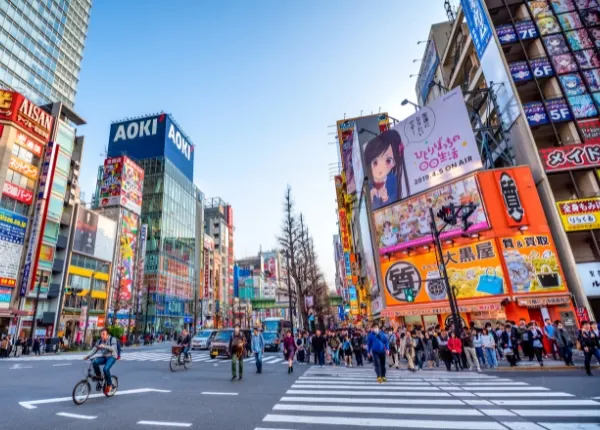
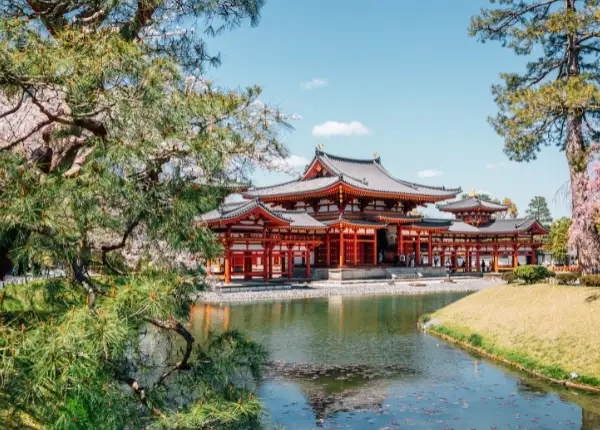

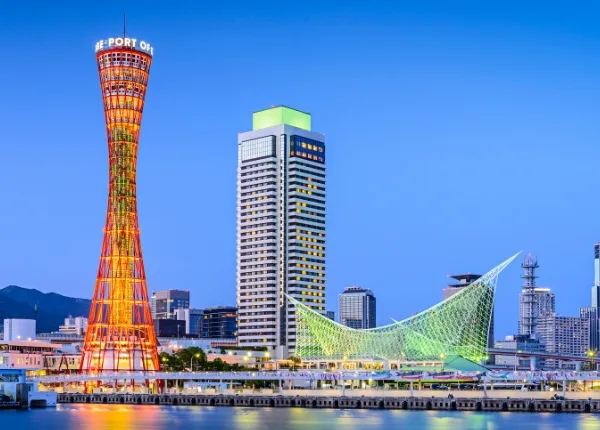

Up to 90 days of study with no visa on many passports works the same in every city on this list.
Source: ViveCampus

Frequently Asked Questions
The questions students ask our advisors most often before booking a Japanese course in Osaka, covering visas, work, costs, levels and daily life. Wherever a rule applies, we point you to the official source.

Do I need a visa to study Japanese in Osaka?
Many passports don’t. You can visit Japan for up to 90 days with no visa, and a short course is allowed as a Temporary Visitor. If your passport needs a visa to visit Japan, you apply for a short-term visa with the school’s letter of acceptance. Tell us your nationality and we’ll check it with you.
Can I stay longer than 90 days?
Yes, with a Working Holiday visa, for the nationalities that have one. It lets you study Japanese and work during a longer stay. Plan it before you travel, and we’ll help you build your course around it.
Can I work while I study Japanese in Osaka?
Yes, on a Working Holiday visa. Osaka’s minimum wage is around JPY 1,230 an hour, and work is great practice for your Japanese. On visa-free entry your stay is for study and travel, which leaves you every afternoon and weekend free to explore.
How much does it cost to study Japanese in Osaka?
Your budget depends on the school, the course length and how you choose to live. A lunch out costs around JPY 1,000 and a metro ticket around JPY 210. Tuition and accommodation vary by school and season, so we give you a personalised quote with all the numbers together. Send us the contact form for your quote.
Which language schools do you work with in Osaka?
You can see every school we work with in Osaka on this page, with its courses, location and accommodation. Our consultants go through them with you and recommend the course that fits your goals.
Do I need to speak Japanese before I arrive?
Not at all. Courses in Osaka welcome every level, including complete beginners. You’ll learn the basics in class and use them in shops, cafés and on the metro from your first week.
How long should my Japanese course be?
Courses start from 2 weeks. On visa-free entry many students choose 4 to 12 weeks, which fits inside the 90 days. With a Working Holiday visa you can stay longer. Tell us your goals and we’ll suggest the length that suits you.
Where will I live in Osaka?
Many students choose a homestay, with your own room and breakfast and dinner with a local family. It’s a great way to settle in and practise Japanese every day. Tell us what you prefer and we’ll arrange it for your dates.
How do I get around Osaka?
Osaka Metro runs 9 lines across the city, and you can tap a contactless bank card at the gates. From Kansai Airport, the Rapi:t takes you to Namba from 34 minutes. JR trains take you to Kyoto and Kobe for weekend trips.
What is the weather like in Osaka?
Osaka has 4 seasons: cherry blossom in spring, warm summers, sunny autumns with red leaves and mild winters. In August afternoons reach around 34 °C, and in January around 10 °C. The Japan Meteorological Agency publishes the forecast.
What is the ISIC card and how do I get it?
The ISIC International Student Identity Card is recognised worldwide and gives you discounts on travel, attractions, food and shopping. Students who apply to a Japanese program in Osaka through ViveCampus receive it, and it’s a great way to make your budget go further while you explore Osaka and the rest of Japan.
Don’t see your question here? Send it through the form below and a ViveCampus advisor will answer it directly. Asking costs nothing and commits you to nothing.
Source: ViveCampus
Fill out the form below. It only takes 2 minutes to start your journey!

Get a Quote
Fill out the form and a ViveCampus advisor will reach out by email or phone to go over courses, costs and start dates that fit your plan. Our service is 100% free for you.

TODAY
