Japanese Courses in Tokyo, Japan (2026)
Japanese courses in Tokyo put you right inside the language, in a capital of around 14 million people where every train ride, café order and night out is a chance to practise. You learn in class in the morning, then use it in Shibuya, Harajuku and Akihabara the same afternoon. Many passports let you study in Japan for up to 90 days with no visa, and a Working Holiday visa opens up longer stays for certain nationalities. Request a free quote on this page and a ViveCampus advisor will help you plan your Japanese course in Tokyo around your goals and your budget.


 1. Tell us your goal
 2. We shortlist schools
 3. We handle the paperwork
 4. Ready to Start
TL;DR: Quick summary
Tokyo gives you Japanese all day long. You study in class, then practise it in the shops, cafés and trains of a city with something new on every corner. Short courses fit a visa-free stay, and a Working Holiday visa lets you stay longer and work.
- Up to 90 days visa-free on many passports, and short courses are allowed on that stay
- Longer stays on a Working Holiday visa, for certain nationalities
- Courses from 2 weeks, in small groups or one-to-one, from complete beginner
- Tokyo’s minimum wage is around JPY 1,280 an hour, for work on a Working Holiday visa
- Free ISIC student card when you apply through ViveCampus
ViveCampus
ViveCampus has helped students study abroad for 15+ years, working with 5,000+ students so far. We help you choose a course, apply to the school, and prepare for arrival: entry paperwork, housing, and what your first week will look like. Every payment goes straight to the school, and our help costs you nothing. We match the course, the length and the part of the city to what you want from your time in Tokyo.

Which Japanese language schools in Tokyo should you consider?
These are the Japanese language schools we work with in Tokyo, each with its own size, style and strengths. Click any school to see its full page, courses and location.
- LTL Language School
LTL teaches Japanese in Kanda, close to Akihabara, with qualified and experienced native teachers. Choose small group classes, one-to-one lessons or both, take your lessons out into the city, and live with a carefully selected Tokyo homestay family.


Some language schools offer exclusive discounts when you apply through ViveCampus. Contact us for more details.
Source: ViveCampus

Why do students choose Tokyo?
A city where the language you are learning is all around you, and where every free afternoon turns into an adventure. It suits students who want real progress in Japanese and a life full of things to do.

Many passports can enter Japan with no visa for up to 90 days, and short courses are allowed on that stay. So you can book your course, buy your flight and start. A Working Holiday visa opens up longer stays for certain nationalities.
Outside class, you order lunch, top up your train card and chat with shop staff in Japanese. Every day gives you the practice that makes the lessons stick.
The famous Shibuya crossing, the street fashion of Harajuku, the anime and gaming shops of Akihabara, the neon nights of Shinjuku. Each one is a few stops apart on the train.
Sushi, ramen, curry, street food, bakeries and cafés on every street. Lunch at an inexpensive restaurant costs around JPY 1,200, so eating out is part of daily life.
Mt. Takao’s hiking trails, cable car and hot springs are about 55 minutes from Shinjuku by train. On a clear day you can spot Mount Fuji from the top of Tokyo Skytree.
One rechargeable IC card takes you across the trains, subway and buses, and Tokyo has more and more multilingual signs. You will feel at home in your first week.
Many passports can enter Japan with no visa for up to 90 days, enough for a short Japanese course.

Tokyo: The Essentials
The essentials for your first days in Tokyo, all in one place.



How do you choose the right Japanese course in Tokyo?
These recommendations come from years of helping students study abroad. They draw on our educational consultants, our partner schools, and above all the students who have lived the experience.
Recommendations and Considerations

Choosing the School - Look at where the school is, how the classes are run, the activities outside class and the accommodation it offers. You will find the details in the school section on this page, and our consultants will help you shape the course around your goals.

Choosing the Program - Small group classes give you 20 hours a week, 4 hours every weekday, with the energy of a class. Add one-to-one lessons for faster progress, or go fully one-to-one with a plan built around you. You can even take your lessons out into the city with your teacher. Choose what matches your goal and your pace.

Length of the Program - Courses start from 2 weeks. A visa-free stay of up to 90 days fits a course of up to around 12 weeks, with time left to travel. With a Working Holiday visa you can stay longer and keep studying. Every extra week adds more speaking, more friends and more of the city.

Minimum Age - Adults of every age are welcome to study Japanese in Tokyo, and there are summer camps for young learners aged 7 to 17. Each school sets its own entry age for adult courses, and we confirm it with you before you book.
Minimum Japanese Level - You can start from any level, including complete beginner. Tell us what you already know and you join the class that fits you from your very first day.

Visa Regulations - Many passports can enter Japan with no visa for up to 90 days, and short courses are allowed on that stay. Check the visa rules for your passport. If your passport needs a visa, the school gives you a letter of acceptance to apply for a short-term visa. For a longer stay, a Working Holiday visa is open to certain nationalities, so tell us your passport and we will check it with you.
| Your stay | What you usually need | What it is for |
|---|---|---|
| Up to 90 days | No visa, on many passports | A short course, plus study and travel time |
| Up to 90 days | A short-term visa, for other passports, with the school’s letter of acceptance | A short course, plus study and travel time |
| Longer stays | A Working Holiday visa, for certain nationalities | Longer courses, with paid work allowed |

Working While You Study - On a Working Holiday visa you can study and work in Japan. Tokyo’s minimum wage is around JPY 1,280 an hour, and every shift is extra Japanese practice. On a visa-free stay, your time is for studying and exploring, which is how you get the most out of a short course.

Accommodation - Homestay places you with a carefully selected Tokyo family, with a single room and breakfast and dinner included. It is the best way to practise your Japanese at the dinner table and see daily life up close. Contact us and we will arrange the option that suits you.

Getting Around and Daily Life - Trains, subway and buses take you everywhere, and one IC card such as Suica or PASMO pays for all of them. You can even set one up on your phone. Tokyo has more and more multilingual signs, so you will find your way from day one. Japan is still very much a cash culture, so keep some yen in your wallet.

Costs Involved - Your budget covers tuition, accommodation, transport and daily life. The table below shows where your money goes. Tuition and accommodation vary by course, length and season, so ask us for a current quote with all the numbers in one place.
| What you pay for | Typical cost (JPY) | Worth knowing |
|---|---|---|
| Tuition | Varies by course and length | Ask us for a current quote |
| Homestay | Varies by length | Single room with breakfast and dinner, which makes budgeting simple |
| Public transport | Around 200 for a one-way ticket | One IC card for trains, subway and buses |
| Lunch out | Around 1,200 at an inexpensive restaurant | Eating out is part of daily life in Tokyo |
| Entry | No visa needed on many passports | For stays of up to 90 days |
| Working Holiday visa | Depends on your country | For longer stays, for certain nationalities |
| Part-time earnings | From around 1,280 an hour | Tokyo’s minimum wage, on a Working Holiday visa |

The biggest part of your budget is usually living costs rather than the course itself, so we help you look at the whole picture when you plan.
Source: ViveCampus

Weather in Tokyo
Tokyo has four clear seasons, and each one gives you something to look forward to: cherry blossom in spring, festivals and fireworks in summer, golden leaves in autumn and bright, crisp days in winter.
| Month | Season | Min °C | Max °C |
|---|---|---|---|
| January | Winter | 1 | 10 |
| February | Winter | 2 | 11 |
| March | Spring | 5 | 14 |
| April | Spring | 10 | 19 |
| May | Spring | 15 | 24 |
| June | Summer | 19 | 26 |
| July | Summer | 22 | 30 |
| August | Summer | 24 | 31 |
| September | Autumn | 20 | 28 |
| October | Autumn | 15 | 22 |
| November | Autumn | 9 | 17 |
| December | Winter | 4 | 12 |
Even in January, the coolest month, afternoons reach around 10 °C, so the city is easy to explore on foot in every season.
Source: Japan Meteorological Agency climate normals, 1991 to 2020, Tokyo station

Cost of living in Tokyo
Here is what everyday life costs in Tokyo, so you can plan your budget with confidence. These are typical city prices in Japanese yen for the things you buy in a normal week. Tell us your dates and we will put the whole picture together for you in your quote.
| What you buy | Typical price (JPY) |
|---|---|
| Cappuccino in a café | around 580 |
| Lunch at an inexpensive restaurant | around 1,200 |
| Fast-food combo meal | around 800 |
| Loaf of bread (500 g) | around 260 |
| Milk (1 litre) | around 240 |
| A dozen eggs | around 350 |
| Rice (1 kg) | around 870 |
| Chicken fillets (1 kg) | around 1,050 |
| Apples (1 kg) | around 730 |
| One-way train or bus ticket | around 200 |
| Mobile phone plan with data, per month | around 3,800 |
| Gym membership, per month | around 9,600 |
| Cinema ticket | around 2,100 |
On a Working Holiday visa, one hour of work at Tokyo’s minimum wage, around JPY 1,280, covers lunch at an inexpensive restaurant.
Source: Numbeo, Tokyo cost of living

Where students live in Tokyo
Tokyo is a city of neighbourhoods, each with its own personality, and the trains link them all in minutes. These are the areas international students love most.

A relaxed student district in central Tokyo, with bookshops, inexpensive curry and noodle bars, and Akihabara close by. Kanda Station is 1 stop from Tokyo Station on the Yamanote Line.
Home to Ueno Park, with its boating pond, zoo and cherry trees, and to Ameyoko, a lively market street. Ueno Station is 8 minutes from Tokyo Station on the Yamanote Line.
A high-energy neighbourhood built to entertain, with Sunshine City’s aquarium and observation deck and plenty of anime and manga shops. It is 8 minutes from Shinjuku on the Yamanote Line.
Tokyo’s laid-back bohemian district, full of vintage clothing stores, bookshops, music shops, cafés and cosy bars. It is 7 minutes from Shinjuku on the Odakyu Line.
A hub for live music and vintage fashion, with shopping streets, izakaya bars and one of Tokyo’s biggest summer street festivals. It is about 15 minutes from Shinjuku on the JR Chuo Line.
Often top of the list of Tokyo’s most desirable places to live, with Inokashira Park and its boating lake minutes from the station. It is 14 minutes from Shinjuku on the JR Chuo Line Rapid.
Wherever you live, one rechargeable IC card such as Suica or PASMO takes you across the trains, subway and buses.
Source: ViveCampus

Getting from Narita and Haneda airports to Tokyo
Tokyo has two international airports, Narita and Haneda, and both have easy ways to reach your new home the day you land.

The easiest start. Your school can arrange an airport pickup, together with a pre-charged transport card and a local SIM card with data, so you walk out of arrivals ready to go.

The Skyliner takes you from Narita to Nippori in as little as 36 minutes and to Ueno in 41. The Narita Express runs to Tokyo, Shinagawa, Shibuya and Shinjuku stations.
Haneda is directly connected to the Keikyu Line and the Tokyo Monorail. Shinagawa is about 15 minutes away and Tokyo Station about 30.

Express buses run from both airports to the main areas of the city. From Haneda, buses reach Tokyo Station and Shinjuku in about 35 minutes, a comfortable choice when you travel with plenty of luggage.
Send us your flight details when you book and we will help you arrange your airport pickup with your school.
Source: Narita International Airport, Haneda Airport and Keisei

Things to do in Tokyo
Between classes and at weekends, Tokyo puts famous sights, nights out, waterfronts and mountain trails within easy reach. These are the favourites of international students.
Main attractions
Events through the year
Tokyo celebrates all year round. Here is when each big event comes around, so you can plan your stay to catch your favourites. The organisers publish the exact dates each year.
| Event | Time of year | What to expect |
|---|---|---|
| Cherry blossom season | Late March to early April | Picnics under the blossom in Ueno Park and along the rivers, with the trees lit up at night |
| Sanja Matsuri | Mid-May | Three days of portable shrine processions through the streets of Asakusa |
| Sumida River Fireworks Festival | Late July | One of Tokyo’s biggest summer fireworks displays, over the Sumida River |
| Jingu Gaien Fireworks | August | 10,000 fireworks and live music from famous and up-and-coming artists |
| Koenji Awa Odori | Late August | More than 10,000 dancers fill the streets of Koenji in one of Tokyo’s largest street festivals |
| Autumn leaves | Mid-November to early December | The golden ginkgo avenue at Meiji Jingu Gaien and red maples across the city |
| Winter illuminations | November to Christmas, some into February | Light displays across the city, most of them free |
Many of Tokyo’s festivals and light displays are free, so there is always something to enjoy with your classmates.

Tokyo in images



ViveCampus can help you
A ViveCampus advisor reviews your needs, age, goals, Japanese level, budget and start date, then plans the Tokyo course that fits you best.
Our advice is completely free, and the process is 100% transparent. You make all payments directly to your chosen school.
When you apply through ViveCampus, you receive support from both the school and our team. We will guide you through the application, the entry requirements and your arrival in Tokyo.
Students who apply to a Japanese course through ViveCampus also receive the ISIC International Student Identity Card, recognised worldwide, with great discounts in Tokyo and across Japan on travel, attractions, food and shopping.
Steps you should follow
1. Tell us your goal A short conversation about your needs, level, budget, dates and what you are looking for.
2. We shortlist schools You get a written plan with real options and total costs.
3. We handle the paperwork Application, letter of acceptance and the documents your entry needs.
4. Ready to Start Accommodation confirmed, payments processed, and someone to call whenever you need a hand.

Other cities to study Japanese in Japan
Tokyo is a wonderful place to start, and Japan has much more to offer. You can also study Japanese in these cities, each with its own lifestyle.
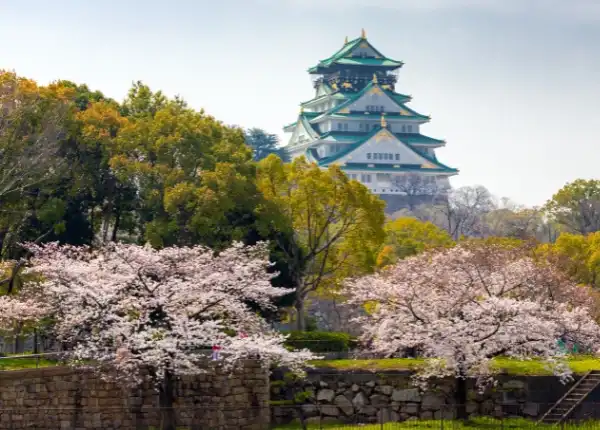
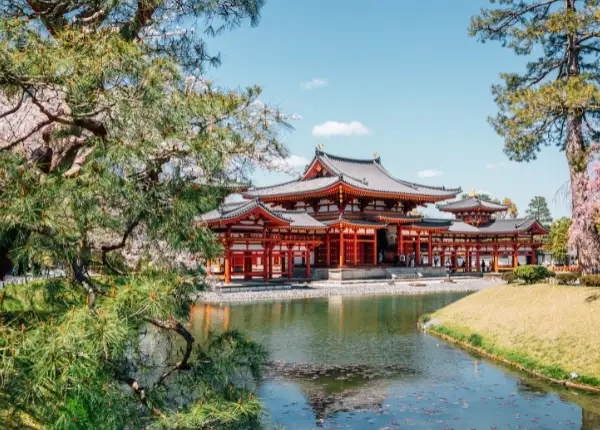

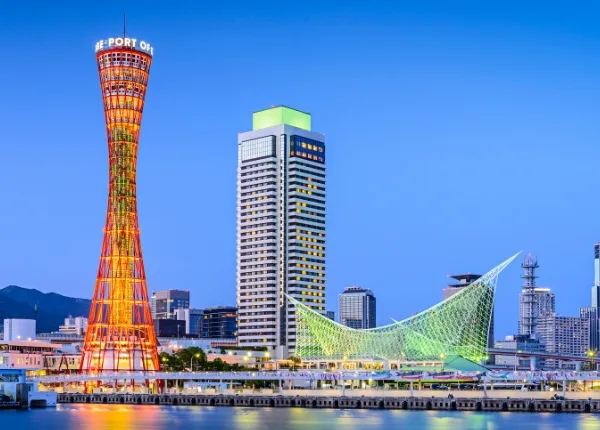

The visa options are the same in every city on this list: up to 90 days with no visa on many passports, or longer on a Working Holiday visa.
Source: ViveCampus

Frequently Asked Questions
The questions students ask our advisors most often before booking a Japanese course in Tokyo, covering visas, work, costs, levels and daily life. Wherever a rule applies, we point you to the official source.

Do I need a visa to study Japanese in Tokyo?
Not for a short course on many passports. You can enter Japan with no visa for up to 90 days, and taking a short course is allowed on that stay. Check the visa rules for your passport. If you need a visa, the school gives you a letter of acceptance to apply for a short-term one. For a longer stay, ask us about the Working Holiday visa.
Can I work while I study Japanese in Tokyo?
Yes, on a Working Holiday visa, which is open to certain nationalities. Tokyo’s minimum wage is around JPY 1,280 an hour. On a visa-free stay your time is for studying and exploring. Tell us your passport and we will check what fits you.
How much does it cost to study Japanese in Tokyo?
It depends on the course, the length and how you choose to live. Tuition and homestay vary by length and season, so we give you a personalised quote with all the numbers together. For everyday life, lunch at an inexpensive restaurant is around JPY 1,200 and a one-way train ticket around JPY 200. Send us the contact form for your quote.
Do I need to speak any Japanese before I start?
Not at all. Complete beginners are welcome, and you join the class that fits your level from your first day. Every day in the city then gives you the chance to use what you learn in class.
How long should my Japanese course be?
Courses start from 2 weeks. A visa-free stay of up to 90 days fits a course of up to around 12 weeks, with time left to travel. On a Working Holiday visa you can stay longer. Tell us your goals and we will suggest the length that suits you.
Is there a minimum age?
Adults of every age are welcome, and there are summer camps in Tokyo for young learners aged 7 to 17. We confirm the entry age for your course with you before you book.
Where will I live in Tokyo?
Homestay is a great choice: you live with a carefully selected Tokyo family, with a single room and breakfast and dinner included. It is the fastest way to use your Japanese every day. We arrange it with you when you book your course.
How do I get around Tokyo?
By train, subway and bus. One rechargeable IC card such as Suica or PASMO pays for all of them, and you can even set one up on your phone. Tokyo has more and more multilingual signs, so getting around feels easy from your first week.
What is the weather like in Tokyo?
Tokyo has four seasons. Summer afternoons reach around 30 °C from July to August, winter afternoons around 10 to 12 °C, and spring and autumn are mild and perfect for exploring. GO TOKYO has ideas for every season.
Who can help me if I need anything during my stay?
Your school and our team are always a message away. For emergencies, call 110 for the police and 119 for fire and ambulance, and Japan’s visitor hotlines list the numbers to keep in your phone. Most of these services have English-speaking staff.
What is the ISIC card and how do I get it?
The ISIC International Student Identity Card is recognised worldwide and gives you discounts on travel, attractions, food and shopping. Students who apply to a Japanese course in Tokyo through ViveCampus receive it, and it is a great way to make your budget go further while you explore Tokyo and the rest of Japan.
Don’t see your question here? Send it through the form below and a ViveCampus advisor will answer it directly. Asking costs nothing and commits you to nothing.
Source: ViveCampus
Fill out the form below. It only takes 2 minutes to start your journey!

Get a Quote
Fill out the form and a ViveCampus advisor will reach out by email or phone to go over courses, costs and start dates that fit your plan. Our service is 100% free for you.

TODAY
