English Courses in Auckland, New Zealand (2026)
English courses in Auckland put you in New Zealand’s largest city, one of the most exciting places in the world to learn the language. Its language schools sit in the heart of a harbour city of around 1.7 million people, with beaches, islands and volcanoes all within reach. English students on a qualifying course can work up to 25 hours a week, so in Auckland your English and your savings grow together. Request a free quote on this page and a ViveCampus advisor will help you choose the right school in Auckland for your goals and your budget.


 1. Tell us your goal
 2. We shortlist schools
 3. We handle the paperwork
 4. Ready to Start
TL;DR: Quick summary
Auckland combines a world-class English school scene with a lifestyle built around the sea, the outdoors and one of the most multicultural communities on the planet. You can study full-time, work part-time and spend your weekends on islands, black-sand beaches and volcanic summits.
- Work up to 25 hours a week on a full-time course of 14 weeks or more at a Category 1 school
- Adult minimum wage of NZD 23.95 an hour from April 2026
- Short courses of up to three months on an NZeTA, from NZD 17
- We help you choose an NZQA Category 1 school, so your course can qualify for work rights
- Free ISIC student card when you apply through ViveCampus
ViveCampus
ViveCampus has helped students study abroad for 15+ years, working with 5,000+ students so far. We help you choose a program, apply to the school, and prepare for arrival: visa paperwork, housing, and what your first week will look like. Every payment goes straight to the school, and our help costs you nothing. We match the school, the course length and the part of the city to what you want from your time in Auckland.

Which language schools in Auckland should you consider?
These are the language schools we work with in Auckland, each with its own size, style and strengths. Click any school to see its full page, courses and location.
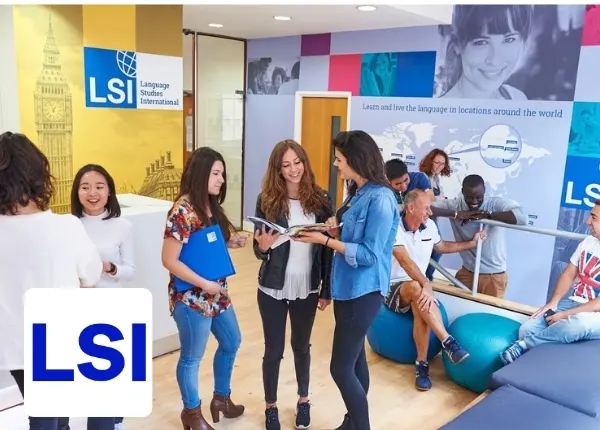
- LSI Auckland
Part of LSI, Language Studies International, which has been teaching since 1965. The Auckland centre combines a structured course system with the energy of a big international school in the city centre.
- Worldwide School of English
Worldwide has taught English in the heart of Auckland since 1989, on 2 campuses a few minutes’ walk apart near the harbour. Classes have 18 students at most, your classmates come from more than 30 countries, and the Job Club helps you find part-time work.
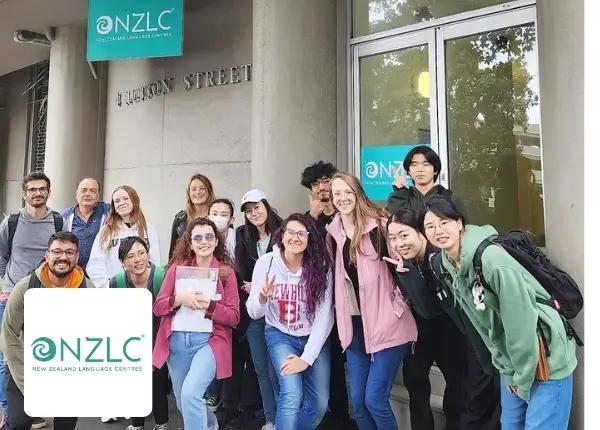
- NZLC Auckland
New Zealand Language Centres teaches in the heart of the city on Queen Street. Its courses cover General English, IELTS and Cambridge preparation, Business English and programmes for young learners, with a strong community of students from around the world.
- ELA, University of Auckland
The English Language Academy of the University of Auckland. Study General English in 5 levels, or Academic English to prepare for university. You learn right next to the campus and enjoy student life at New Zealand’s top-ranked university. From 18 years old.
- Kiwi English Academy
Kiwi English Academy has taught English in Newmarket since 1991, in one of Auckland’s liveliest shopping and café districts. Classes have 15 students at most and your classmates come from more than 25 countries, so it feels warm and personal.




Some language schools offer exclusive discounts when you apply through ViveCampus. Contact us for more details.
Source: ViveCampus

Why do students choose Auckland?
A city that combines excellent English schools with a quality of life people travel across the world for. It suits students who want real progress in English and a life full of things to do.

English students on a full-time course of 14 weeks or more at a Category 1 school can work up to 25 hours a week. The right covers your whole visa, including the time before and after your course.
Auckland is known as the City of Sails. It sits between two harbours, the Waitematā and the Manukau, with ferries to the islands of the Hauraki Gulf leaving from the heart of the city.
The city is built across around 50 volcanic cones you can walk up for the view. West coast black-sand beaches, native forest and Waiheke Island’s vineyards are a short trip away.
People from all over the world call Auckland home, so you will meet classmates, flatmates and friends from every continent while you practise your English with locals every day.
Auckland enjoys a temperate, maritime climate with warm summers and gentle winters, so you can spend time outdoors in every season of your course.
New Zealand’s English schools are quality-assured by the New Zealand Qualifications Authority, and Category 1 is its top rating. We help you choose a Category 1 school, so your course can also qualify for work rights.
English students on a qualifying course can work up to 25 hours a week in New Zealand.
Source: Immigration New Zealand

Get to know Auckland
Take a tour of the city before you arrive: the Sky Tower, the waterfront, the ferries across the harbour and the neighbourhoods where students live, study and relax. AucklandNZ, the city’s official visitor site, is full of ideas for your first weekends.
For the wider country, New Zealand’s official travel site shows everything within reach of Auckland, from Rotorua’s geothermal parks to the beaches of the Coromandel.

Auckland: The Essentials
The essentials for your first days in Auckland, all in one place.



How do you choose the right English program in Auckland?
These recommendations come from years of helping students study English in Auckland. They draw on our educational consultants, our partner schools, and above all the students who have lived the experience.
Recommendations and Considerations

Choosing the School - Auckland’s language schools each have their own character: some are large and international, some are smaller and more personal, and some sit right next to a university campus. It is worth comparing location, class size, facilities, the mix of nationalities and the activities programme. Look at the schools on this page, and our consultants will match you with the one that fits you best.

Choosing the Program - General English builds all your skills, and intensive courses add extra hours for faster progress. Exam preparation targets an IELTS or Cambridge score, Business English suits working professionals, and academic English prepares you for university or college in New Zealand. Choose the one that matches the goal you have in mind.

Length of the Program - Length shapes what your time in Auckland can include. A full-time course of 14 consecutive weeks or more at a Category 1 school is what unlocks the right to work up to 25 hours a week, so many students plan for at least that. Most students move up a level every couple of months of full-time study, and every extra week adds more speaking, more friends and more of the city.

Minimum Age - Students of every age are welcome to study English in New Zealand. Each school sets its own entry age, usually between 16 and 18 for adult courses, and many welcome students of every age above that.
Minimum English Level - You can start from any level, including complete beginner, and apply whenever you are ready. Schools place you with a short test so you join the class that fits you from your very first day.

Visa Regulations - Which document you need depends on how long you plan to study. A short course that fits inside a visit of up to three months can usually be done on an NZeTA or a visitor visa, and a longer course runs on a student visa. Immigration New Zealand recommends applying for a student visa at least three months before you travel, and we prepare the paperwork with you.
| Course length | Document usually needed | Cost | Work rights |
|---|---|---|---|
| Up to 3 months | NZeTA, for visa-waiver passports | From NZD 17 | Study only |
| Up to 3 months | Visitor visa, for other passports | Depends on your country | Study only |
| Longer than 3 months | Fee Paying Student Visa, with an offer of place | Depends on your country | Up to 25 hours a week on a qualifying course |

Working While You Study - This is one of Auckland’s biggest advantages. When your course is full-time, at least 14 consecutive weeks long and at a university or an NZQA Category 1 school, your student visa can let you work part-time up to 25 hours a week. The adult minimum wage is NZD 23.95 an hour, so part-time work makes a real contribution to your living costs. Hospitality, retail and customer service are popular first jobs, and every shift is extra English practice.

Accommodation - Homestay places you with a local family, usually with breakfast and dinner included, which is a wonderful way to settle in and practise English at the table. Student residences put you among other international students close to the city, and shared flats give you independence once you know the city. Many students begin in homestay for their first weeks and then move into a flat. Contact us and we will arrange the option that suits you.

Getting Around and Daily Life - Buses, trains and ferries are run by Auckland Transport, and an AT HOP card gives you concession fares across the whole network, including the ferries to Waiheke and Devonport. Auckland’s mild climate makes walking, cycling and weekends outdoors easy all year, and MetService will tell you when the beach days are coming. Your school will help you arrange the health insurance your visa needs.

Costs Involved - Your budget covers tuition, accommodation, transport and daily life, and part-time work can make a real difference to it. At 25 hours a week on the adult minimum wage you can earn close to NZD 600 a week before tax. The table below shows where your money goes. Tuition and accommodation vary by school, course and season, so ask us for a current quote with all the numbers in one place.
| What you pay for | Typical cost (NZD) | Worth knowing |
|---|---|---|
| Tuition | Varies by school and course | Longer bookings usually lower the weekly rate; ask us for a current quote |
| Homestay | Varies by school and season | Usually includes breakfast and dinner, which makes budgeting simple |
| Public transport | Concession fares with AT HOP | One card for buses, trains and ferries across Auckland |
| Living funds for visitors | NZD 1,000 a month | What Immigration NZ asks visitors to show, or NZD 400 if accommodation is prepaid |
| NZeTA | From NZD 17 | For short courses on a visa-waiver passport |
| Student visa | Depends on your country | For courses longer than three months |
| Part-time earnings | Close to NZD 600 a week before tax | 25 hours at the NZD 23.95 adult minimum wage, on a qualifying course |

The biggest part of your budget is usually living costs rather than the course itself, so we help you look at the whole picture when you compare schools.
Source: ViveCampus

Weather in Auckland
Auckland enjoys a mild, maritime climate all year round, with warm summers, gentle winters and the sea always close by. The seasons run opposite to Europe and North America, so a January start means long summer days at the beach.
| Month | Season | Min °C | Max °C |
|---|---|---|---|
| January | Summer | 16 | 24 |
| February | Summer | 17 | 24 |
| March | Autumn | 15 | 23 |
| April | Autumn | 13 | 20 |
| May | Autumn | 11 | 18 |
| June | Winter | 9 | 16 |
| July | Winter | 8 | 15 |
| August | Winter | 8 | 15 |
| September | Spring | 10 | 17 |
| October | Spring | 11 | 18 |
| November | Spring | 13 | 20 |
| December | Summer | 15 | 22 |
Even in July, the coolest month, afternoons reach around 15 °C, so the city is easy to explore on foot in every season.

Cost of living in Auckland
Here is what everyday life costs in Auckland, so you can plan your budget with confidence. These are typical city prices in New Zealand dollars for the things you buy in a normal week. Want to see the whole picture for your stay? Our study abroad cost calculator helps you estimate the total cost.
| What you buy | Typical price (NZD) |
|---|---|
| Cappuccino in a café | around 6 |
| Lunch at an inexpensive restaurant | around 25 |
| Fast-food combo meal | around 17 |
| Loaf of bread (500 g) | around 4 |
| Milk (1 litre) | around 3.40 |
| A dozen eggs | around 11 |
| Rice (1 kg) | around 3.30 |
| Chicken fillets (1 kg) | around 18 |
| Apples (1 kg) | around 5 |
| One-way bus or train ticket | around 4.50 |
| Mobile phone plan with data, per month | around 48 |
| Gym membership, per month | around 76 |
| Cinema ticket | around 23 |
One hour of part-time work at the New Zealand minimum wage pays for about four coffees in a café.
Source: Numbeo, Auckland cost of living

Where students live in Auckland
Auckland is a city of friendly neighbourhoods, each with its own character, and buses, trains and ferries link them all to the city centre. These are the areas international students love most.

Live steps from the schools on Queen Street, the waterfront and the ferry terminal. Student residences and apartments here put everything within walking distance.
A village feel at the foot of Maungawhau, with cafés, restaurants and green streets, and frequent buses into the city. A favourite area for homestays.
One of Auckland’s main shopping areas, with its own train station and plenty of cafés right on your doorstep.
Auckland’s café and dining quarter, just west of the city centre, with independent shops, restaurants and a creative, relaxed feel.
Leafy streets and heritage villas beside the Auckland Domain, with a train station and a short trip into the city centre.
Beaches such as Takapuna and Devonport across the harbour, linked to the city by ferry and the Northern Busway. Ideal if you love the sea.
Wherever you live, one AT HOP card or a contactless bank card takes you across the whole bus, train and ferry network.
Source: ViveCampus

Getting from Auckland Airport to the city
Auckland Airport sits south of the city, and you have several easy ways to reach your new home the day you land.

The easiest start. Your school can usually arrange a driver to meet you at arrivals and take you straight to your homestay or residence.

The orange AirportLink bus runs every 10 minutes from early morning until after midnight to Puhinui Station, where trains continue to the city centre. Pay with an AT HOP card or a contactless bank card.

A direct coach between the airport terminals and Hobson Street, near the Sky Tower, every 30 minutes from early morning until late evening.
Taxis and rideshare apps take you door to door, a comfortable choice when you land late or travel with plenty of luggage.
Send us your flight details when you book and we will help you arrange your airport transfer with your school.
Source: Auckland Transport and SkyDrive

Things to do in Auckland
Between classes and at weekends, Auckland puts beaches, volcanoes, islands and a lively events calendar within easy reach. These are the favourites of international students.
Main attractions
Events through the year
Auckland celebrates all year round. Here is when each big event comes around, so you can plan your stay to catch your favourites. The organisers publish the exact dates each year.
| Event | Time of year | What to expect |
|---|---|---|
| Auckland Anniversary Day Regatta | Late January | Sailing races across the Waitematā Harbour on the Auckland Anniversary long weekend |
| Pasifika Festival | March | A celebration of Pacific Island cultures at Western Springs, with food, music and dance |
| Matariki | Late June or July | The Māori New Year, a public holiday celebrated with light shows, food and community events |
| Diwali Festival | Late October or early November | A free festival of lights in the city centre with food, dance and music, enjoyed by more than 65,000 people |
| Farmers Santa Parade | Late November | Around 180,000 people line Queen Street for floats, bands and characters |
| Christmas in the Park | December, before Christmas | New Zealand’s biggest free annual Christmas concert, with live music on an outdoor stage |
| New Year’s Eve at the Sky Tower | End of December | Fireworks from the Sky Tower light up the harbour to welcome the new year |
Many of Auckland’s biggest events are free, so there is always something to enjoy with your classmates.

What do students say about studying English in Auckland?
Reading about other students’ experiences is one of the best ways to picture your own time in Auckland. These students studied English here with ViveCampus, and their stories show the friendships, the progress and the confidence that come with the experience.

I really enjoyed studying English in Auckland. I loved going to Mission Bay and spending weekends exploring places like Waiheke Island with my friends. The best part was meeting people from so many different countries. I was shy about speaking English at first, but now I feel much more confident. Auckland gave me an amazing international experience!

I really loved my experience studying English in Auckland. I enjoyed spending time at Viaduct Harbour after class and going to Mount Eden with my friends. The views are amazing! My English improved a lot because I was speaking every day with people from different countries. I made so many friends and became much more confident speaking English. I would definitely come back to Auckland. Thank you ViveCampus for all the guidance.
Students share their experience of studying English in Auckland.
Source: ViveCampus

Auckland in images



ViveCampus can help you
A ViveCampus advisor reviews your needs, age, goals, English level, budget and start date, then narrows Auckland’s schools down to the few that fit you best.
Our advice is completely free, and the process is 100% transparent. You make all payments directly to your chosen school.
When you apply through ViveCampus, you receive support from both the school and our team. We will guide you through the application, the visa requirements and your arrival in Auckland.
Students who apply to an English program through ViveCampus also receive the ISIC International Student Identity Card, recognised worldwide, with great discounts in Auckland and across New Zealand on travel, attractions, food and shopping.
Steps you should follow
1. Tell us your goal A short conversation about your needs, level, budget, dates and what you are looking for.
2. We shortlist schools You get a written comparison of two or three real options, with total costs.
3. We handle the paperwork Application, letter of acceptance and the documents your visa needs.
4. Ready to Start Accommodation confirmed, payments processed, and someone to call whenever you need a hand.

Other cities to study English in New Zealand
Auckland is a wonderful place to start, and New Zealand has much more to offer. These cities also have language schools we work with, each with its own lifestyle.
- Christchurch
The South Island’s largest city, between the Southern Alps and the Pacific, with the Avon River running through its modern centre. After class, Hagley Park, the Port Hills and the beach at Sumner are all yours.
- Nelson
A sunny city on Tasman Bay at the top of the South Island, with golden beaches and 3 national parks within reach. You cross the centre on foot, and on Saturday the market fills Montgomery Square.
- Tauranga
The coastal city of the Bay of Plenty, with a sparkling harbour, surf beaches and islands all around. Mount Maunganui, its beach suburb, gives you the surf, Pilot Bay and a main street full of cafés.


Work rights on a qualifying course are the same in every city on this list as in Auckland: up to 25 hours a week.
Source: ViveCampus

Frequently Asked Questions
The questions students ask our advisors most often before booking an English course in Auckland, covering work, visas, costs, schools and daily life. Wherever a rule applies, we point you to the official source.

Can I work while I study English in Auckland?
Yes, on a qualifying course. Immigration New Zealand allows English language students to work part-time up to 25 hours a week when the course is full-time, at least 14 consecutive weeks, and at a university or an NZQA Category 1 provider. The right covers your whole visa, including before and after your course. We help you choose a Category 1 school and plan a course that qualifies.
Do I need a visa to study English in Auckland?
It depends on your course length and your passport. A short course that fits inside a visit of up to three months can usually be done on an NZeTA, which costs from NZD 17 and is valid for two years, or on a visitor visa. For longer courses you apply for a Fee Paying Student Visa, ideally at least three months before you travel. We prepare the paperwork with you.
How much does it cost to study English in Auckland?
Your budget depends on the school, the course length and how you choose to live. Tuition and accommodation vary by school and season, so we give you a personalised quote with all the numbers together. On the other side of the budget, part-time work at the adult minimum wage of NZD 23.95 an hour can bring in close to NZD 600 a week before tax on a qualifying course. Send us the contact form for your quote.
Which language schools do you work with in Auckland?
You can see every school we work with in Auckland on this page, each with its own style: big international schools in the city centre, smaller schools with a personal feel, and an academy right next to a university campus. Our consultants compare them with you and recommend the one that fits your goals.
What is Auckland like as a place to study?
Auckland is New Zealand’s largest and most international city, a harbour city of around 1.7 million people built across volcanic hills and surrounded by beaches and islands. It is regularly ranked among the most liveable cities in the world, and its multicultural community makes it easy to feel at home. Explore ideas for your stay on AucklandNZ.
How do I get around Auckland?
Auckland Transport runs the city’s buses, trains and ferries. An AT HOP card gives you concession fares across the whole network, including the ferries to Waiheke Island and Devonport, and many students also walk or cycle around the central neighbourhoods.
What is the weather like in Auckland?
Auckland has a mild, temperate climate, with warm summers from December to February and gentle winters from June to August. That means you can enjoy the beaches, the islands and the volcanic walks in every season. MetService publishes the local forecast.
Do I need a certain level of English to start?
Not at all. Schools in Auckland welcome every level, including complete beginners, and you can apply whenever you are ready. You take a short placement test so you join the class that fits you from your first day.
What is the ISIC card and how do I get it?
The ISIC International Student Identity Card is recognised worldwide and gives you discounts on travel, attractions, food and shopping. Students who apply to an English program in Auckland through ViveCampus receive it, and it is a great way to make your budget go further while you explore Auckland and the rest of New Zealand.
How long should my English course be?
Many students choose at least 14 weeks, because a full-time course of that length at a Category 1 school is what unlocks the right to work up to 25 hours a week. Most students move up a level every couple of months of full-time study, and longer courses often lower the weekly price. Tell us your goals and we will suggest the length that suits you.
Where can I check that a school is officially recognised?
The New Zealand Qualifications Authority quality-assures education providers and rates them, with Category One as its top rating. English New Zealand is the association of accredited English language schools. We help you choose a Category 1 school, so your course can qualify for work rights.
Don’t see your question here? Send it through the form below and a ViveCampus advisor will answer it directly. Asking costs nothing and commits you to nothing.
Source: ViveCampus
Fill out the form below. It only takes 2 minutes to start your journey!

Get a Quote
Fill out the form and a ViveCampus advisor will reach out by email or phone to go over schools, costs and start dates that fit your plan. Our service is 100% free for you.

TODAY
