Language Courses at LSI Language Studies International
LSI has been teaching languages since 1965 and now runs thirteen centres across England, the United States, Canada, New Zealand, Australia, France and Switzerland: English courses in eleven of them, French courses in Paris and German courses in Zurich. Every lesson lasts fifty minutes instead of the usual forty five, which hands you an extra hour and forty minutes of teaching every week, and more than a full extra week of class over a twelve week term, at no extra cost.

 1. Tell us your goal
 2. We help you find the right program
 3. We handle the paperwork
 4. Ready to Start
TL;DR: Quick summary
LSI, Language Studies International, is one of the longest running language school groups in the world: it opened in 1965 and now teaches in thirteen centres across seven countries. Eleven of them teach English, in England, the United States, Canada, New Zealand and Australia, and two teach a different language altogether, French in Paris and German in Zurich, on the same enrolment system and the same course structure. The thing LSI puts in writing that most schools do not is the length of a lesson: fifty minutes rather than the forty five that is standard across the industry, which is over an hour of extra teaching in a twenty lesson week. Courses run from one week to fifty, six levels from complete beginner to advanced, and every centre is accredited in its own country: the British Council and English UK in England, ACCET in the United States, Languages Canada in Canada, NZQA Category One in New Zealand, NEAS in Australia and EAQUALS in Switzerland.
Sixteen programmes: General 20, Intensive 24 and Intensive 30, an Afternoon 10 course, IELTS and TOEFL preparation in two formats, Cambridge B2 First, C1 Advanced and C2 Proficiency, an academic term and an academic year abroad, Business English, English for a profession, and intensive French in Paris or German in Zurich.
A lesson at LSI is fifty minutes. General 20 gives you sixteen hours forty minutes of class a week, Intensive 24 gives you twenty hours and Intensive 30 gives you twenty five, with the last six lessons of the intensive week spent on electives you pick yourself. Levels run from complete beginner to advanced, and the free Job Club and Grammar Doctor sessions sit outside your timetable.
- 50 minute lessons, not 45
- Six levels, beginner to advanced
- 13 centres, 7 countries, 3 languages
- Accredited country by country, from 1965
ViveCampus
ViveCampus is a benchmark study abroad agency with more than 17 years of experience and over 5,000 satisfied students around the world. We handle your enrolment at LSI for you, we walk you through every step, and our service costs you nothing.


Why do students choose LSI in 2026?
Sixty years of teaching, thirteen centres and a set of numbers LSI publishes openly. Here is what makes the difference once you are in the classroom.

Almost every school counts its course in lessons, and almost every school makes a lesson forty five minutes. LSI makes it fifty, and publishes that it does so precisely because it is a comparison worth making. On a twenty lesson week that is one hundred extra minutes of teaching, close to two extra lessons. On a thirty lesson intensive week it is two and a half hours, and over a twelve week term it is more than thirty hours of class you would not get elsewhere for the same headline number. It is the most useful thing to check before you compare two quotes, because two schools can both advertise twenty lessons a week and be an hour and a half apart in actual teaching. LSI also states the arithmetic in clock hours on every course page, so nobody has to work it out.
This is what a group buys you that a single school cannot. General 20, Intensive 24, Intensive 30, the Cambridge courses and the academic year all run to the same structure whichever centre you pick, so the city becomes a free choice rather than a compromise. London and New York if you want the big one, Brighton and Cambridge if you want to walk everywhere, San Diego and Brisbane if you want the beach, Toronto and Vancouver for the friendliest post study rules, Auckland for the smallest and greenest. Choose for climate, cost and accent, and know the teaching is identical.
LSI is the rare group where a language other than English is a real option rather than a footnote. French runs at the Paris centre in the Marais, German at the Zurich centre, and both use the same course structure, the same level system and the same fifty minute lesson as the English centres. That matters if your plan is bigger than one language: you can do a term of English in London and a term of French in Paris on one relationship with one school, and we handle both enrolments together.
The Academic Term Abroad and Academic Year Abroad courses are where LSI puts its teaching to work. They run twelve to twenty three weeks and twenty four to forty eight weeks, at twenty, twenty four or thirty lessons a week, and what separates them from simply booking a long course is the management: an individual study plan built around your level and your goal, two extra sessions with a teacher every week, and regular progress meetings to check you are on track for what you came for. You can combine general English, exam courses, academic English, a pathway or business English inside the same enrolment.
A group this size is only as strong as its weakest centre, so LSI is accredited separately in each country by the body that matters locally. The British Council and English UK in England, ACCET in the United States with state approval in New York and California on top, Languages Canada in Canada with provincial designation in British Columbia, NZQA Category One in New Zealand, which is the highest of the four bands, NEAS in Australia, and EAQUALS in Switzerland. The Paris centre carries the French Qualité FLE label. Each of those is an outside inspector that can withdraw its approval.
Two of them run at every centre and neither costs extra. Grammar Doctor is exactly what it sounds like: a teacher, a room and whatever it is you keep getting wrong, worked through one question at a time. Job Club helps you write a CV that reads properly in the country you are in, prepare for an interview and understand your rights at work. On top of that the social programme is run by LSI’s own qualified teachers rather than outsourced, so the museum trip and the Friday evening out are still time spent with someone who teaches for a living.
LSI, Language Studies International, has been teaching languages since 1965 and operates thirteen centres in England, the United States, Canada, New Zealand, Australia, France and Switzerland, with a registered office in London. Its English centres are accredited by the British Council and are members of English UK in England, by ACCET in the United States, by Languages Canada in Canada, and by NEAS in Australia. LSI Auckland holds NZQA Category One, the top band, and NZQA records itself as Highly Confident in both its educational performance and its self assessment. The Zurich centre is accredited by EAQUALS and the Paris centre carries the Qualité FLE label. Most centres are also recognised for German Bildungsurlaub study leave.

Seven countries, and the choice is the point
Most students reach this page having decided they want to study a language abroad and not yet where. That is the right order, and LSI is the group that lets you answer it last: the course, the level system, the lesson length and the accreditation hold in every centre, so the city is a free choice rather than something you settle for.
What changes between them is cost of living, climate, accent and what you can do outside class. England has four centres and the shortest flights from Europe. The United States has the widest spread, from Manhattan to a California beach. Canada is the most affordable of the big English speaking countries and has the friendliest post study rules. New Zealand and Australia give you the southern summer and a strong part time job market. And France and Switzerland are there if the language you want is not English at all. We will go through the trade-offs with you before you choose.

What courses does LSI offer?
Sixteen programmes, and with a few exceptions every one of them runs at every centre. A lesson is fifty minutes, levels run from complete beginner to advanced, and courses go from one week to fifty. The minimum age is 16.

The course most students book and the base everything else is built on. Twenty lessons a week, which at fifty minutes each is sixteen hours forty minutes of class, or a full twenty clock hours at the American centres. Two lessons a day go on grammar, vocabulary and pronunciation, and two on speaking, listening, reading and writing, worked through a coursebook alongside newspapers, audio and role plays. Your afternoons stay free, which is why it suits students who want to see the city they flew to.
General 20 with four more lessons a week, which comes to a round twenty hours of class. It is the middle option and the one we recommend most often: enough extra time to move a level inside a fixed number of weeks, without giving up every afternoon. The extra lessons are timetabled across two longer days and three standard ones rather than spread thinly, so you still get clear afternoons to work or explore.
Thirty lessons a week, twenty five hours, and the course to take if you have a fixed number of weeks and want the most out of them. The first four lessons a day are the General 20 core; lessons five and six are electives you choose yourself, so two students in the same class can spend the last part of the day on completely different things. It is also the frame LSI hangs its IELTS and TOEFL preparation on, which means you can switch your electives to exam work without changing course.
Ten lessons a week in the afternoon, eight hours twenty minutes, built around fluency rather than coverage. The emphasis is on everyday language and on talking: discussion of film, theatre and what is happening in the city, vocabulary you will use that evening, and pronunciation. It is the course for somebody whose mornings are already spoken for, or who wants to keep a language alive over a short stay without committing the whole day.
IELTS preparation built inside the Intensive 30, which is a better arrangement than it sounds: twenty lessons a week keep working on your actual English, grammar and the four skills, while ten go to exam technique and study skills. That split matters, because a score is lifted by both, and a course that is only past papers stops improving your English somewhere around week three. IELTS is the test asked for by universities and immigration systems across the English speaking world outside North America.
The same structure aimed at the other test: twenty lessons a week on language and ten on the exam, inside the Intensive 30. TOEFL is the test American and Canadian universities ask for, so this is the course if your plan is a degree in North America. You work through the four papers and the timing, and the language half of the week keeps pushing your level rather than only your technique.
A shorter, lighter option that prepares you for both tests at once, at twenty lessons a week over one to eight weeks. Each week takes a topic, a language target and a set of exam question types across reading, writing, listening and speaking, using current coursebooks and real past questions. It is the sensible pick if the exam is a few weeks away and you want focused practice rather than a full term. TOEFL 20 runs in New York, Vancouver, Toronto and Auckland, and IELTS 20 in London, Vancouver, Toronto and Auckland.
Preparation for the most popular of the Cambridge exams, at thirty lessons a week, twenty five hours, covering reading, writing, speaking, listening and Use of English. B2 First says you can work and study independently in English, it is recognised by employers and universities worldwide, and it never expires, so the work you put in keeps its value for the rest of your career. Course dates follow the official exam sittings. The exam fee is charged separately.
The certificate above B2 First, and the one that opens doors. C1 Advanced is accepted for direct entry by British and Australian universities and read by employers as genuine working fluency. Thirty lessons a week on all four skills plus Use of English, aimed at precision and range rather than new grammar: saying exactly what you mean, in the register the situation asks for. It does not expire either.
The oldest and the most demanding of the Cambridge exams, for students who already operate comfortably in English and want the qualification that says so. Thirty lessons a week at the top of the level range. C2 Proficiency meets the entry requirements of most British universities and is read by employers as a level above fluent. It is a serious course and a serious certificate, and like the others it lasts for life.
A term of twelve to twenty three weeks at twenty, twenty four or thirty lessons a week, and the difference from simply booking a long course is the management around it. You get an individual study plan built for your level and your goal, two extra sessions with a teacher every week, and regular meetings to check the plan is working. Inside it you can combine general English, an exam course, academic English, a university pathway or business English, and change the mix as your level moves.
The same arrangement over twenty four to forty eight weeks, which is long enough to change your level completely rather than improve it. The individual study plan, the two extra weekly teacher sessions and the progress meetings all apply, and over a year they are what stops a long course drifting. Most students start on general English, move into an exam course once the level is there, and finish on academic or business English aimed at whatever comes next.
The English of meetings and deadlines rather than of exam papers, built for people who already work or are about to start. Meetings, negotiation, presentations, professional writing and the vocabulary that goes with them, taught in the elective half of an Intensive 30 or as a focus inside an academic term. It is the course for somebody who has plenty of English and wants to sound precise and confident in a professional room, and it sits naturally alongside a Cambridge course for anybody who wants the certificate too.
LSI runs a set of courses for people who need English for one particular job: Medical English, Legal English, English for Aviation, English for Public Speaking and English for Teaching, along with tailored English for Specific Purposes for anything not on that list. The vocabulary, the situations and the writing are all taken from the work itself, so a nurse practises handover and a lawyer practises a contract clause. Availability varies by centre and some run to fixed dates, so tell us the profession and the month and we will confirm where and when.
The same course structure in a different language, at the LSI centre on rue du Renard in the Marais, a few minutes from the Pompidou Centre and Notre-Dame. General and intensive timetables, the same six levels, the same fifty minute lesson, and preparation for the French language certificates if you need one. The centre carries the French Qualité FLE label and is recognised by the Paris Chamber of Commerce. It is the obvious move if you already have English and want a second language with the same school behind it.
German at the LSI centre on Kreuzstrasse in Zurich, accredited by EAQUALS, the European accreditation body for language education. Same structure again: general and intensive timetables, six levels, fifty minute lessons, and exam preparation where you need it. Switzerland puts you within easy reach of the Alps and of three other language regions, and Zurich itself is one of the easiest cities in Europe to live in as a student, if not the cheapest.

General 20 and Intensive 24 are where most students start, the academic term and year are what people book when they are serious, and the Paris and Zurich centres are what bring back students who finished their English somewhere else
Source: ViveCampus

What should you know before enrolling at LSI?
The things worth settling before you book rather than after, taken from LSI’s own course pages and accreditation records, and from what students ask us every week.
Costs, Dates, Application Process and other Considerations
Application Process - Send us the contact form and an advisor comes back with the order of operations for your nationality and the country you are considering, because seven countries genuinely differ: England, the United States, Canada, New Zealand, Australia, France and Switzerland each ask for different documents, different money and different amounts of time. You take a level test before you travel, so you walk into the right class on your first morning and the lessons start straight away. Preparing the application and submitting it is our job, in whichever country you pick, and the translations are included.

Dates of the Program - Most courses start any Monday of the year: General 20, Intensive 24 and Intensive 30, the IELTS and TOEFL preparation built on them, Business English, the academic term and year, and the French and German courses in Paris and Zurich. Fixed dates apply to the Cambridge courses, which are tied to the official exam sittings, and to several of the profession specific courses. Beginner level has a minimum of eight weeks at most centres, which is worth knowing if you are starting from zero. Tell us the month you have in mind and we will confirm what is open where.

Length of the Program - Anything from one week to fifty. What you can actually book depends on the country and the visa: a short course is straightforward almost everywhere, while a long stay in the United States, Canada, New Zealand or Australia means a study visa with its own minimum and maximum. The academic term is twelve to twenty three weeks and the academic year twenty four to forty eight. The Afternoon 10 course runs one to eleven weeks. Send us the dates you have in mind and we will tell you which lengths actually work for them.

Costs - What you pay depends on the city far more than on the course, which is the useful thing to know early: the same Intensive 24 costs noticeably less in Brighton, Toronto or Auckland than in London or New York, for the same structure and the same fifty minute lesson. LSI publishes a price list per centre covering tuition, registration, materials, accommodation and airport transfers, and the rates are set each year. Use the form at the bottom of this page and the full quote arrives in writing, with everything itemised and whatever promotion is running, before you commit to anything. If you would rather see numbers before speaking to anyone, our cost of studying abroad calculator will give you a per-city estimate to start from.

Health Insurance - It depends on the country, and this is where the seven differ most. A student in the United States must hold medical cover, and treatment there is expensive enough that this is not a formality. Canada, New Zealand and Australia all require cover for non-resident students, and Australia’s is the compulsory Overseas Student Health Cover bought with the visa. In England, a course over six months pays the Immigration Health Surcharge with the visa and then uses the NHS; a shorter course wants private travel and medical insurance. France and Switzerland have their own rules again. LSI can arrange cover, and we confirm exactly what your city and course require before you pay for anything.

Minimum Age - Sixteen for the year-round adult courses at every centre, which is worth knowing because a sixteen year old on an adult course is in a room with adults. LSI also runs junior summer and winter camps for younger students, from six to eleven and twelve to seventeen, with supervision and a full activity programme, and there is a summer centre at UCL in central London. If the student is under eighteen, tell us and we will put the supervision, the accommodation and the airport transfer in writing before anything is booked.

Minimum English Level - None for General 20, Intensive 24 and Intensive 30, which run across six levels from complete beginner to advanced. Beginners should plan on a minimum of eight weeks at most centres, because that is what it takes to get somewhere. The exam courses and the specialist ones ask for more: intermediate for IELTS, TOEFL and Cambridge B2 First, upper intermediate to advanced for C1 Advanced, advanced for C2 Proficiency, and intermediate or better for Business English and the profession courses. You take a level test before you travel and a placement check when you arrive, and you move up when you are ready.

Visa Regulations - This is the question that most often decides the country, so settle it early. A short course, generally up to about three months, needs no student visa in most of these countries for most nationalities, though the United States requires the right entry status even for a short course and some passports need a visa simply to enter. Anything longer needs a proper study visa: an F-1 or M-1 in the United States, a Student visa in the United Kingdom, a study permit in Canada, a student visa in New Zealand or Australia, and a residence permit in France or Switzerland. LSI issues the enrolment documents each one requires and we prepare the application with you, translations included, at no extra cost.

Working While You Study: - It depends heavily on the country, and it is worth deciding on this before the city. Australia and New Zealand are the most open: a student visa there normally allows paid work, and in New Zealand a long enough course can carry up to twenty hours a week. Canada restricts language students on a study permit. United States rules limit an F-1 student to work on campus, within set hours. A short English course in the United Kingdom carries no right to work at all. France and Switzerland each have their own rules for student permits. If working is part of your plan, tell us first and it will shorten the list quickly.

Accommodation - LSI arranges accommodation in every city, and the options are broadly the same everywhere, which makes comparing cities easier. A host family, usually with breakfast and dinner, is what we recommend for a first stay and for anybody who wants their speaking to move: it is several more hours of language a day that you do not pay extra for. LSI manages its own homestay pool in London across a range of zones rather than handing it to an agency, and uses registered accredited providers at peak times. A residence or a shared apartment gives you your own key, a kitchen and a building full of people in the same position, which is where most of the friendships start. The gap between two cities is usually wider than the gap between two options within a city, so it is worth pricing the shortlist rather than the type. Write to us and we will cost each one in each city you are weighing up.

Extra Curricular Activities - Every centre runs a weekly social programme, and the detail that makes it worth joining is that LSI’s own qualified teachers lead it rather than an outside activity company, so the walking tour is still time with somebody who teaches for a living. Beyond that it is the usual mix of museums, sports, film nights and weekend trips, and it varies by city in ways worth thinking about: Cambridge and Boston lean academic, San Diego and Brisbane lean outdoors, London and New York lean towards theatre and music. Grammar Doctor and Job Club run weekly at every centre and are free.

Airport Pickup - LSI arranges airport transfers in every city as part of the booking, and for students under eighteen they are included rather than optional. Whether you need one depends on the city: arriving into Heathrow or JFK for the first time with luggage and no local phone plan is a different experience from arriving into Brighton or Auckland. Ask us and we will say which of your shortlisted cities are simple to arrive in alone and which are smoother with a driver waiting, then book it alongside the course.

First day of classes - You will have taken your level test before travelling, so the first morning is a welcome session, a placement check, a tour of the building and the practical business of wifi, timetables and your student account. Classes begin the same day. You will be shown how the electives work if you are on an Intensive 30, since that is the part of the week you shape yourself, and when Grammar Doctor and Job Club run. If you need documents signed for your visa or your embassy, that appointment is booked in your first week.

Keep in mind that the biggest expense is usually not the course itself, but the living costs. So, before choosing the cheapest school, consider all factors carefully
Source: ViveCampus

LSI centres
Picking a city is hard when you have never been to any of them. A ViveCampus advisor helps you weigh the things that actually change your year: what it costs to live there, how cold the winter gets, how many people around you speak your first language, and how big a city you want to wake up in.
- LSI London
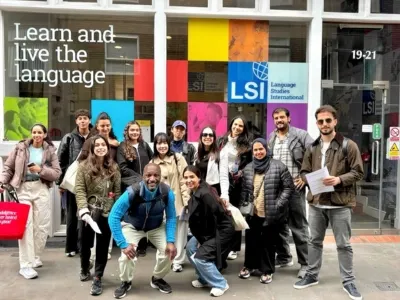
LSI has two schools in London and both are year-round. London Central sits on Ridgmount Street in Bloomsbury, a few minutes from the British Museum, Oxford Street and Soho, surrounded by university buildings and the cafés and discounts that come with them. London Hampstead is the quieter alternative in one of the greenest parts of the city. Between them they carry the widest course list in the group, including Medical English and Legal English, and London Central is the group’s registered home. Accredited by the British Council and a member of English UK.
Location: 19-21 Ridgmount Street, London WC1E 7AH, England
- LSI Brighton
An hour from London by train and a completely different proposition: a seaside city of about three hundred thousand, famous for its beach, its pier, its independent shops in the Lanes and one of the liveliest music and festival calendars in the country. It is a student town in the real sense, with two universities, and living costs sit well under the capital while London stays close enough for a day trip. Accredited by the British Council and a member of English UK.
Location: 55-61 Portland Road, Brighton BN3 5DQ, England
- LSI Cambridge
One of the oldest university cities in the world, and small enough to cross on a bicycle, which is how most of it gets around. The school is on Tenison Road, a few minutes’ walk from the station and from the colleges, the river and the punts. Cambridge suits students who want to study somewhere academic and calm, with London under an hour away when you want the opposite. Accredited by the British Council and a member of English UK.
Location: 41 Tenison Road, Cambridge CB1 2DG, England
- LSI Boston
The most academic city in the United States, Boston is home to Harvard and MIT across the river and to dozens of colleges in between, which gives the whole place a student population and the prices and events that follow. The school is on Beach Street in the middle of downtown, walking distance from Chinatown, the Common and the Freedom Trail. It is compact, walkable and properly four-season, and it is the obvious pick if a US university is the plan. Accredited by ACCET.
Location: 105 Beach Street, Boston MA 02111, USA
- LSI New York
Lower Manhattan, on Rector Street, a few blocks from Wall Street, the waterfront and the ferry to Staten Island, with the whole subway system at the door. Studying in New York is unlike studying anywhere else on this list: the city does half the teaching, the accents come from everywhere at once, and there is more to do in a week than you can fit in a term. It is the most expensive centre in the group and the one students least regret. Accredited by ACCET and licensed by New York State.
Location: 40 Rector Street, 10th Floor, Suite 1000, New York NY 10006, USA
- LSI San Diego
Southern California with the weather to match: warm and dry nearly all year, seventy miles of coastline, and a downtown that is small enough to feel manageable on your first week abroad. The San Diego school is on 5th Avenue in the Gaslamp Quarter, in the middle of the restaurants and music, with the beaches at Pacific Beach and La Jolla a short ride away and Mexico close enough for a weekend. Accredited by ACCET and approved by California’s BPPE.
Location: 1706 5th Avenue, San Diego CA 92101, USA
- LSI Berkeley
The San Francisco centre is in Berkeley, on Center Street, right beside the University of California campus and a short BART ride across the bay from San Francisco itself. It is the best of both: a genuine college town with bookshops, cafés and a famous food scene, and one of the world’s great cities twenty minutes away. Northern California weather is mild all year, and Yosemite, Napa and the Pacific coast road are all weekend trips. Accredited by ACCET and approved by California’s BPPE.
Location: 2015 Center Street, Berkeley CA 94704, USA
- LSI Toronto
Toronto is Canada’s biggest city and one of the most international anywhere: around half its residents were born outside the country, which shows up in the food, the neighbourhoods and how easy it is to arrive and feel normal. The school is on Yonge Street, on the subway line, close to the museum and the university. Canada is the most affordable of the big English speaking destinations and has the friendliest rules for what comes after study. Member of Languages Canada.
Location: 1055 Yonge Street, Suite 210, Toronto ON M4W 2L2, Canada
- LSI Vancouver
Mountains on one side, ocean on the other, and a downtown between them where you can ski in the morning and be on a beach by the afternoon. The school is on Hornby Street in the centre, minutes from the seawall and Stanley Park. Vancouver has the mildest winter in Canada and one of the biggest international student populations, and the centre is designated by British Columbia’s Private Training Institutions Branch as well as being a Languages Canada member and EQA certified.
Location: 3rd Floor, 530 Hornby Street, Vancouver V6C 2E7, Canada
- LSI Auckland
The smallest and greenest option on this list, built across two harbours with islands, beaches and volcanic cones inside the city limits. The school is on Scotia Place in the centre, walking distance from Queen Street and the waterfront. New Zealand’s student work rights are among the most generous here, and LSI Auckland holds NZQA Category One, the top of the four-band scale, with NZQA recording itself as Highly Confident in both its teaching and its self assessment. Member of English New Zealand and a Cambridge exam preparation centre.
Location: 10-12 Scotia Place, Auckland City 1010, New Zealand
- LSI Brisbane
The capital of Queensland, Brisbane is warm and subtropical almost all year, built along a river with an inner-city beach at South Bank and the Gold Coast and Sunshine Coast an easy trip away. The school is in Spring Hill, just above the centre. Australia’s student visa normally allows paid work, which makes this one of the two centres on this list where a long stay can partly pay for itself, and living costs here are among the kindest of Australia’s big cities. Sydney and Melbourne are a short flight south when you want a weekend somewhere bigger. Accredited by NEAS.
Location: 6/133 Leichhardt Street, Spring Hill, Brisbane QLD 4000, Australia
- LSI Paris
French rather than English, in the same house. The centre is on rue du Renard in the 4th arrondissement, between the Pompidou Centre and Notre-Dame, which is about as central as Paris gets. Same six levels, same fifty minute lesson, same general and intensive timetables as the English centres, plus preparation for the French certificates. It carries the Qualité FLE label, the French state quality mark for language schools, and is recognised by the Paris Chamber of Commerce.
Location: 23 rue du Renard, 75004 Paris, France
- LSI Zurich
German in the biggest city in Switzerland, at the centre on Kreuzstrasse near the lake. It is accredited by EAQUALS, the European body for language education, and runs the same course structure and level system as everywhere else in the group. Zurich is a comfortable and very well organised place to be a student, with the Alps under an hour away by train and three other language regions inside the same small country. It is not the cheapest city here, and it is one of the easiest to live in.
Location: Kreuzstrasse 36, 8008 Zurich, Switzerland


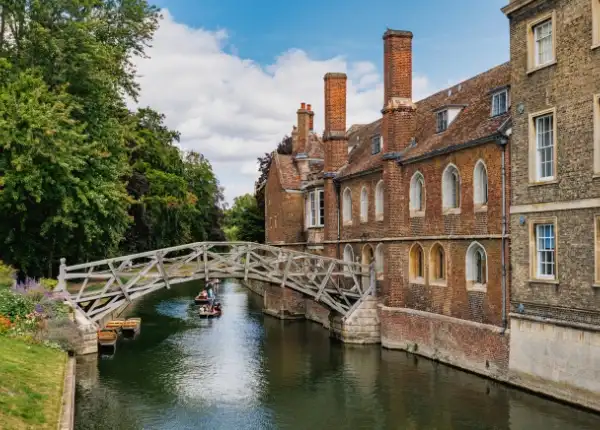











Around two thirds of the students we send to LSI choose London, New York, Toronto or Auckland.

What do students say about studying at LSI?
Two LSI students, in their own words. Patricio studied in New York and Aline in Auckland, and between them the two reviews cover most of what people ask us about: the teachers, the friends, and finally speaking without thinking about it first.

Hey! I’m from Chile, and I’ve had a really great experience at LSI New York. The best part is that I can finally speak English with confidence! I studied English in high school and university back home, but I never felt comfortable speaking it like I do now. I’ve also made some amazing friends from all over the world, which made the experience even better. I’m really glad I chose LSI, and I want to thank my agency, ViveCampus, for recommending the school and helping me through the whole process. It was definitely the right choice.

I had such a great time studying English here in LSI Auckland. The teachers and staff have been amazing and always there to help me. They even helped me with the things I needed to start looking for a part-time job, which was really nice. The school is super cozy, and I always felt comfortable, almost like I was at home. And the classes are actually fun! They’re nothing like the boring English classes I was used to. I will recommend LSI to all my friends.
Student testimonials from LSI share students’ experiences at the language school.
Source: ViveCampus

LSI in images



How ViveCampus can help you
A ViveCampus advisor helps you find the right program for you according your goals, needs and budget.
Our advice is completely free and the process is transparent from start to finish. All payments are made directly to LSI.
When you apply through ViveCampus, you receive support from both the school and our team. We will assist you throughout the application process, the visa, the accommodation and the arrival.
You will also receive an international student card with thousands of discounts, along with other benefits that your educational consultant will explain.
Steps you should follow
1. Tell us your goal A short conversation about your needs, level, budget, dates and what you are looking for.
2. We clarify your doubts We answer all your questions about costs and requirements.
3. We handle the paperwork Application, letter of acceptance and the documents your visa or permit needs.
4. Ready to Start Accommodation confirmed, payments processed, and someone to call whenever you need a hand.


Frequently Asked Questions
What our advisors are asked most often before booking a course with LSI: which city, how the fifty minute lesson adds up, which visa, whether you can work, and what it costs in one city against another.

Which LSI centre should I choose?
Start from the single thing you most want out of the year, and the list gets short quickly. If you want to work while you study, look at Auckland and Brisbane first, because the southern hemisphere rules are the most generous on this list. If budget decides it, start with Brighton, Toronto, Auckland and Brisbane, where the identical course costs noticeably less than in London or New York. If you want a small place where the language is simply what everybody speaks, take Brighton, Cambridge or Berkeley; for a big city with an airport and a job market, London, New York, Toronto or Brisbane. If a US or British university is the goal, Boston and Cambridge are the two to look at. And if the language you want is not English, it is Paris or Zurich. Send us that one priority and we will come back with two or three centres that fit it.
Why does a fifty minute lesson matter?
Because almost every school sells its course in lessons, and almost every other school makes a lesson forty five minutes. The difference sounds trivial and is not. On General 20 you get one hundred extra minutes of teaching a week, which is close to two extra lessons. On Intensive 30 it is two and a half hours a week, and over a twelve week academic term that is more than thirty hours of class. So when you compare two quotes that both say twenty lessons a week, they are not the same course, and the gap is a full day and a half of teaching over a term. LSI also publishes the clock hours next to the lesson count on every course page, which makes it easy to check rather than something you have to trust.
Can I study in more than one LSI city?
Yes, and students do, particularly on the longer bookings. The course structure, the six levels and the lesson length are the same at every centre, so your level carries across and you pick up where you left off rather than starting again. The practical limits are visas and dates rather than the school: moving between countries usually means a new entry status, which needs planning, while moving between two English centres in the same country is straightforward. The pairing we get asked about most is a term of English in London or Brighton followed by a term of French in Paris, and we set both enrolments up together so there is one conversation rather than two.
Can I work while I study at LSI?
It depends entirely on the country, so decide this before you decide the city. Australia and New Zealand are the most open: a student visa there normally allows paid work, and in New Zealand a long enough course can come with up to twenty hours a week, which is why Auckland and Brisbane are the two centres students pick when the budget needs help. Canada restricts language students on a study permit. United States rules limit an F-1 student to work on campus, within set hours. A short English course in the United Kingdom carries no right to work. France and Switzerland have their own rules for student permits. The figures move with government policy, so we confirm the current position for your nationality and your dates rather than printing a number here.
What is the difference between General 20, Intensive 24 and Intensive 30?
The core is identical and the difference is how much of the day you give it. General 20 is twenty lessons, sixteen hours forty minutes, and leaves your afternoons free. Intensive 24 adds four lessons for a round twenty hours, and is the one we recommend most often because it moves your level inside a fixed number of weeks without eating the whole day. Intensive 30 adds six more, twenty five hours, and those last six are electives you choose yourself, which is how LSI builds its IELTS and TOEFL preparation and its Business English. If you have a lot of weeks, General 20 and the city will do the work. If you have a few weeks and a target, take the Intensive 30.
Do I need a certain level to start?
Not for the general and intensive courses, which run across six levels from complete beginner to advanced. If you are starting from zero, plan on at least eight weeks, because that is the minimum most centres set for beginner level and it is also roughly what it takes to get somewhere useful. The specialist courses do have entry levels: intermediate for IELTS, TOEFL and Cambridge B2 First, upper intermediate to advanced for C1 Advanced, advanced for C2 Proficiency, and intermediate or better for Business English and the profession courses. You take a level test before you travel and a placement check on arrival, so you start in the right room on the first morning.
Which exam should I prepare for, IELTS, TOEFL or Cambridge?
Start from what will be asked of you. If you are applying to a university in the United States or Canada, that is usually TOEFL. Almost everywhere else in the English speaking world, including the United Kingdom, Australia and New Zealand, it is IELTS, and it is also what immigration systems ask for. Cambridge is the different one: B2 First, C1 Advanced and C2 Proficiency are qualifications rather than test scores, they never expire, and they are read by employers as a statement about you rather than a number from a particular morning. So if the deadline is a university place, take the test they name; if you are building a career, the Cambridge certificate keeps its value for life. LSI runs all three.
What are Grammar Doctor and Job Club?
Two free weekly classes that sit outside your timetable at every centre, and two of the more useful things on this page. Grammar Doctor is a teacher, a room and whatever you keep getting wrong, worked through one question at a time, which is a different and often faster thing than covering it again in class. Job Club is about working in the country you are in: writing a CV that reads properly there, preparing for an interview, and understanding what you are entitled to at work. Neither costs extra and both are worth building into your week from the first Monday.
What is an Academic Term or Academic Year Abroad?
A long booking with management wrapped around it. The term runs twelve to twenty three weeks and the year twenty four to forty eight, at twenty, twenty four or thirty lessons a week. What you get on top of a standard long course is an individual study plan built for your level and your goal, two extra sessions with a teacher every week, and regular progress meetings against that plan. Inside the enrolment you can combine general English, an exam course, academic English, a university pathway and business English, and change the mix as your level moves. It is the right shape for anybody whose aim is a level or a qualification rather than a holiday with lessons.
Is LSI an accredited school?
Yes, and separately in each country, which is the part that matters in a group this size. The English centres are accredited by the British Council and belong to English UK. The American centres are accredited by ACCET, with New York State licensing in New York and BPPE approval in California on top. The Canadian centres belong to Languages Canada, and Vancouver is designated by British Columbia’s Private Training Institutions Branch and EQA certified. Brisbane is accredited by NEAS. Auckland holds NZQA Category One, the highest of the four bands. Zurich is accredited by EAQUALS and Paris carries the Qualité FLE label. Most centres are also recognised for German Bildungsurlaub study leave.
Can I really study French or German with the same school?
Yes, and it is a genuine part of the group rather than a sideline. The Paris centre teaches French on rue du Renard in the Marais and the Zurich centre teaches German on Kreuzstrasse, both year-round, both using the same six levels, the same fifty minute lesson and the same general and intensive timetables as the English centres. Both prepare you for the relevant certificates. Paris carries the French state Qualité FLE quality label and Zurich is EAQUALS accredited. If your plan is two languages rather than one, this is the practical advantage of booking with a group: one relationship, one set of records, and a level that is understood when you move.
How long should I book for?
Four weeks will shift your confidence, eight to twelve weeks will usually shift your level, and a term or a year will change what you can do in the language. The honest guide is that a CEFR level takes somewhere around ten to twelve weeks of intensive study for most people, so if your goal is to arrive at intermediate and leave at upper intermediate, budget a term rather than a month. If you are starting as a complete beginner, eight weeks is the minimum most centres will take you for, and it is a sensible floor rather than a formality. Tell us the level you want to reach and we will work backwards from it with you.
What does it cost, and what makes the difference?
The city, far more than the course. The same Intensive 24 costs noticeably less in Brighton, Toronto, Auckland or Brisbane than in London or New York, for the same structure, the same six levels and the same fifty minute lesson, and living costs move in the same direction. LSI publishes a price list per centre covering tuition, registration, materials, accommodation and transfers, and rates are set once a year. Our advice is to pick two or three cities you would be happy in and let us quote all of them, because the spread often surprises people and a cheaper city can buy you extra weeks. Send us the contact form and the quotes come back in writing, itemised, with any promotion running for your dates. Our side of it is free.
What is included and what is extra?
The quote we send you covers tuition for the weeks you book, the registration fee, course materials, accommodation if you want us to arrange it, and the airport transfer if you take one. What sits outside it is worth knowing in advance: exam fees for the Cambridge, IELTS and TOEFL tests are charged separately by the exam boards, visa fees and any health surcharge go to the government rather than the school, and insurance depends on the country. Living costs are yours. We itemise all of it before you commit, so the figure you see is the figure you pay, and we will tell you which of the extras your particular city and course actually require.
Don’t see your question here? Send it through the form below and a ViveCampus advisor will answer it directly. Asking costs nothing and commits you to nothing.
Source: ViveCampus
Fill out the form below. It only takes 2 minutes to start your journey!

Get a Quote
Fill out the form and a ViveCampus advisor will reach out by email or phone to go over schools, costs and start dates that fit your plan. Our help is free and you are under no obligation.

TODAY
