Professional Programs at Greenwich College
Professional programs at Greenwich College lead to 16 nationally recognised qualifications, taught across 7 Australian campuses: business, IT and project management, hospitality and commercial cookery, and health, care and early childhood.

 1. Tell us your goal
 2. We help you find the right program
 3. We handle the paperwork
 4. Ready to Start
TL;DR: Quick summary
Greenwich College is a registered training organisation as well as an English school, which means the diploma your English leads to is taught in the same college, on the same student visa, by the same team. Sixteen qualifications across three fields: business, IT and project management, from a Certificate IV up to a Graduate Diploma; hospitality and commercial cookery, taught in training kitchens in Brisbane and Perth; and health, care and early childhood, with a purpose-built healthcare lab in Adelaide. All of them are nationally recognised, which means the qualification is the same document wherever in Australia you earn it and it is recognised by every employer in the country. Two years of study also opens the post-study work visa, which is the reason a lot of students choose this route in the first place. Tell us the field and the city and a ViveCampus advisor comes back with the entry requirements, the dates and a price.
Sixteen qualifications: Certificate IV in Project Management Practice, diplomas of Business, E-Commerce, Leadership and Management, Project Management and Marketing, Advanced Diplomas of Leadership and Management and of Program Management, a Graduate Diploma of Management, Certificate IV in Kitchen Management, the Diploma and Advanced Diploma of Hospitality Management, Certificates III and IV in individual support and ageing, the Diploma of Community Services, and early childhood education and care at Certificate III and Diploma.
Every one of them is nationally recognised and delivered under RTO number 91153, audited by the Australian Skills Quality Authority. Courses run from 26 weeks for the accelerated culinary diploma to 104 weeks for the Advanced Diploma of Information Technology, and most sit between 44 and 76. Packaging two courses to reach two years of study is what opens the post-study work visa. Hospitality is taught in training kitchens in Brisbane and Perth, and health and care in a purpose-built healthcare lab in Adelaide.
- Nationally recognised qualifications
- Training kitchens and a healthcare lab
- 16 qualifications, 3 fields, 7 campuses
- CRICOS 02672K, RTO 91153
ViveCampus
ViveCampus is a benchmark study abroad agency with more than 17 years of experience and over 5,000 satisfied students around the world. We handle your enrolment at Greenwich College for you, we walk you through every step, and our service costs you nothing.


Why do students choose Greenwich professional programs in 2026?
Sixteen qualifications, three fields and a college that teaches the English that leads into them. Here is what makes the difference once you are enrolled.

Every qualification on this page sits on the Australian Qualifications Framework and is delivered under Greenwich’s registration as a training organisation, RTO 91153, which the Australian Skills Quality Authority audits. In practice that means three things worth knowing before you compare colleges. The certificate is the same document whatever state you earn it in, so a Diploma of Leadership and Management from the Perth campus reads identically to one from Sydney. Every employer in the country recognises it, because the qualification codes are national and an HR department can look yours up. And the credit is portable: if you go on to a bachelor degree at an Australian university, a diploma often carries credit towards it, which can take a semester or a year off the degree. That is the difference between a certificate a school prints and a qualification a country stands behind.
Business, IT and project management is the largest group, from a Certificate IV in Project Management Practice through diplomas of Business, E-Commerce, Leadership and Management and Project Management, up to Advanced Diplomas and a Graduate Diploma of Management. Hospitality runs from a Certificate IV in Kitchen Management through the Diploma and Advanced Diploma of Hospitality Management, all with a culinary specialisation. Health and care covers individual support and ageing at Certificate III and IV, the Diploma of Community Services with case management, and early childhood education and care at both Certificate III and Diploma. Three fields, and inside each one a ladder you can climb rather than a single course.
Kitchens are taught in kitchens. Greenwich has fully equipped commercial training kitchens at its Brisbane and Perth campuses, so the Certificate IV in Kitchen Management and the hospitality diplomas are practised on the equipment a real service runs on rather than described on a whiteboard. Health and care is taught in a purpose-built healthcare lab at the Adelaide campus, which is a brand new building with ten training rooms. Greenwich also runs a high level of engagement with hospitality venues, which is how its graduates walk into the industry with contacts rather than just a certificate.
This is the part worth planning from the start rather than discovering at the end. Two years of study in Australia can qualify you for the Temporary Graduate visa, subclass 485, which allows you to live and work in the country after you finish, and for many students it is the whole point of the trip. Greenwich packages courses to reach that two year mark: a Diploma followed by an Advanced Diploma, or a hospitality package that runs a Certificate IV into a Diploma. Because it is one college, the second course is a continuation rather than a new application. Ask us to map the two years before you book the first course, because the order you take them in matters.
Greenwich teaches the English as well, which is why these two pages sit side by side. English for Vocational Studies is designed as the bridge: five or ten weeks from IELTS 5.5, aimed at the reading, report writing and presentation skills a vocational classroom runs on. Finish it and you move straight into a qualification here without sitting an external English test. Staying inside one college keeps the whole route on one student visa with one team looking after it, and it means the people who taught you English know the course you are walking into next.
Greenwich has twice been named Vocational College of the Year at the ST Star Awards, which is voted on by the agencies that place students from all over the world and is the award that matters most for the courses on this page. It has also been named Best English Language School in the Southern Hemisphere, and its own students rate it 9.3 out of 10. It is CRICOS registered under provider code 02672K, which is what allows it to enrol international students on a study visa, and it is part of the NextEd Group.
Greenwich College is an Australian English language and vocational college with seven campuses, in Sydney, Melbourne, Brisbane, Gold Coast, Perth and Adelaide. It is registered as a training organisation under RTO number 91153 and registered to teach international students under CRICOS provider code 02672K. It is an authorised Cambridge English and TOEFL exam centre and an IELTS Approved Preparation Provider, and has twice been named Vocational College of the Year at the ST Star Awards.
Source: Greenwich College

Six cities, and the choice is the point
Most students reach this page having decided they want an Australian qualification and not yet which city. That is the right order, and Greenwich is the college that lets you answer it last: the qualifications are national, so the certificate reads the same wherever you earn it, and the city becomes a free choice you make for the life you want outside class and the work you want beside it.
What changes between them is cost of living, climate and where the jobs in your field are. Sydney and Melbourne have the deepest labour markets and the highest rents. Brisbane and Gold Coast give you roughly 300 days of sunshine, a lower cost of living and a hospitality industry that runs all year. Perth is calm and safe with a training kitchen on campus and a skills shortage that favours trained people. Adelaide is the most affordable city on the list and the one with the healthcare lab. An advisor will weigh those against your budget and your plans before you commit to one.

What professional programs does Greenwich College offer?
Business and IT, hospitality and commercial cookery, and health, care and early childhood
Sixteen nationally recognised qualifications, delivered under RTO number 91153. Each one carries a national course code, printed here so you can look it up yourself, and a duration in weeks. Entry requirements and the campuses each course runs at vary, so tell us the one you want and we will confirm both.

The qualification most of our students book first, and the one that opens the widest set of doors. It covers leading a team, managing operational plans, communicating with influence, developing workplace policy and handling the budget that goes with all of it. It is the standard entry point into Australian management study and it carries credit towards a business degree at many universities, so it works both as a job qualification and as a step towards one.
The step above the Diploma, and the second half of the two year package most students build to reach the post-study work visa. Where the Diploma is about leading a team, this is about leading an organisation: strategic planning, organisational change, risk management, business resources and the financial reporting a senior role answers for. Taken after the Diploma it is a continuation rather than a new application.
A business diploma built around the thing every Australian business is currently doing: moving how it works onto digital tools. It covers business operations, communication and workplace policy alongside digital transformation itself, so you finish able to talk to both sides of an organisation. A good choice if you want the breadth of a business qualification without committing to management as the direction.
A nationally accredited course aimed squarely at online retail and digital trade: building and running an online store, digital marketing and analytics, customer experience and the operations behind an order. It pairs naturally with eBusiness Pro English on the English side of the college, and it suits students who already sell something online and want to do it properly and in English.
The longest qualification Greenwich teaches, and the most technical. Two years covering IT strategy, systems, cyber security, data and the management of technology projects, at a level that maps onto a senior technical or team lead role. Because it runs to 104 weeks on its own it satisfies the two year study requirement for the post-study work visa without needing to be packaged with a second course.
The entry point into project management and the shortest qualification in the business group. It covers scope, time, cost, quality, risk and stakeholder management on real project documentation, which is the vocabulary every project role expects you to already have. Students take it as a first Australian qualification or as a fast addition to a degree earned at home that had no project component.
The full project management qualification and the one employers recognise. It runs the same knowledge areas as the Certificate IV at greater depth and adds managing project teams, procurement and governance. Greenwich also runs a free preparation course for the internationally recognised CAPM certification alongside it, which is worth taking: a national diploma plus an international certification is a stronger pair than either alone.
A step beyond running a single project, into running several that share resources and a strategic goal. It covers program governance, benefits management, portfolio level risk and the reporting a senior sponsor expects. It is the qualification for somebody who already manages projects and wants the credential that matches what they are doing, and it satisfies the two year study requirement on its own.
A postgraduate level qualification for people who lead learning and development, whether that is a training function, a team of trainers or organisational capability. It sits above the Advanced Diploma on the Australian Qualifications Framework, which makes it the highest qualification Greenwich teaches, and it suits students who already have a degree or substantial experience and want an Australian postgraduate credential.
The commercial cookery qualification, taught in Greenwich’s own training kitchens rather than described in a classroom. It covers cooking methods across the sections of a professional kitchen, food safety, costing a menu, ordering and stock, and leading a small brigade through a service. It is the longest hospitality course here because it carries the practical hours a kitchen qualification needs, and it is the base the two hospitality diplomas are built on.
Specialising in culinary, and designed to follow the Certificate IV: at 26 weeks it is the accelerated step that takes a cook into a supervisor. It covers rostering, stock and cost control, food safety programs, customer service standards and the finances of running a venue. Packaged with the Certificate IV it takes a hospitality student comfortably past the two years of study the post-study work visa asks for.
The senior hospitality qualification, also specialising in culinary, for people heading towards running a venue rather than a section of one. It covers strategic planning, financial management, leading a large team and the business decisions behind a hotel, a restaurant or a resort. Greenwich’s industry engagement matters most here: the students who finish this one tend to leave with the contacts as well as the certificate.
The entry qualification into aged care and disability support, and the fastest route on this page into work in an industry Australia is short of people for. It covers personal care, supporting independence, working with diverse clients, recognising and responding to risk, and the legal and ethical framework the sector runs on, with supervised practical placement. Thirty two weeks and you are qualified to work.
The step above the Certificate III, for people who want to coordinate care rather than only deliver it. It adds care planning, supporting people with dementia, working with complex needs and supervising other support workers. Taken after the Certificate III it builds a year and a half of continuous study, and aged care is one of the clearest long term skills shortages in the country.
The management level qualification in community services, specialising in case management. It covers assessing client needs, developing and reviewing a case plan, working with people at risk, coordinating services across agencies, and the legal and ethical responsibilities that come with holding somebody’s case. It is taught at the Adelaide campus in a purpose-built healthcare lab and it is the natural destination for students who started in individual support.
The qualification that lets you lead a room in an Australian early learning centre, and the one the sector is most short of. It covers child development, designing and running an education program, health and safety, working with families and the national quality framework every centre is measured against, with substantial supervised placement. Greenwich also teaches the Certificate III in Early Childhood Education and Care, at 48 weeks, as the step before it.
Not at the English level these courses ask for yet? Greenwich teaches ten English courses at the same campuses, and English for Vocational Studies is the bridge straight into the qualifications above. See the English courses

The Diploma of Leadership and Management is where most students start, the hospitality package is what people book when they want to work while they study, and health and care is the field with the clearest shortage of people in Australia
Source: ViveCampus

What should you know before enrolling in a Greenwich qualification?
The things worth settling before you book rather than after, taken from Greenwich’s own course pages and student handbook, and from what students ask us every week.
Costs, Dates, Application Process and other Considerations
Application Process - Send us the contact form and an advisor comes back with the entry requirements for the qualification you want, which differ by course and by field, and with the campuses it runs at. Most courses ask for an English level around IELTS 5.5 to 6.0 and completion of secondary school, and some of the health courses ask for a police check and immunisation records before placement. You will need a confirmation of enrolment from Greenwich for the student visa, and we prepare that file with you. If your English is not there yet, English for Vocational Studies at the same college is the bridge, and we will quote both together so you can see the whole plan.

Dates of the Program - Vocational courses run to fixed intakes through the year rather than weekly starts, and the dates differ by qualification and by campus. That is worth knowing early because it shapes your flight and your visa timing, and because a course that starts in four weeks and one that starts in fourteen are very different plans. Tell us the qualification and the city and we will send you the next three intake dates for it, along with what the application needs to be in by.

Length of the Program - From 26 weeks for the accelerated hospitality diploma to 104 weeks for the Advanced Diploma of Information Technology, with most sitting between 44 and 76 weeks. The number to plan around is two years rather than any single course, because two years of study is what opens the post-study work visa. That usually means packaging two qualifications, a Diploma then an Advanced Diploma, or a Certificate IV then a Diploma in hospitality. Ask us to map the two years before you book the first one, because the order matters and so do the gaps between intakes.

Costs - Vocational tuition is usually quoted per term or for the whole qualification rather than per week, and it varies by field: the hospitality and health courses carry practical costs that a business diploma does not. On top of tuition there is a one-off enrolment fee, materials and uniform where a course needs one, and Overseas Student Health Cover for the length of your visa. Living costs move the total more than the tuition does, and Perth and Adelaide are meaningfully cheaper than Sydney over two years. Send us the contact form with the qualification and the city and an advisor will put tuition, fees, insurance and accommodation into one quote covering the whole plan rather than the first course only. For a first estimate, try our cost of studying abroad calculator.

Health Insurance - Overseas Student Health Cover is required for the whole length of your student visa in Australia, and it has to be in place before the visa is granted. It covers doctors, hospital treatment, ambulances and a contribution towards medicines. We arrange it with your enrolment and quote it alongside the tuition so the number you see is the number you pay. If you are coming on a visitor or working holiday visa for a short course instead, OSHC does not apply and ordinary travel insurance does, and we will tell you which one your plan needs before you pay for anything.

Minimum Age - Eighteen for every qualification on this page. That is firmer here than on the English side, because these courses include workplace placement and the industries involved set their own minimum age and screening requirements. The health and care courses go further: expect to need a national police check, a working with children check for the early childhood qualifications, and immunisation records before you can start placement. None of it is difficult, but it takes time, so we start it with you early rather than late.

Minimum English Level - Most of these qualifications ask for around IELTS 5.5 to 6.0 or the equivalent, and the exact level depends on the course: the health and community services courses sit at the top of that range because you will be talking to clients, and the business diplomas at the lower end. You do not have to arrive with it. English for Vocational Studies at the same college is designed as the bridge, takes five or ten weeks from IELTS 5.5, and moves you into a qualification here without an external English test. Tell us where your English is and we will quote the whole route.

Visa Regulations - These courses run on a student visa, which needs a confirmation of enrolment from Greenwich, Overseas Student Health Cover, evidence of funds and a genuine student statement. Greenwich is CRICOS registered under provider code 02672K, which is what allows it to issue those documents. The more interesting question is what comes after: two years of study opens the Temporary Graduate visa, subclass 485, which lets you stay and work once you finish. Several of these fields also appear on Australia’s skilled occupation lists, which matters if permanent residence is somewhere in the plan. We will map the whole sequence with you before you book.

Working While You Study: - A student visa normally allows up to 48 hours of paid work a fortnight while your course is running and unlimited hours during scheduled breaks, and Australia’s minimum wage is among the highest in the world. What makes these courses different from a language course is that the work can be in your field: a hospitality student with a Certificate IV in Kitchen Management is employable in a kitchen rather than only front of house, and an aged care student is working in the sector they are qualifying for. That experience is what an Australian employer reads first when you apply for the job after graduation.

Accommodation - Greenwich arranges accommodation in every city and the options are broadly the same everywhere. A homestay with an Australian family, usually with breakfast and dinner, is what we recommend for a first stay and for anybody who wants their speaking to move: it is several more hours of English every day and it comes with people who will explain the city to you. Student residences give you your own room in a building full of people in the same position, with shared kitchens and study spaces, and they are the sociable option. A shared flat is the cheapest and the most independent, and it is what most students move into after the first few months. Say which of the three appeals in the contact form and we will arrange it alongside your enrolment.

Extra Curricular Activities - Vocational students get the same campus life as the English students, and it is worth using: the activity calendar runs at every campus and is published a month ahead, with afternoon clubs, city walking tours, film days and weekend trips priced for students. The Job Ready programme is the one to make time for on this page in particular, because it covers the Australian CV, the cover letter and the interview, and a qualification plus a CV that reads correctly is a much stronger application than a qualification on its own.

Airport Pickup - Greenwich arranges an airport transfer in every city and we book it with your course. Whether you need one depends on where you are landing and what time: arriving into Sydney or Melbourne for the first time with luggage, no local SIM and a long way to go is a different experience from stepping off a short flight into Adelaide. For students under eighteen it is part of the arrangements rather than optional. It costs little next to the tuition and it lets the first evening be about the city rather than about logistics.

First day of classes - The first morning is orientation: a welcome session, a tour of the campus, your student account and timetable, and the practical business of wifi, transport cards and where to eat. For these courses it also covers the things a qualification adds, which is the assessment schedule, how competency is judged rather than marked, what your placement will involve and when it starts, and the uniform and equipment a hospitality or health course needs. Classes begin the same day, and a city walking tour for new students runs that week.

Keep in mind that the biggest expense is usually not the course itself, but the living costs. So, before choosing the cheapest school, consider all factors carefully
Source: ViveCampus

Greenwich College campuses
Seven campuses in six cities, and a nationally recognised qualification reads the same wherever you earn it, so the city is a free choice. Which qualifications run at which campus does vary, and it follows the facilities: the training kitchens are in Brisbane and Perth, the healthcare lab is in Adelaide. Tell us the course you want and the city you like and a ViveCampus advisor will confirm where the two meet.
- Greenwich Sydney Pitt Street
The larger of the two Sydney campuses, in the middle of the CBD with Central, Town Hall and Museum stations close by and reception open from 8am to 7pm. Sydney has the deepest labour market in the country, which matters on this page more than on any other: business, project management and community services roles are concentrated here, and part time work in your field is easiest to find. It is the campus most of our students ask about first.
Location: Level 2, 396 Pitt Street, Sydney NSW 2000
- Greenwich Sydney Mary Street
The second Sydney campus, a few streets from the first and also in the CBD, close to Central Station and the Surry Hills edge of the city. It gives Sydney a second set of classrooms and a quieter building, and the two share the same student services and the same city. Which building your course runs in depends on the qualification and the timetable rather than on anything you need to choose.
Location: Level 2, 72 Mary Street, Sydney NSW 2000
- Greenwich Melbourne
Six floors and more than a hundred classrooms on Spencer Street, two minutes from Southern Cross Station and inside the free tram zone, with a café on site at student prices and computer labs throughout. Melbourne is Australia’s cultural and sporting capital and its second largest business centre, which makes it a strong pairing with the management, marketing and IT qualifications. Reception is open to 7pm.
Location: Level 8, 120 Spencer Street, Melbourne VIC 3000
- Greenwich Brisbane
Nineteen classrooms and a fully equipped commercial training kitchen on Charlotte Street, in the centre of Australia’s third largest city. The kitchen is the reason to look at Brisbane for the hospitality qualifications: the Certificate IV in Kitchen Management is practised on real equipment here. Around 300 days of sunshine a year, a hospitality industry that runs all year round, and a cost of living noticeably below Sydney.
Location: Level 3, 119 Charlotte Street, Brisbane QLD 4000
- Greenwich Gold Coast
A purpose-built campus in Southport, four minutes from the Nerang Street tram stop and beside the Australia Fair shopping centre, with a student lounge, study spaces and a counselling room. The Gold Coast is a tourism economy, which means hospitality and customer service work is abundant and year round, and it averages 300 days of sunshine and 29 degrees. Brisbane is an hour away and the beach is fifteen minutes from class.
Location: 56 Nerang Street, Southport, Gold Coast QLD 4215
- Greenwich Perth
A purpose-built campus in Bayswater, two minutes from the train station, with a fully equipped commercial training kitchen, a student lounge, study spaces and parking on site. Perth is the second home of the hospitality qualifications for that reason. It moves at a calmer pace than the east coast, living costs are well below Sydney, and Western Australia’s skills shortages tend to favour people who arrive already trained.
Location: 13 Beechboro Road South, Bayswater WA 6053
- Greenwich Adelaide
A brand new campus on Currie Street, nine minutes from Adelaide Railway Station, with ten training rooms and a fully equipped, purpose-built healthcare lab. That lab is why Adelaide is the campus to look at for the health and care qualifications: individual support, ageing support and community services are practised in a room built for them. Adelaide is also the most affordable city on this list, which over a two year qualification is worth real money.
Location: Level 4, 27 Currie Street, Adelaide SA 5000




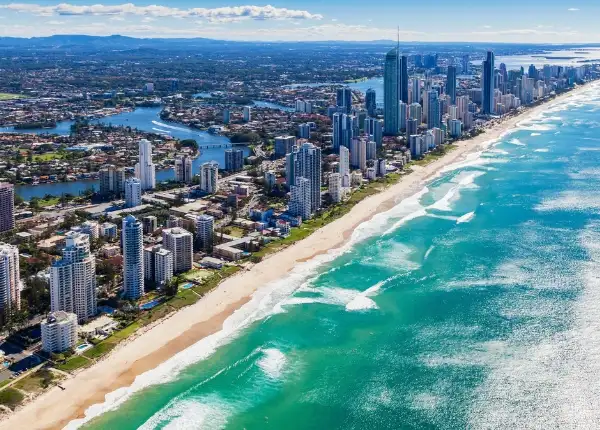

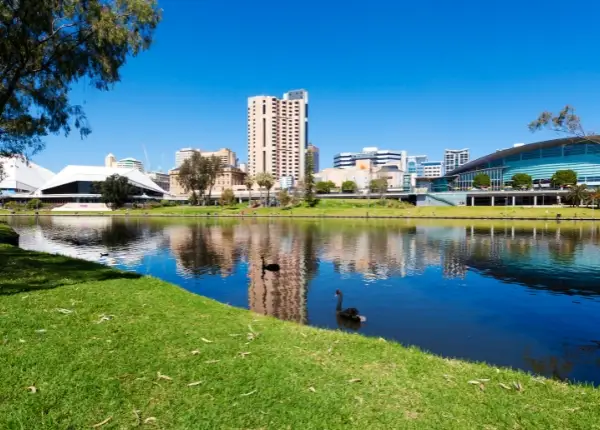

Around two thirds of the students we send to Greenwich choose Sydney, Melbourne or Gold Coast.
Source: Greenwich College

Greenwich College in images



How ViveCampus can help you
A ViveCampus advisor helps you find the right program for you according your goals, needs and budget.
Our advice is completely free and the process is transparent from start to finish. All payments are made directly to Greenwich College.
When you apply through ViveCampus, you receive support from both the school and our team. We will assist you throughout the application process, the visa, the accommodation and the arrival.
You will also receive an international student card with thousands of discounts, along with other benefits that your educational consultant will explain.
Steps you should follow
1. Tell us your goal A short conversation about your needs, level, budget, dates and what you are looking for.
2. We clarify your doubts We answer all your questions about costs and requirements.
3. We handle the paperwork Application, letter of acceptance and the documents your visa or permit needs.
4. Ready to Start Accommodation confirmed, payments processed, and someone to call whenever you need a hand.


Frequently Asked Questions
What our advisors are asked most often about the Greenwich qualifications: which course, what "nationally recognised" is worth, the two year plan, what English you need, and what it costs.

Which qualification should I choose?
Work backwards from the job. If you want to manage people, the Diploma of Leadership and Management is the standard door and the one most of our students take. If you want to run projects, the Certificate IV is the fast entry and the Diploma is what employers look for. If you want to cook professionally, the Certificate IV in Kitchen Management is the base and everything else in hospitality builds on it. If you want to work in aged care or disability support, the Certificate III in Individual Support gets you qualified in 32 weeks, which is the fastest route to work on this page. And if you already have a degree, the Graduate Diploma of Management is the one that sits above it. Send us the job you are aiming at through the contact form and we will name the course.
What does "nationally recognised" actually mean?
Three concrete things. The qualification sits on the Australian Qualifications Framework and carries a national course code, printed on every card above, which an employer or an immigration officer can look up. It is identical whatever state you earn it in, so a diploma from Perth and one from Sydney are the same document. And it usually carries credit towards an Australian bachelor degree, which can take a semester or a year off a degree if you go on to one. It is delivered under Greenwich’s registration as a training organisation, RTO 91153, which the Australian Skills Quality Authority audits. A certificate a private school prints for itself does none of that.
Can I work in Australia after I finish?
That is what the two year plan is for. Two years of study in Australia can qualify you for the Temporary Graduate visa, subclass 485, which lets you live and work in the country after you graduate, and for a lot of students it is the real reason for the trip. Most single qualifications here are shorter than two years, so the usual route is to package two: a Diploma then an Advanced Diploma, or a Certificate IV then a Diploma in hospitality. The Advanced Diploma of Information Technology reaches two years on its own. Ask us to map it before you book the first course, because the order and the gaps between intakes both matter.
What English level do I need?
Most of these ask for around IELTS 5.5 to 6.0 or the equivalent, with the health and community services courses at the top of that range because you will be talking to clients, and the business diplomas at the lower end. You do not need to arrive with it. English for Vocational Studies at the same college is built as the bridge: five or ten weeks from IELTS 5.5, focused on the report writing, reading and presentation skills a vocational classroom runs on, and finishing it moves you into a qualification here without an external English test. Tell us where your English is now and we will quote the English and the qualification as one plan.
Which campus teaches which course?
It follows the facilities, which is the useful way to think about it. Hospitality and commercial cookery are taught where the commercial training kitchens are, which is Brisbane and Perth. Health and care is taught in the purpose-built healthcare lab at Adelaide. The business, IT and project management qualifications are the most widely available, because they need classrooms rather than specialist rooms. Sydney and Melbourne are the largest campuses and carry the widest list. Tell us the course and the city you would like and we will confirm where the two meet before you plan anything around it.
Is there a work placement?
In the hospitality and health and care qualifications, yes, and it is one of the most valuable parts. Commercial cookery carries practical service hours, which is part of why the Certificate IV in Kitchen Management runs to 84 weeks. The individual support, ageing support and community services qualifications include supervised placement with real clients, which is what makes the certificate mean something to an employer. Placement is arranged by the college. It also has requirements attached, typically a national police check, a working with children check for the early childhood courses and immunisation records, and those take time, so we start them with you early.
What does it cost?
Vocational tuition is normally quoted per term or for the whole qualification rather than per week, and it varies by field: hospitality and health carry practical costs a business diploma does not. On top of tuition there is a one-off enrolment fee, materials, uniform where the course needs one, and Overseas Student Health Cover for the length of your visa. Over two years the living costs matter more than the tuition, and Perth and Adelaide are meaningfully cheaper than Sydney. Send us the contact form with the qualification and the city and we will quote the whole plan rather than the first course.
Can I start with English and move into a qualification?
Yes, and it is the most common route our students take. Greenwich teaches ten English courses at the same campuses, and English for Vocational Studies exists specifically to feed into the qualifications on this page. Doing both inside one college keeps the whole thing on one student visa with one team looking after it, which is simpler and usually cheaper than moving providers halfway. It also means the people who teach you English know the course you are walking into. We quote the two together so you can see the full length and the full cost from the start.
Can I change course once I have started?
Yes, and Greenwich has a change of course process for exactly this. Students move between fields more often than you would expect, usually after a term makes the work clearer than a brochure could. What you need to know is that on a student visa some changes have paperwork attached, particularly if the new course is longer or shorter than the one your visa was granted for. Talk to us first and we will handle it with the college rather than have you find out afterwards.
Is Greenwich College accredited for these courses?
Yes, and on this page that is the question that matters most. Greenwich is a registered training organisation, RTO number 91153, which is what authorises it to deliver and assess nationally recognised qualifications, and it is audited by the Australian Skills Quality Authority against the national standards. It is separately registered to teach international students under CRICOS provider code 02672K. It has twice been named Vocational College of the Year at the ST Star Awards, which is the award that speaks directly to the courses listed here, and its own students rate it 9.3 out of 10.
Don’t see your question here? Send it through the form below and a ViveCampus advisor will answer it directly. Asking costs nothing and commits you to nothing.
Source: ViveCampus
Fill out the form below. It only takes 2 minutes to start your journey!

Get a Quote
Fill out the form and a ViveCampus advisor will reach out by email or phone to go over schools, costs and start dates that fit your plan. Our help is free and you are under no obligation.

TODAY
